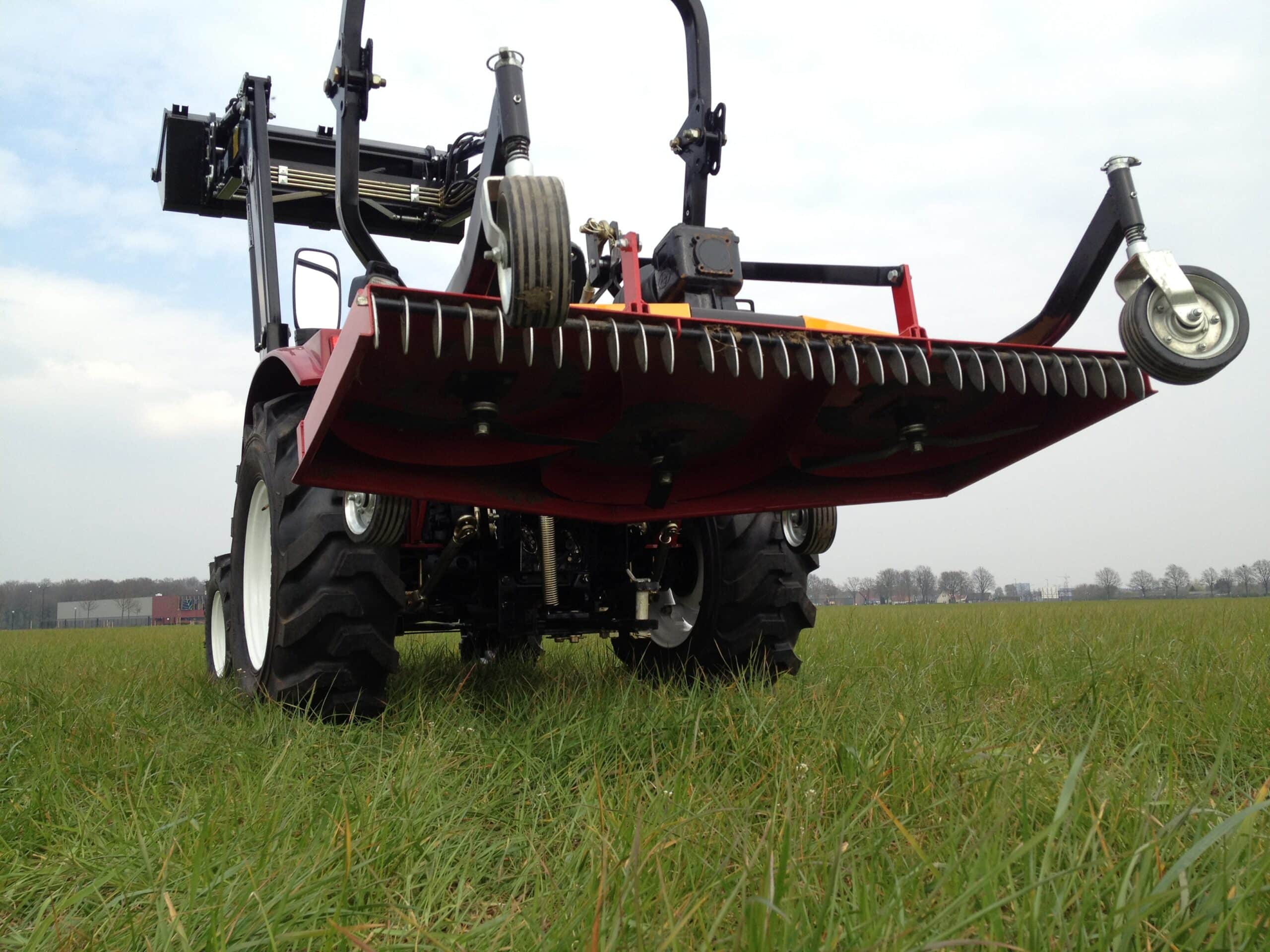
Pasture topper cutting height: how to set it right
The short answer
Set the cutting height of a pasture topper so that you cut off ungrazed tufts, thistles and seeded grasses without scalping the sward itself. Always leave some stubble, and if in doubt, cut a little too high rather than too low.
You set the height with the adjustment on the topper itself and the position of your tractor's three-point linkage. Level the machine, mow a test strip and fine-tune before you do the whole field.
What does a pasture topper actually do?
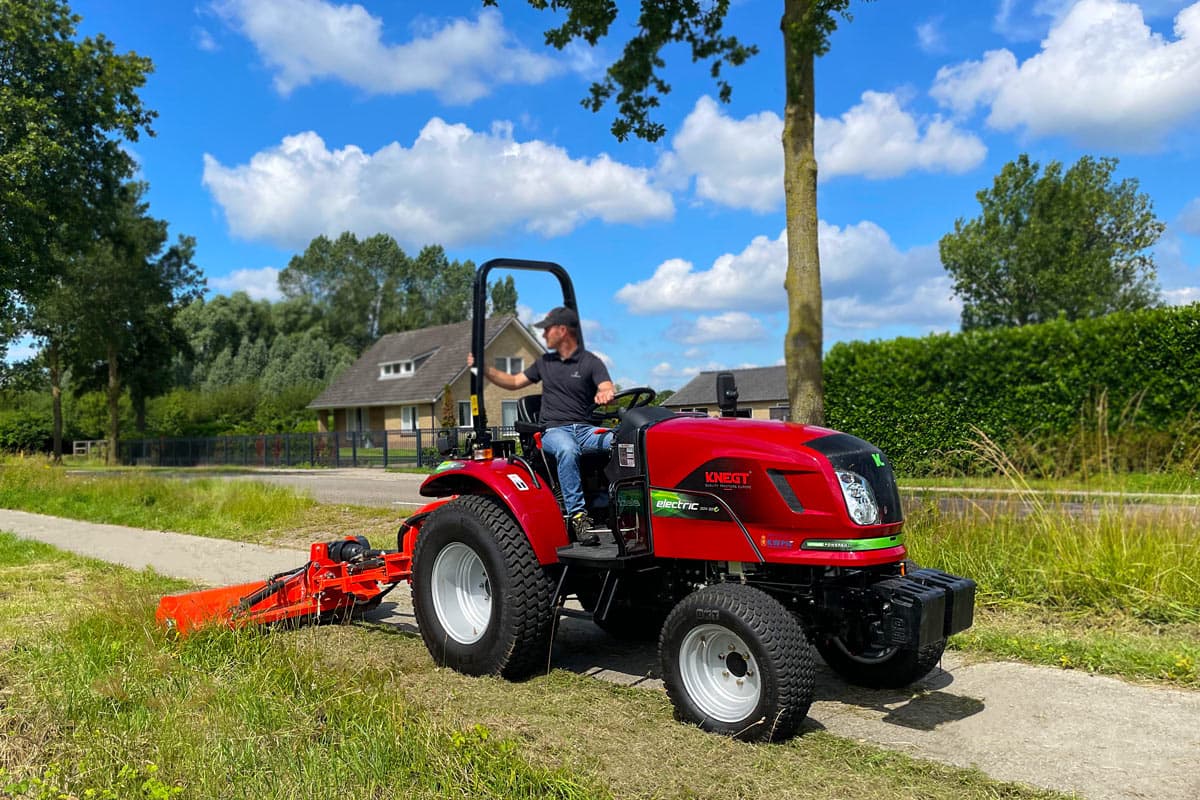
A pasture topper is a tractor-mounted mower that cuts vegetation with rotating blades. The Knegt pasture topper has 3 heavy blades that cut the grass and discharge it at the back. It is built for more than just lawns: coarser growth on verges and pastures is no problem, and a stray branch or molehill is no obstacle.
Topping is mainly done after grazing. Horses, sheep and cattle graze a pasture unevenly: some patches are eaten short, while tufts, rough grasses and weeds remain elsewhere. Cutting off those leftovers helps the grass regrow more evenly and gives weeds less chance to set seed.
Common uses:
- horse and sheep paddocks after grazing
- verges, ditch banks and rough edges
- recreation grounds and larger grass areas that do not need lawn-quality mowing
- fields with molehills or loose branches
Why the right cutting height matters
Cutting height is the most important setting on a pasture topper. Cut too low and the blades hit the ground and molehills. That damages the turf, mixes soil into the grass and causes extra wear on the blades. A sward cut too short also dries out faster and takes longer to recover.
Cut too high and the tufts and weeds simply stay standing, so topping has little effect.
The goal lies in between: rough leftovers gone, sward intact. Exactly how high depends on your grass species, the season, soil moisture and how the field is used. If in doubt, start higher and only go lower if the result is not good enough.
Setting the cutting height in 6 steps
How you adjust the height exactly differs per version, so always follow the manual of your topper or ask your dealer. The general approach is:
- Park the tractor on a flat, hard surface, disengage the PTO, switch the tractor off and remove the key before adjusting anything.
- Attach the topper to the three-point linkage and check that the PTO shaft is secure and the guards are in good order.
- Level the topper both side to side (with the lift arms) and front to back (with the top link). A topper that hangs crooked cuts shorter on one side.
- Set the desired cutting height according to the manual and choose a fixed position for the tractor's linkage, so you can find the same height every time.
- Mow a test strip of a few metres and check the result: are tufts left standing, or do you see bare patches and soil?
- Adjust where needed and only then mow the whole field. Check the height again when conditions change, for example on wetter ground or a different field.
Which Knegt pasture topper suits your tractor?
Knegt supplies the pasture topper in three working widths. All three have 3 blades, a category 1 three-point hitch and a 540 rpm PTO drive with overrun clutch. The PTO shaft is included as standard.
- Pasture topper WB120: working width 120 cm, weight 195 kg, required power 25 hp
- Pasture topper WB150: working width 150 cm, weight 210 kg, required power 25 hp
- Pasture topper WB180: working width 180 cm, weight 230 kg, required power 30 hp
A wider topper finishes a large pasture faster; a narrower one is handier between fences and trees and on smaller plots. Knegt builds electric compact tractors (304G2E, 404G2E and 504G3E) and diesel models (304G2, 404GT and 504GT). Which combination of tractor and topper best suits your land and tasks is best discussed with a Knegt dealer or advisor.
Frequently asked questions
How often should I top my pasture?
That depends on grazing and growth. Many pasture managers top after a grazing period, when tufts and weeds have clearly been left standing.
Can a pasture topper also mow a lawn?
Yes. The Knegt pasture topper mows lawns as well as the coarser growth of verges and pastures.
What does an overrun clutch on a pasture topper do?
An overrun clutch prevents the still-spinning blades from driving the tractor through the PTO when you disengage or slow down the PTO. The blades then run down freely.
Can I use a pasture topper behind an electric compact tractor?
The electric Knegt 304G2E and 404G2E have a live PTO with two speeds, so you can also drive implements such as a mower electrically. Ask your dealer to confirm which topper suits the model you have or want to buy.
See the pasture topper at work
Would you like to know which pasture topper and which Knegt tractor suit your fields? Request a free demo and see the combination at work on your own land. Prefer to talk first? Book an advice session, request a quote or find a Knegt dealer near you.