Buying an electric tractor: what to look for
The short answer
When buying an electric tractor, look at five things: power that matches your work, run time per charge and how you charge, lift capacity and PTO for your implements, dimensions and manoeuvrability on your site, and the total cost including service and tax benefits.
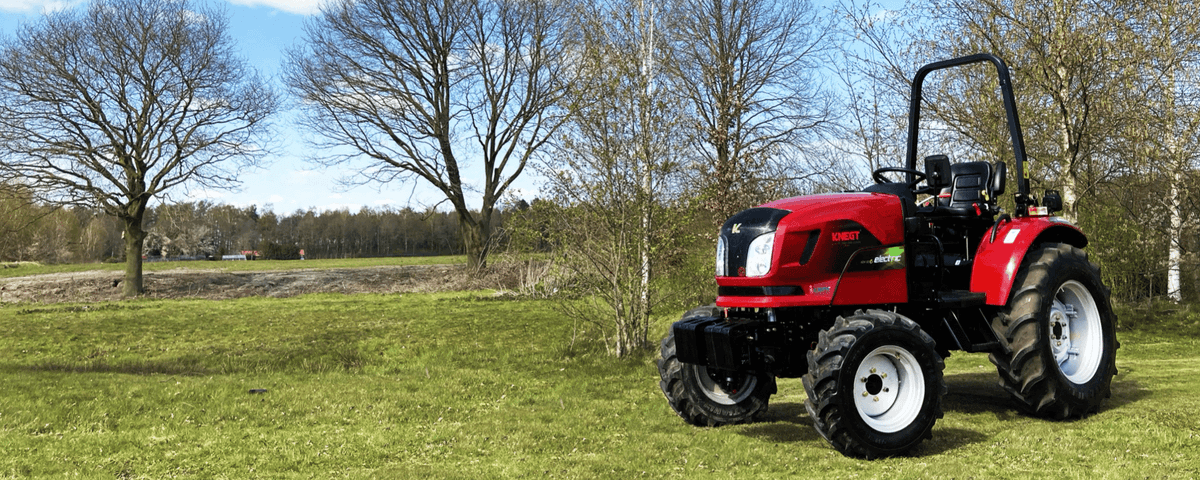
Since 2006, Knegt has developed and built compact tractors in its own workshop in Veldhoven, the Netherlands. The electric range consists of three models: the 304G2E (45 hp), the 404G2E (55 hp) and the 504G3E (65 hp). Below, you will find what to look for on each point and how the three models compare.
1. Choose the power that matches your work
With an electric tractor, total horsepower says less than with diesel. Knegt uses two separate electric motors: one for driving and one of 15 hp for the hydraulics. This leaves hydraulic power available for a front loader or implement, even while you are driving.
- Knegt 304G2E: 30 hp drive motor + 15 hp hydraulics. Compact and agile, strong in stables, greenhouses, equestrian centres and sports grounds.
- Knegt 404G2E: 40 hp drive motor + 15 hp hydraulics. An all-rounder for mowing, transport, grounds maintenance and earthwork.
- Knegt 504G3E: 50 hp drive motor + 15 hp hydraulics. The flagship, for intensive work in agriculture, municipal work and land management.
In doubt between two models? Look mainly at the heaviest implement you will use and how long you work with it in one go.
2. Run time, battery and charging
Run time depends heavily on how hard you work the tractor. According to the specifications, the 304G2E runs 3 to 6 hours, the 404G2E 3 to 9 hours and the 504G3E 7 to 8 hours on a single charge, depending on workload and the chosen battery.
All three models have a lithium battery rated for 3,500 charge cycles, and you can top up in between, for example during the lunch break.
- Charge from a standard 230V socket or with a fast charger.
- With the optional fast charger, you charge from 30 to 80% in about 2.5 hours.
- An extra battery pack extends run time for long days.
So do not just count on the maximum run time, but on your own working day: how many hours does the tractor really run, and is there a moment to top up?
3. Implements, lift capacity and PTO
A tractor is only as useful as the implements you attach to it. So check in advance whether lift capacity and PTO suit your mower, rotary tiller, sweeper or spreader.
- PTO: the 404G2E and 504G3E have a PTO with 540 and 1,000 rpm.
- 3-point lift capacity (61 cm behind the ball): 665 kg on the 404G2E and 1,100 kg on the 504G3E.
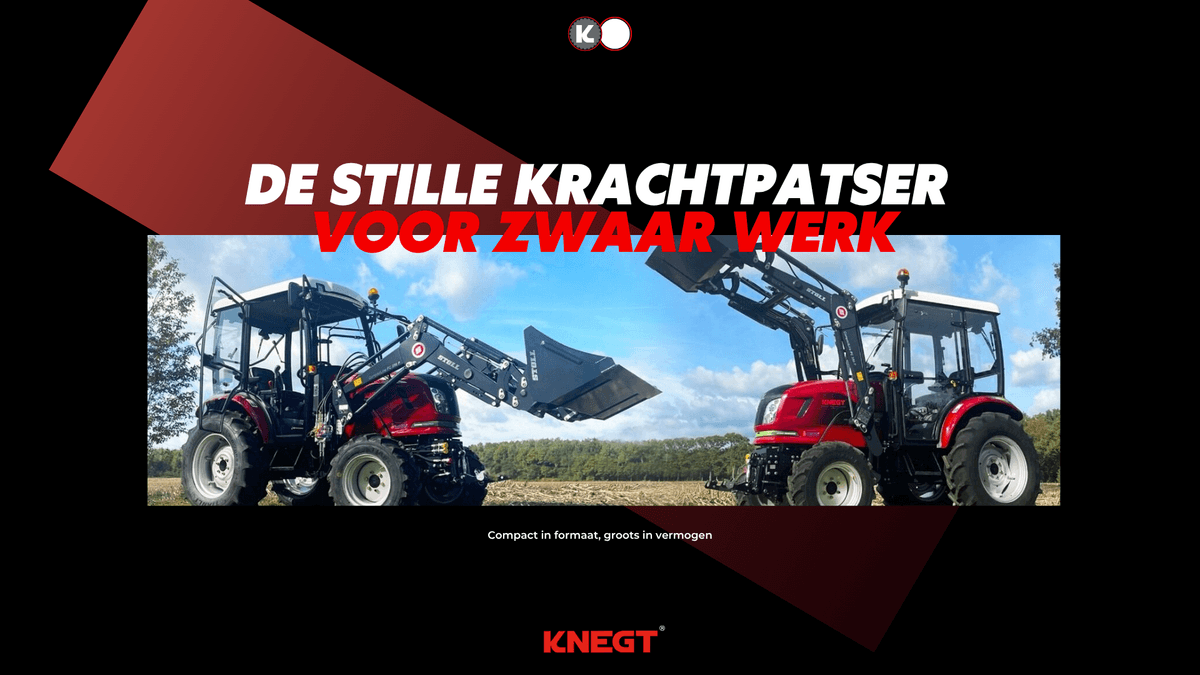
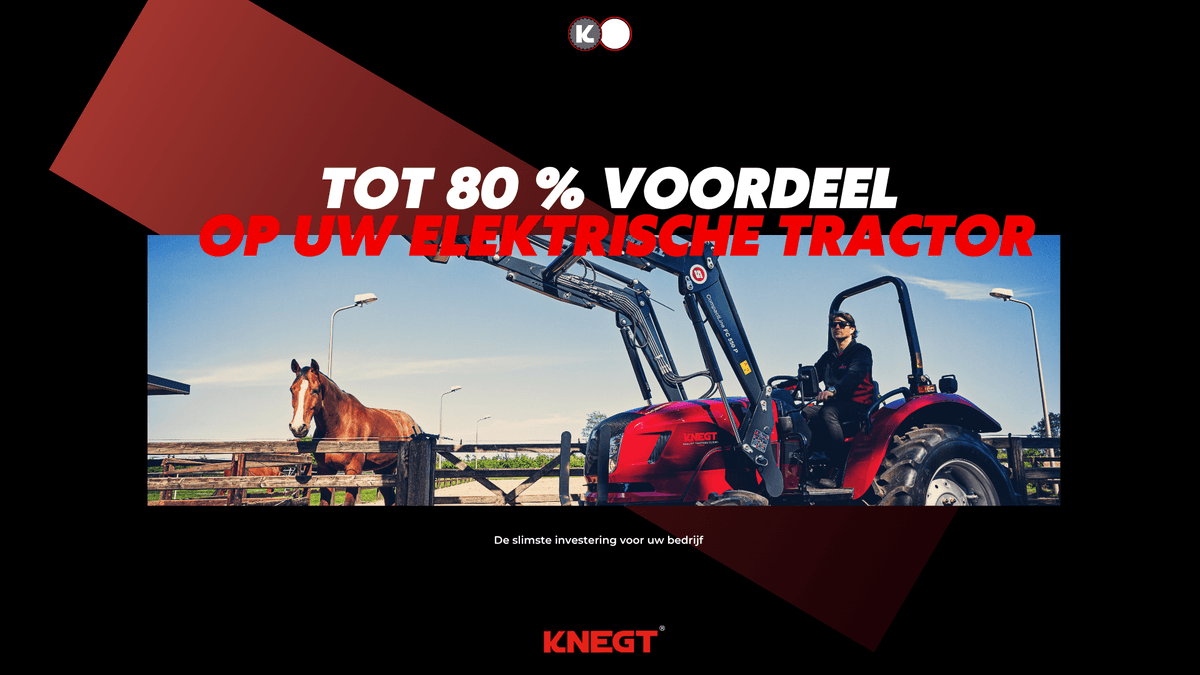
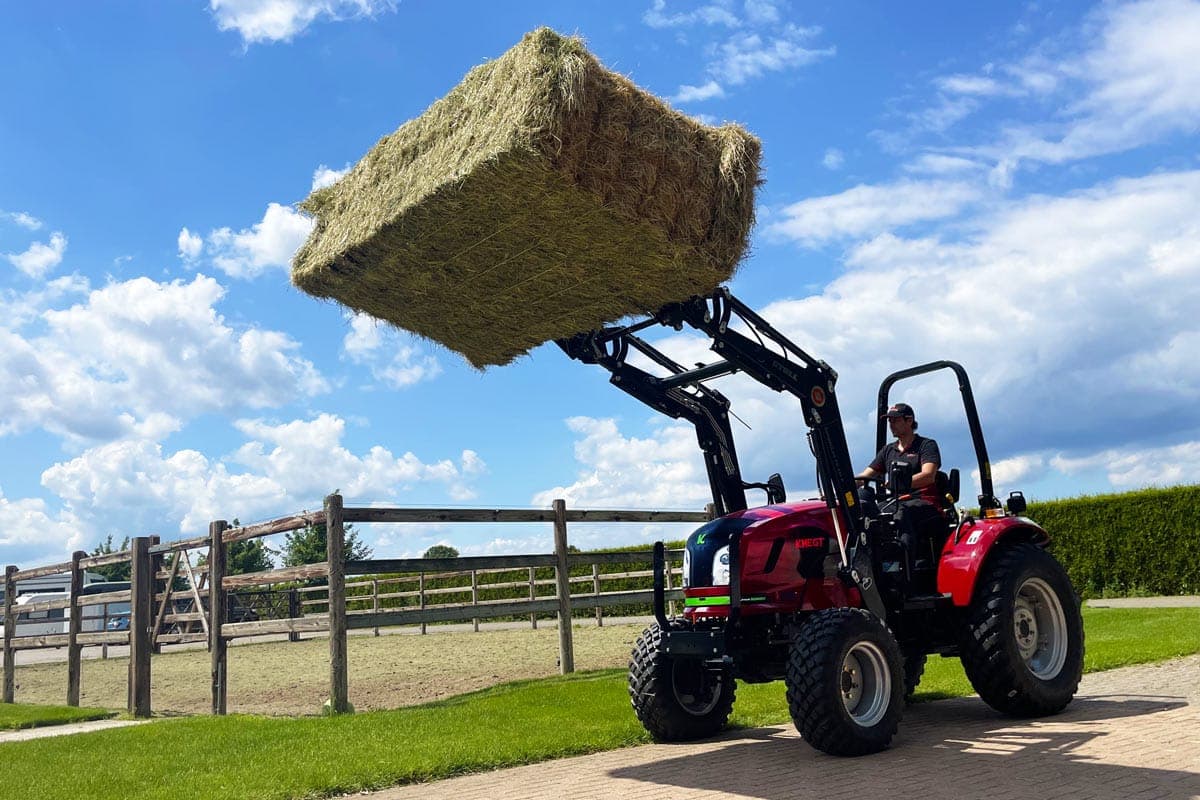
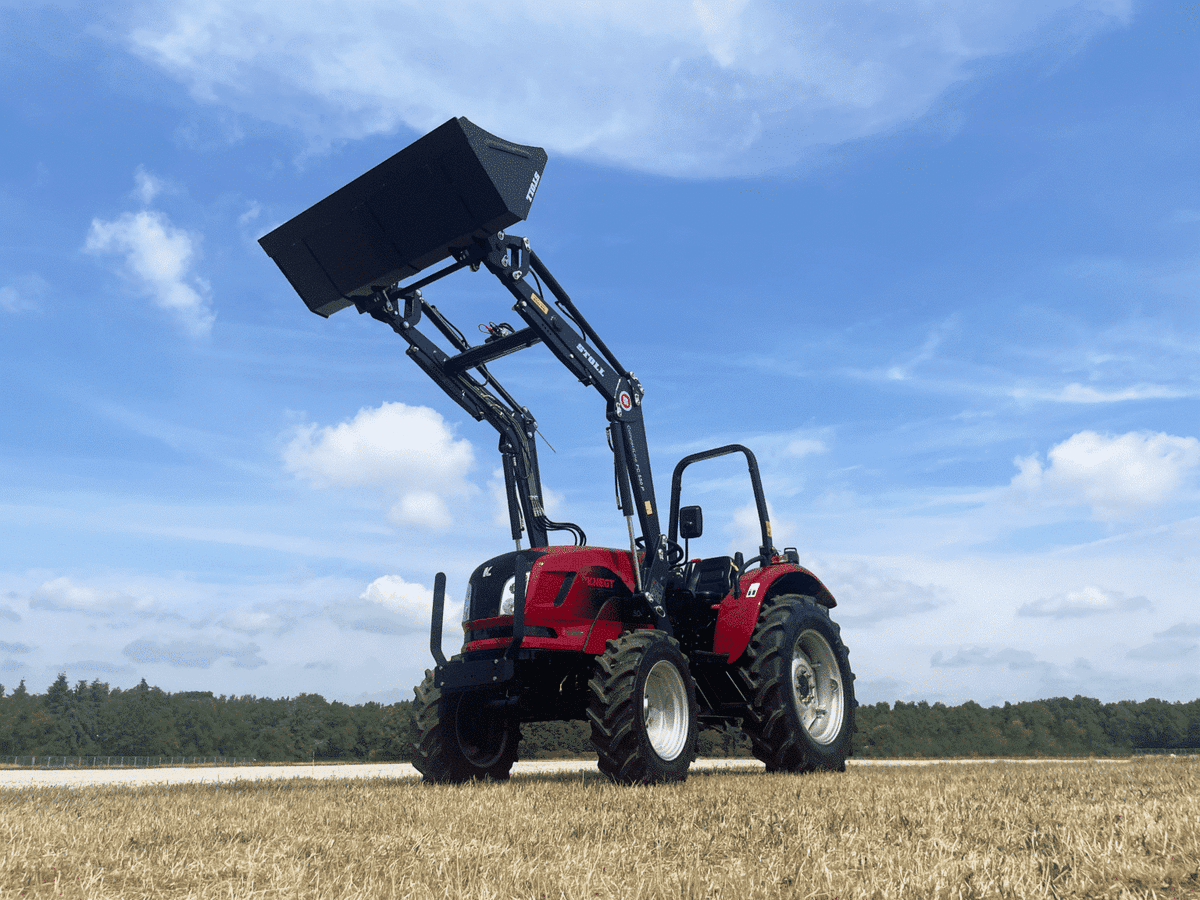
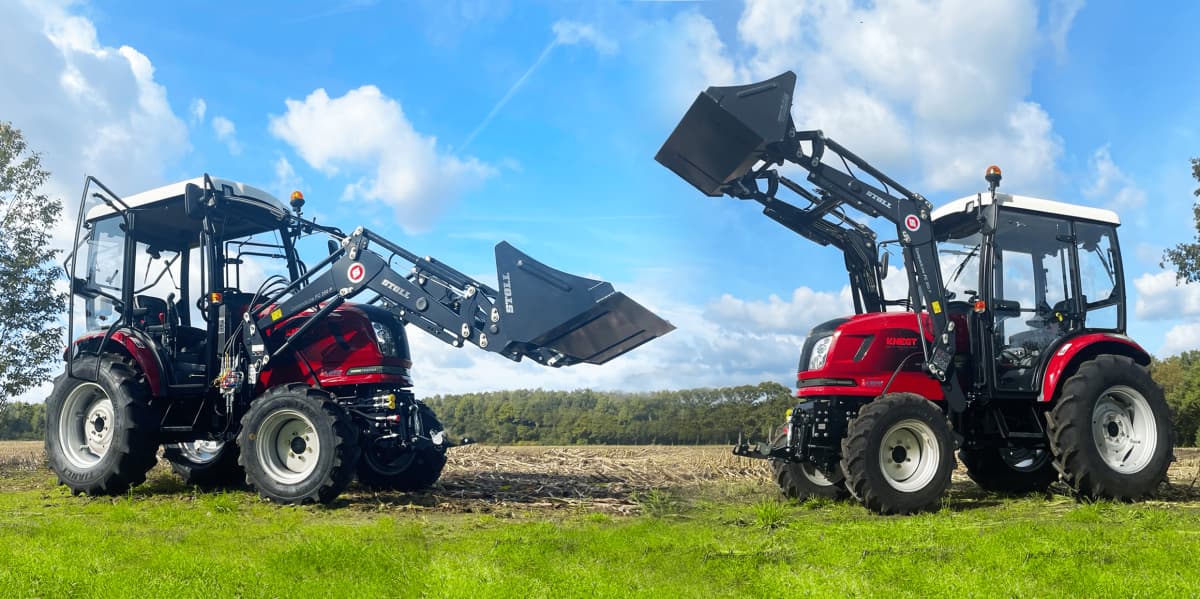
- Options: a comfort cab and a Stoll front loader are available.
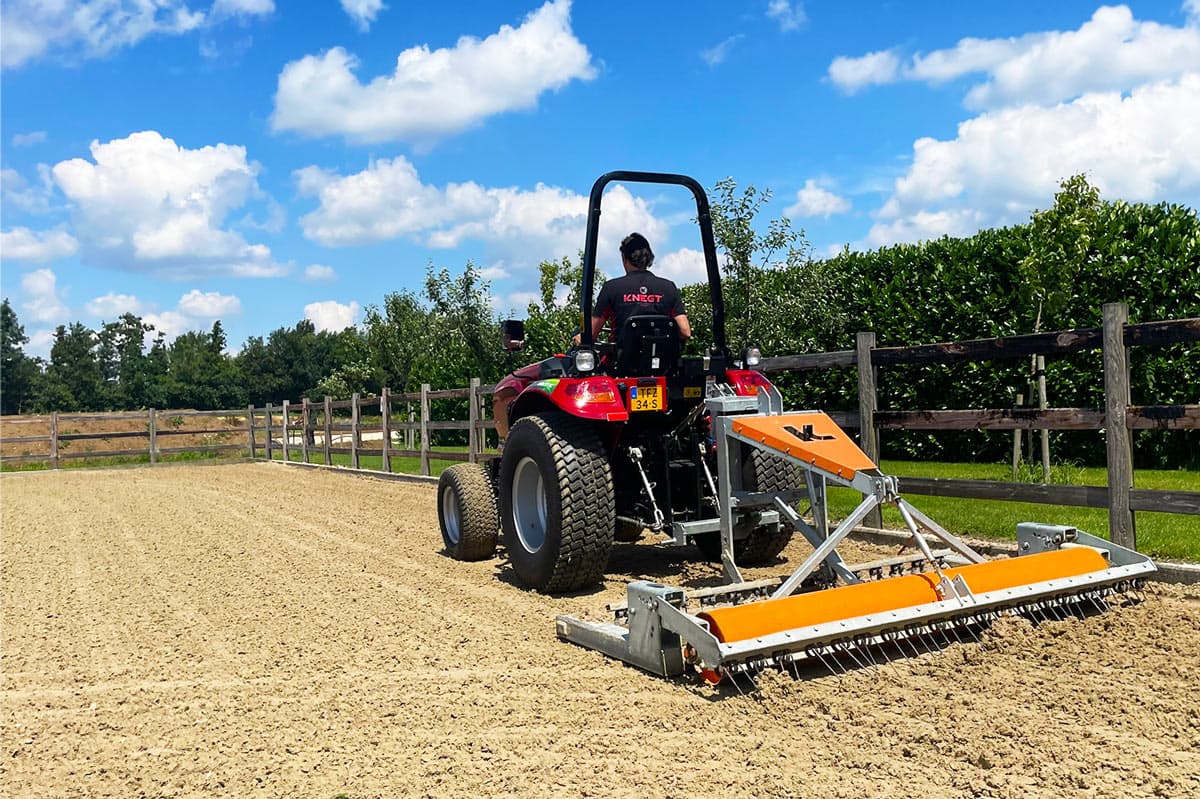
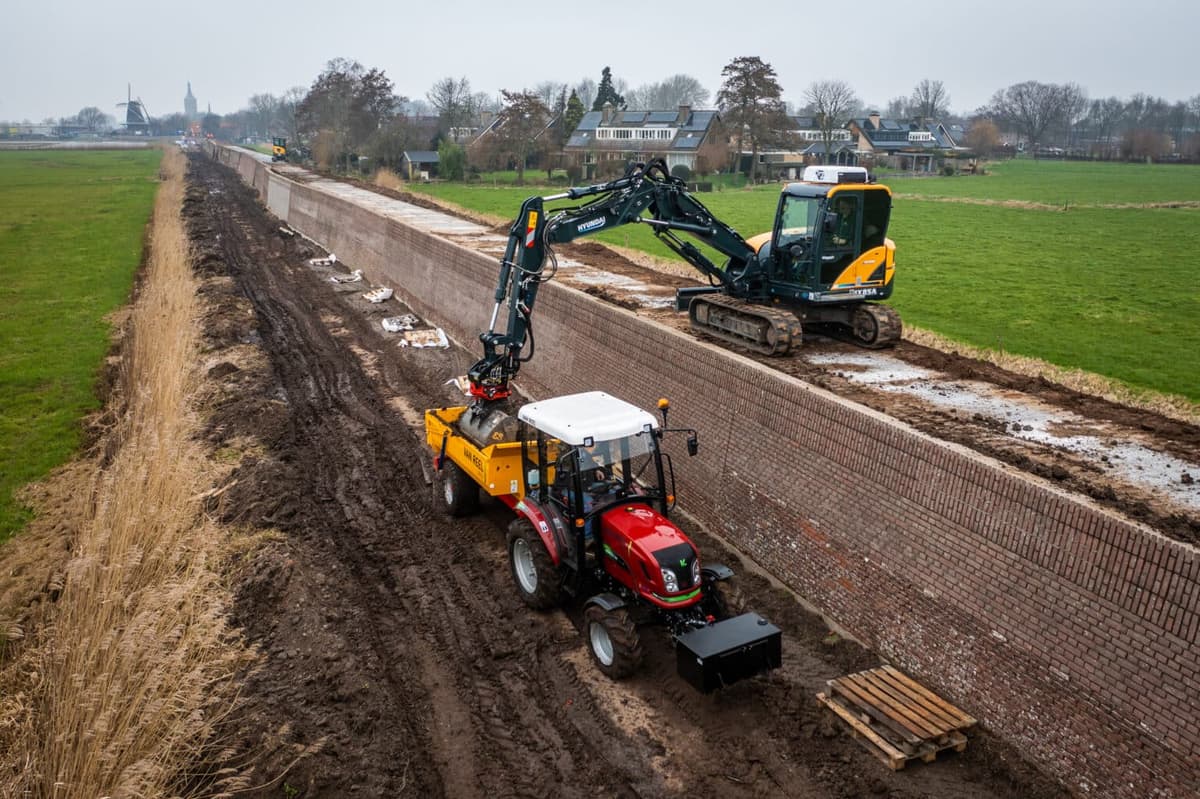
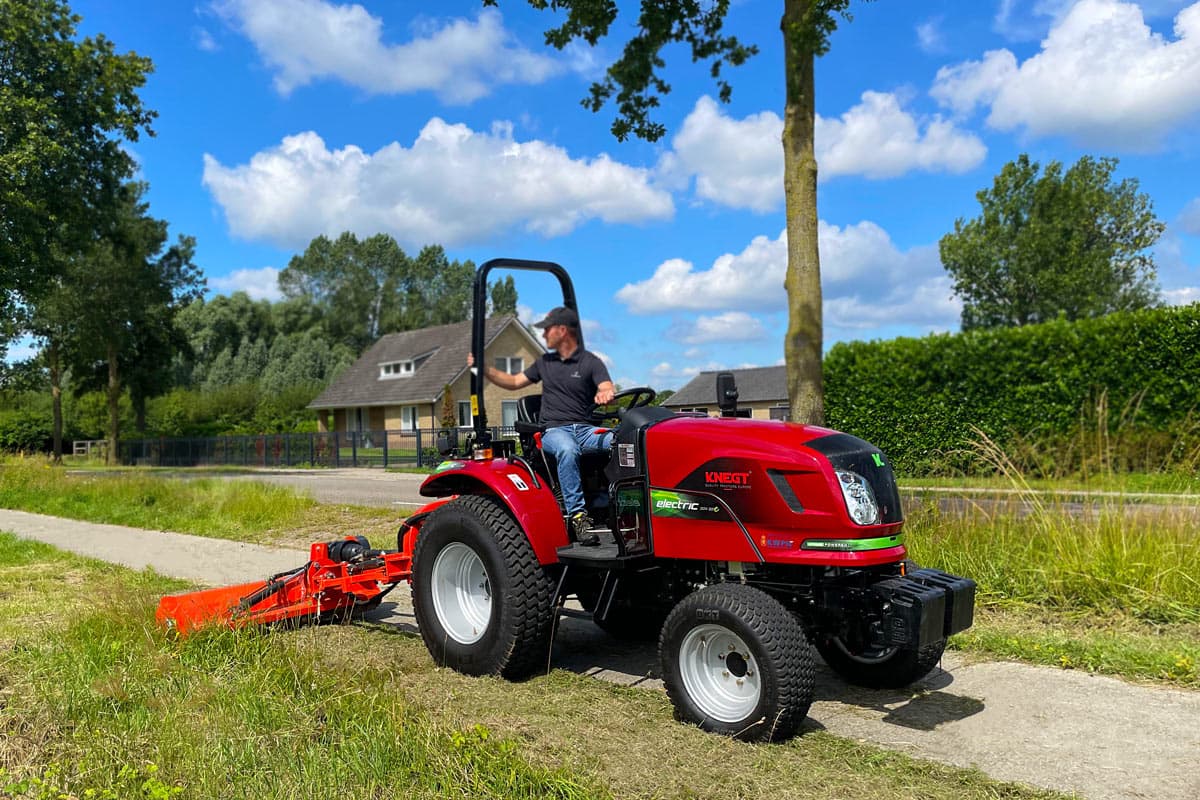
Knegt also supplies a wide range of implements and accessories, so you can tailor the tractor to your work, from mowing and sweeping to loading and transport.
4. Dimensions, weight and manoeuvrability
In a narrow yard, a greenhouse or between stables, manoeuvrability often matters more than extra power. So compare the dimensions too:
- 304G2E: 161 cm wide, 1,760 kg unladen, turning circle 230 cm.
- 404G2E: 167 cm wide, 1,888 kg unladen, turning circle 380 cm.
- 504G3E: 161 cm wide, 2,258 kg unladen, turning circle 370 cm.
All three have four-wheel drive and power steering. They reach up to 25 km/h (the 504G3E up to 27.5 km/h), are CE approved and road legal in Europe. Because they are quiet and emission-free, you can also use them in noise-sensitive areas and indoor spaces such as stables and warehouses.
5. Price and total cost of ownership
The starting prices of the electric Knegt tractors are € 37,950 for the 304G2E, € 45,950 for the 404G2E and € 52,950 for the 504G3E (excl. VAT). You can see the current price of your configuration in the configurator on the models page.
For a fair comparison with diesel, look at the total cost over the lifetime:
- No diesel costs: you only pay for the electricity you use.
- Less maintenance: an electric motor has no engine oil, fuel filters or injectors. A service is due every 350 hours or once a year.
- Tax benefit in the Netherlands: the Dutch Environment List 2026 (Milieulijst) includes electrically driven mobile machinery (code E 3413), with the agricultural tractor as an example. This gives a 27% environmental investment allowance (MIA) on 90% of the investment, for investments from € 25,000 excl. VAT. Conditions apply, such as outdoor use. Outside the Netherlands, other schemes apply; ask your accountant or adviser about the options in your country.
- Financing: Knegt works with De Lage Landen (DLL) for suitable financial solutions.
New Knegt tractors come with a two-year factory warranty, and extended warranty packages are available.
Frequently asked questions
How long does the battery of an electric tractor last on one charge?
At Knegt, this ranges from 3 to 9 hours depending on the model, workload and battery choice. Topping up in between or adding an extra battery pack lets you work longer.
Can I charge an electric tractor from a normal socket?
Yes, from a standard 230V socket. This takes longer than with the optional fast charger, which charges from 30 to 80% in about 2.5 hours.
Is an electric tractor powerful enough for heavy work?
The 504G3E has 65 hp, a PTO with 540 and 1,000 rpm and a lift capacity of 1,100 kg. For most compact tractor tasks, that is more than enough. Discuss your heaviest job with a dealer to choose the right model.
Is an electric Knegt allowed on public roads?
Yes. The tractors are CE approved and road legal in Europe.
Test drive and personal advice
Comparing on paper is a good start, but you only notice the difference when you drive one yourself: quiet, instant power and no exhaust fumes. Request a free demo, book a consultation or find a Knegt dealer near you. Together we will work out which model, battery and implement configuration suits your work.