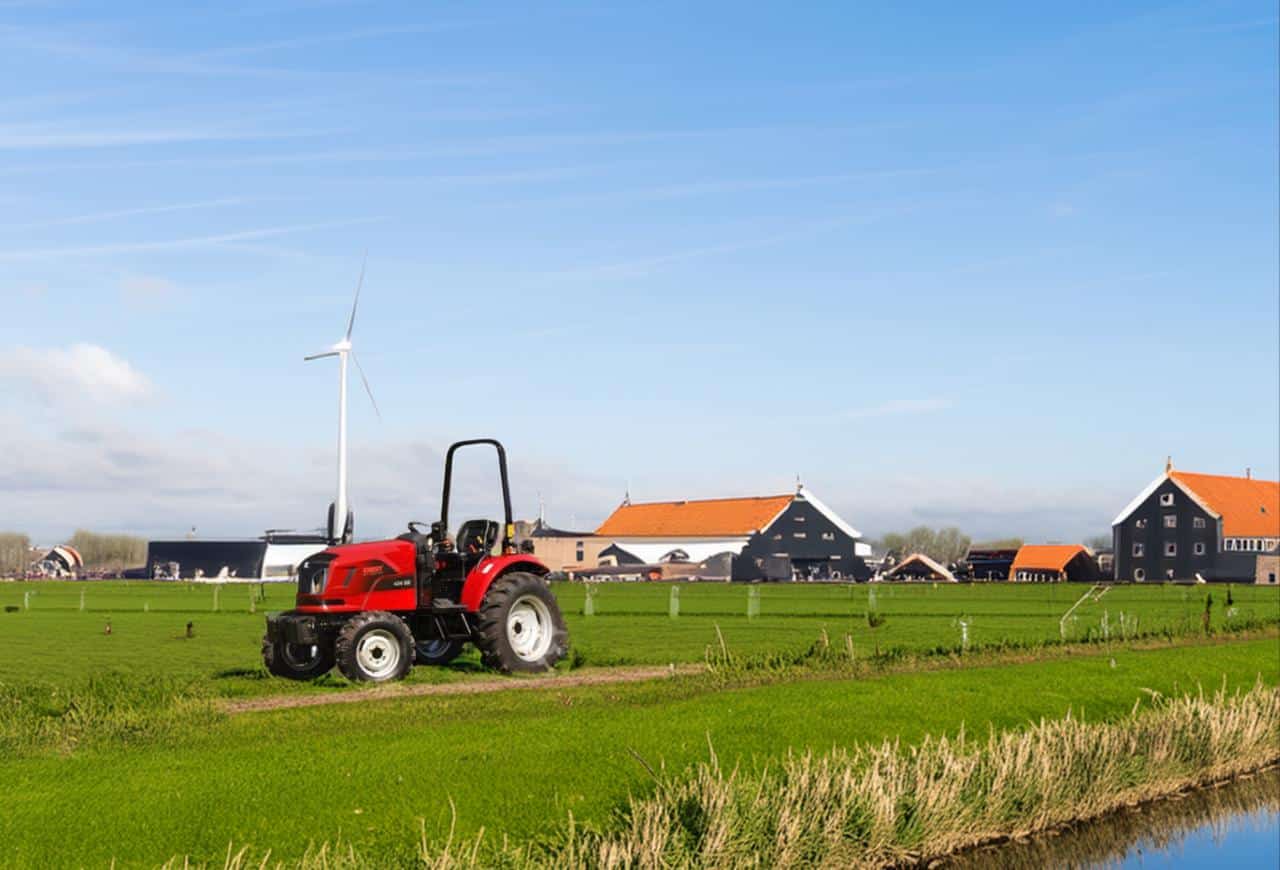
Fully electric tractor: what does 100% electric mean?
The short answer
A fully electric tractor has no combustion engine on board. All its energy comes from a battery: for driving as well as for the hydraulics and the PTO. So there is no diesel tank, no exhaust and no engine idling.
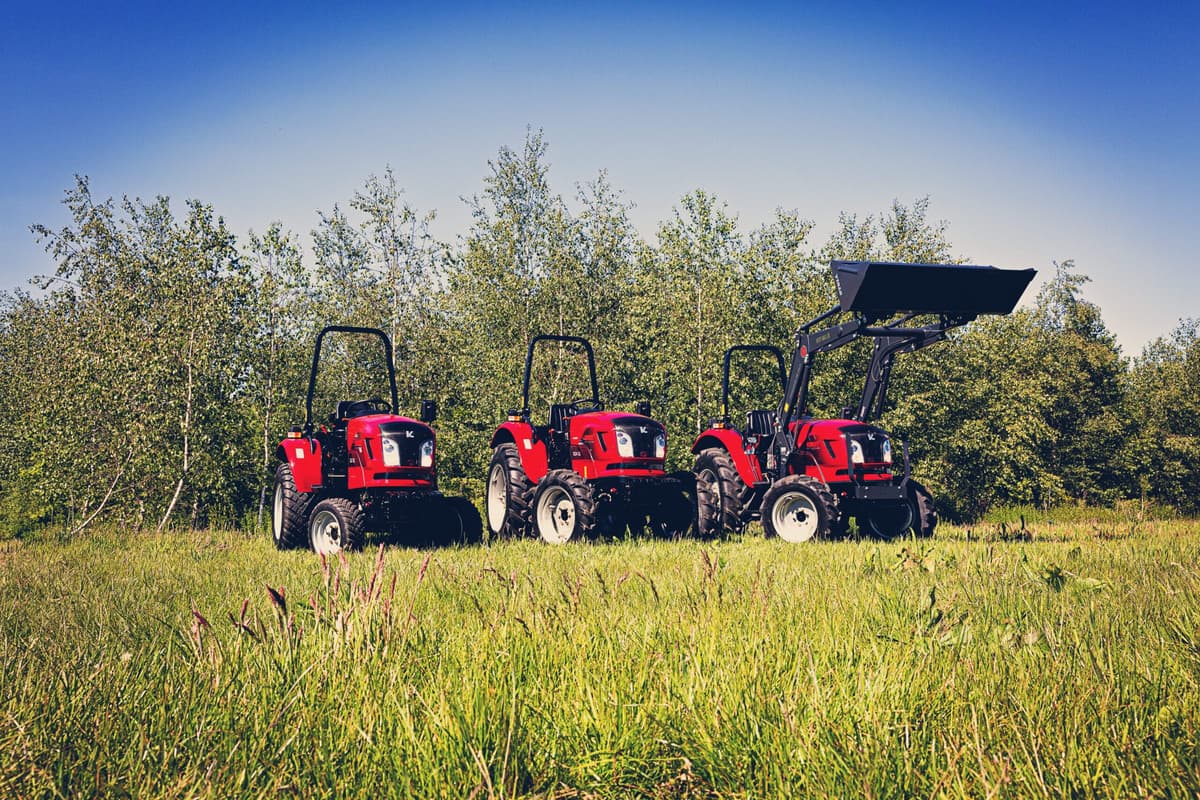
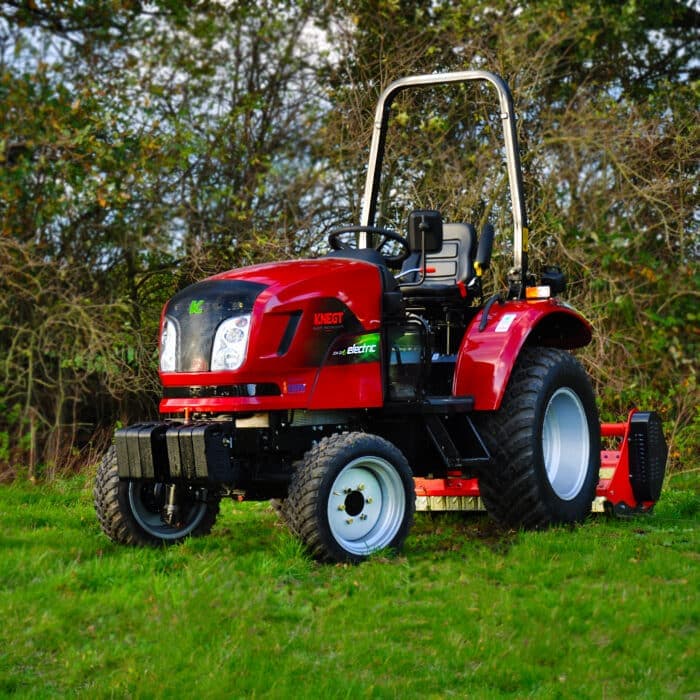
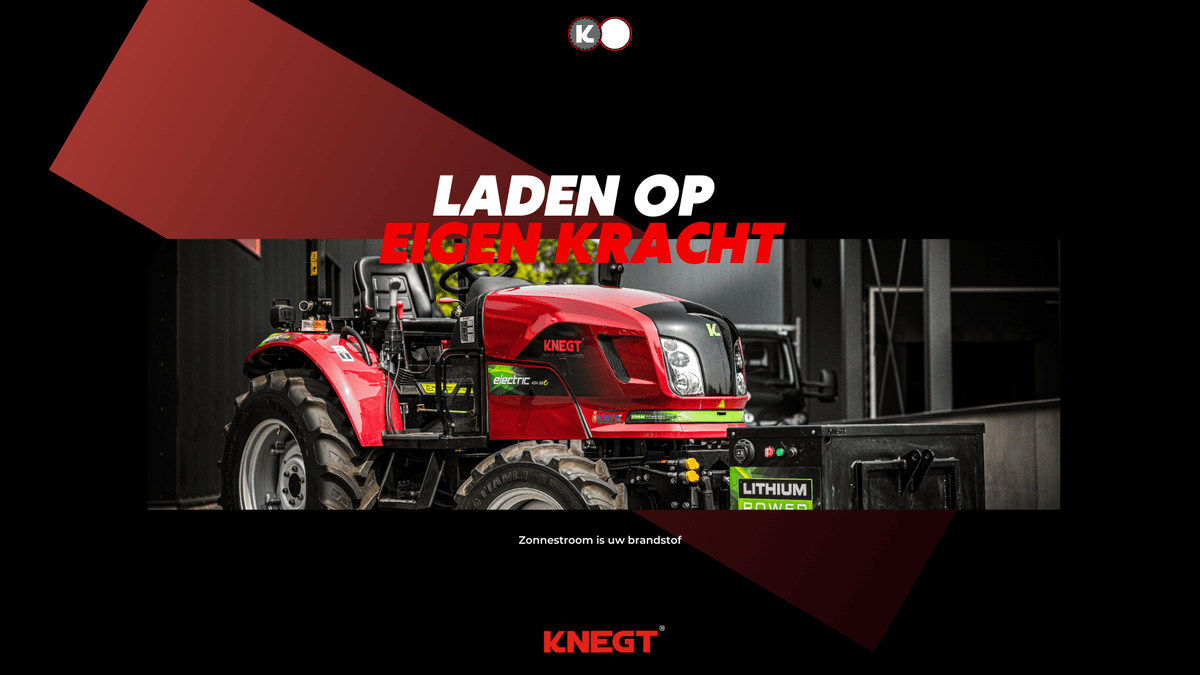
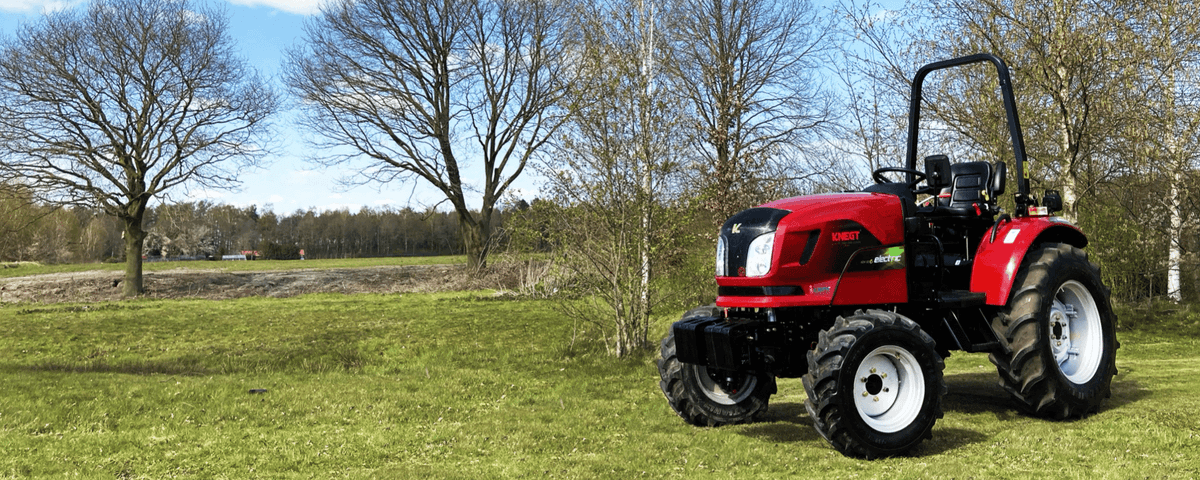
That is what sets a 100% electric tractor apart from a hybrid tractor, which combines a combustion engine with electric components. Knegt builds three fully electric compact tractors: the 304G2E (45 hp), the 404G2E (55 hp) and the 504G3E (65 hp).
Fully electric, hybrid or diesel: the differences
Not every tractor marketed as electric is fully electric. Broadly speaking, there are three types of drive:
- Diesel: a single combustion engine drives the wheels, the hydraulic pump and the PTO. You fill up with diesel and the engine produces exhaust gases.
- Hybrid: a combustion engine works together with electric components, for example an electric motor or a battery that supports the engine. Part of the work is done electrically, but there is still a fuel engine on board that needs refuelling and servicing.
- Fully electric: electric motors draw all their energy from a battery that you charge from a socket. No fuel and no exhaust gases are involved.
So the difference is not one single component but the entire energy source. As soon as there is a combustion engine in the machine, it is not 100% electric, however efficient or quiet it may be.
How do you recognise a fully electric tractor?
Not sure when reading a spec sheet or brochure? These questions quickly tell you where you stand:
- Is there a fuel tank or filler cap? If so, the tractor is not fully electric.
- Where does the energy for the hydraulics come from? On a fully electric tractor, the hydraulic pump is driven electrically too. On a Knegt, that is a separate 15 hp electric motor.
- Is the battery capacity stated in kWh? With Knegt you choose between a 24 kWh and a 34 kWh lithium battery.
- How is the working time expressed? For a fully electric tractor it is hours per battery charge, not litres per hour.
- Are charging times and charging options listed? A Knegt charges from a standard 230V socket or with an optional fast charger.
If the specifications still mention an engine displacement in litres, an emissions class such as Stage V or a tank capacity, you are dealing with a diesel engine, whether or not in a hybrid set-up.
What does 100% electric mean in practice?
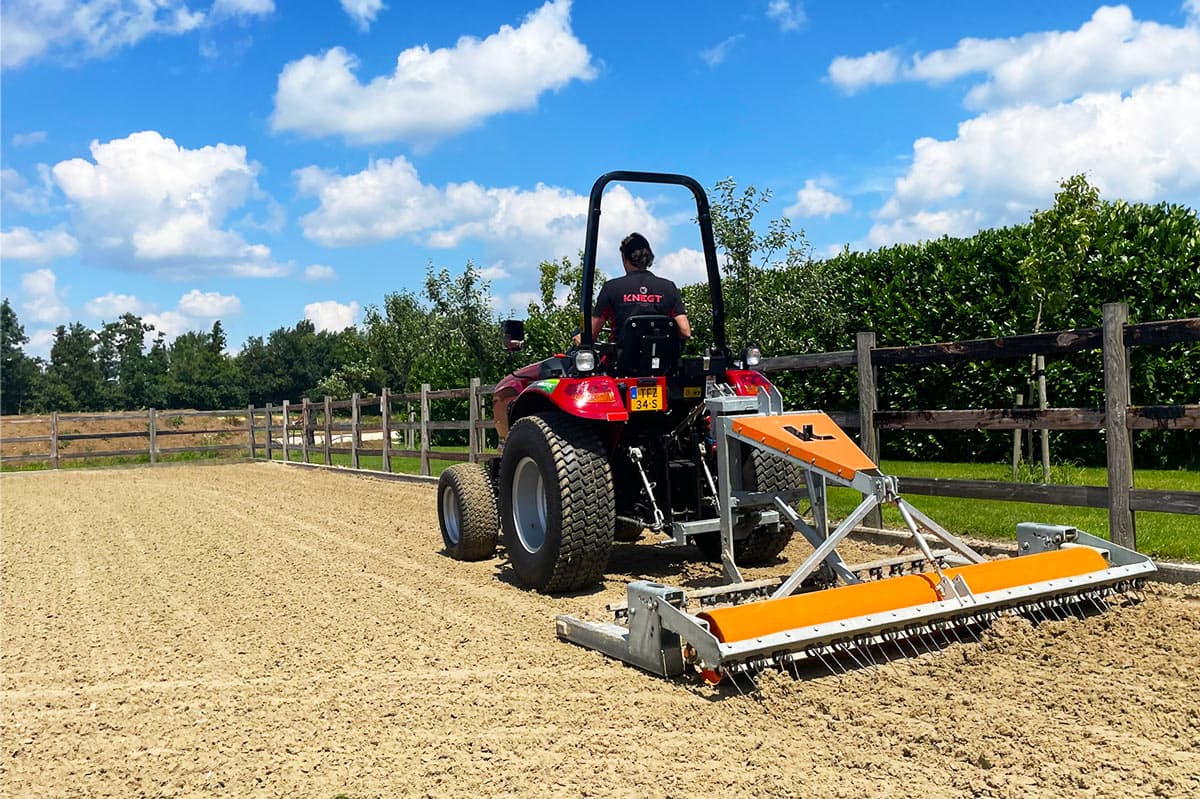
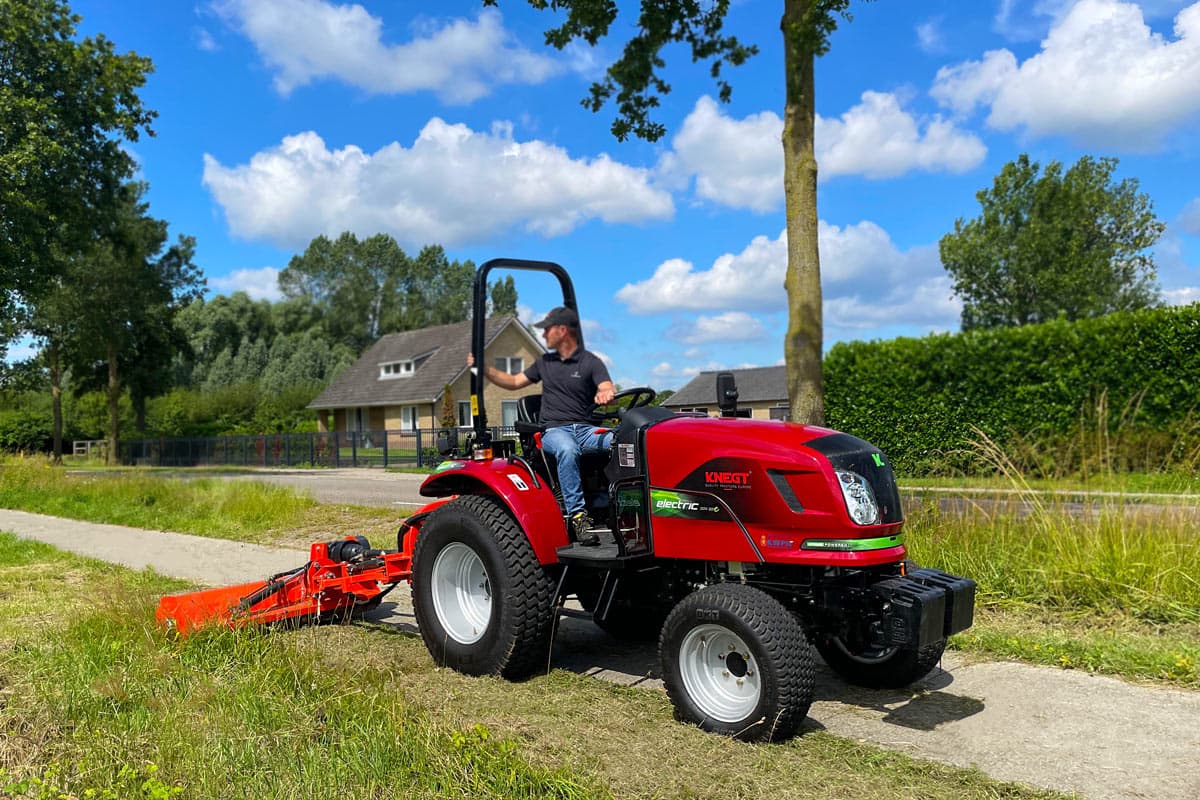
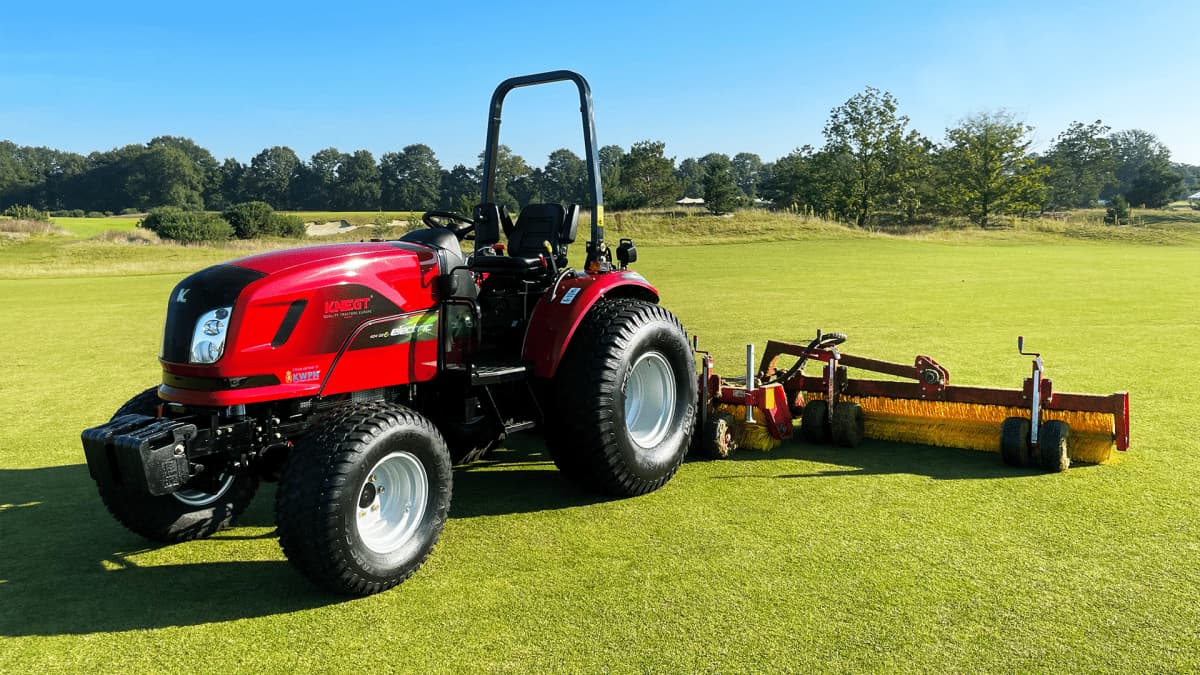
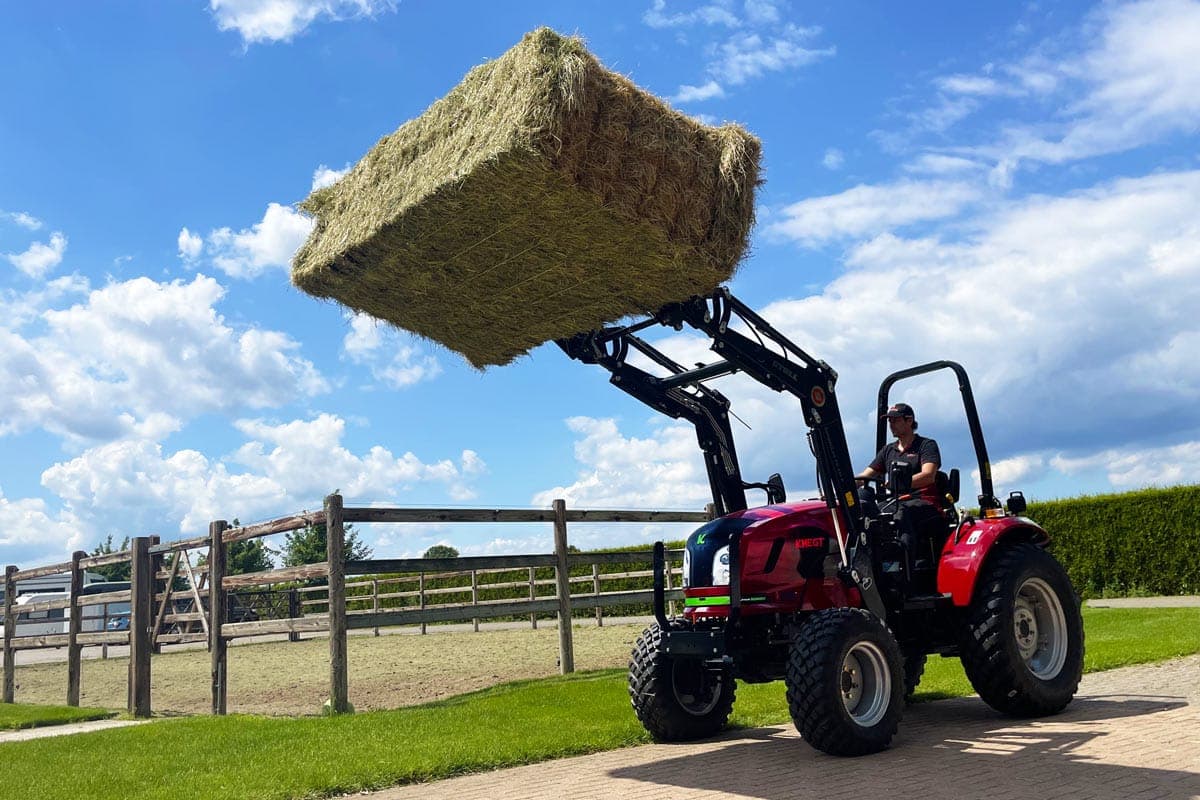
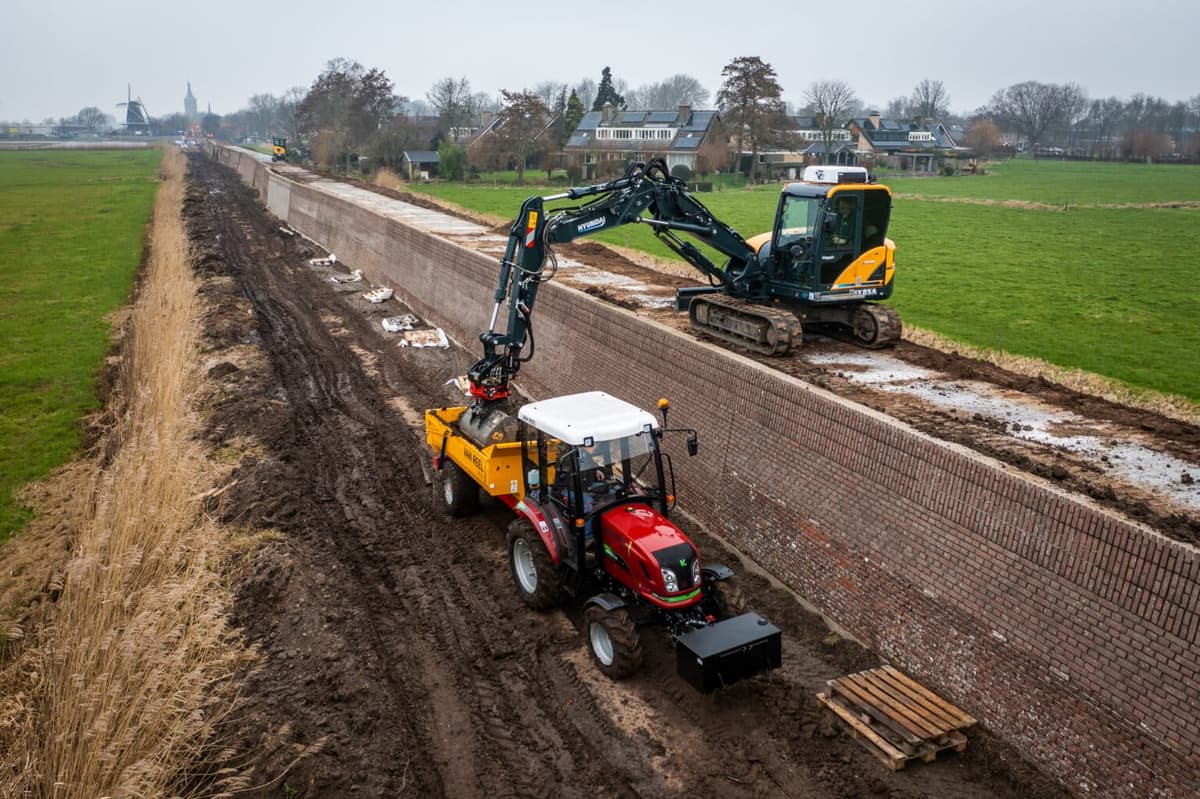
The work itself does not change: you mow, sweep, load, transport and work with implements on the three-point hitch. What does change is mainly noticeable in the environment you work in.
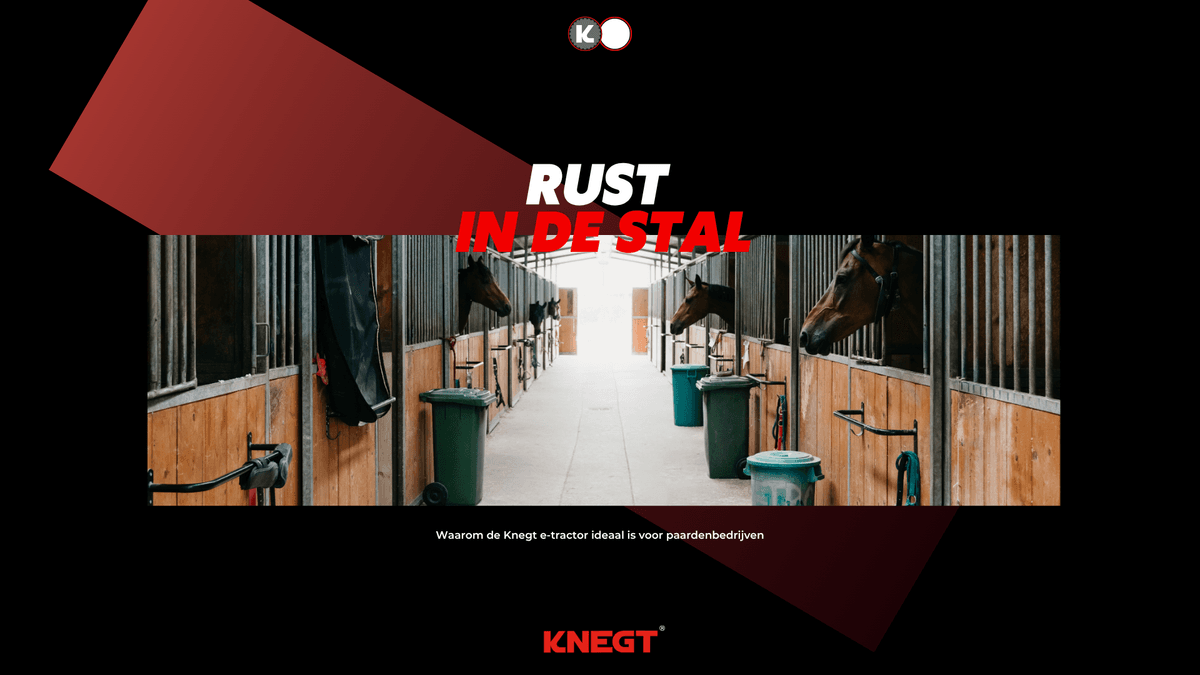
- No exhaust gases: you can work indoors, for example in a stable, greenhouse, barn or warehouse.
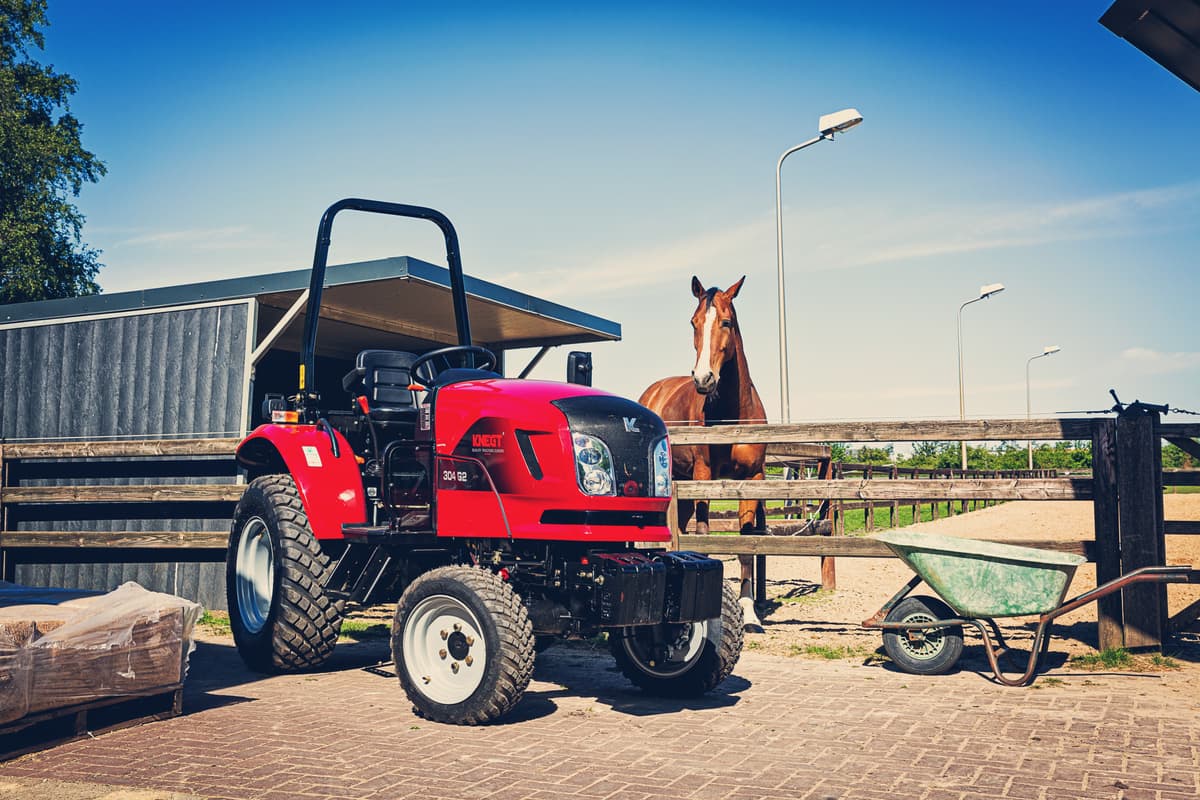
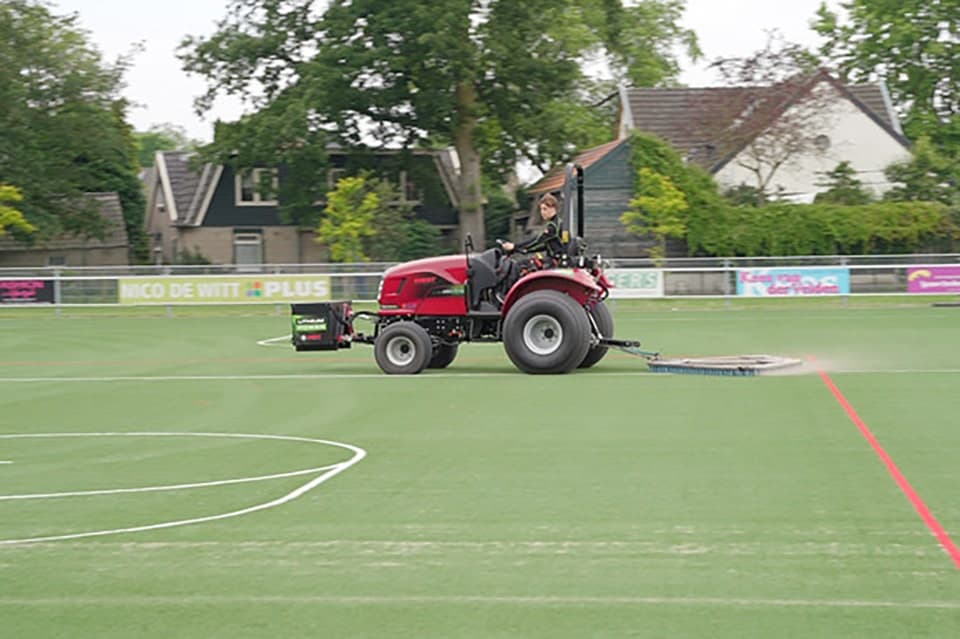
- Virtually silent: pleasant around animals, in residential areas, at sports grounds and at leisure parks.
- No diesel storage: you do not need a tank or jerry cans on site, just a fixed charging point.
- No idle consumption: when the tractor is standing still, it uses no energy.
- Simpler maintenance: an electric motor has no engine oil, fuel filters or injectors. At Knegt, a service is scheduled every 350 operating hours or once a year.
On the other hand, you plan your charging. The working time per charge on a Knegt is about 3 to 9 hours, depending on the model, workload and battery choice. A full charge via 230V takes 8 to 10 hours; the fast charger takes the battery from 30 to 80 percent in about 2.5 hours. You can top up at any time, and an extra battery pack is available for long days.
Knegt's fully electric models
Knegt has been developing and building compact tractors in its own workshop in Veldhoven, the Netherlands, since 2006. According to Knegt, the company was the first in the world with a 100% electric compact tractor. All electric models have two separate electric motors: one for driving and one for the hydraulics.
- Knegt 304G2E: 30 hp drive motor + 15 hp hydraulics, 45 hp in total. From € 37,950 excl. VAT.
- Knegt 404G2E: 40 hp drive motor + 15 hp hydraulics, 55 hp in total. From € 45,950 excl. VAT.
- Knegt 504G3E: 50 hp drive motor + 15 hp hydraulics, 65 hp in total. From € 52,950 excl. VAT.
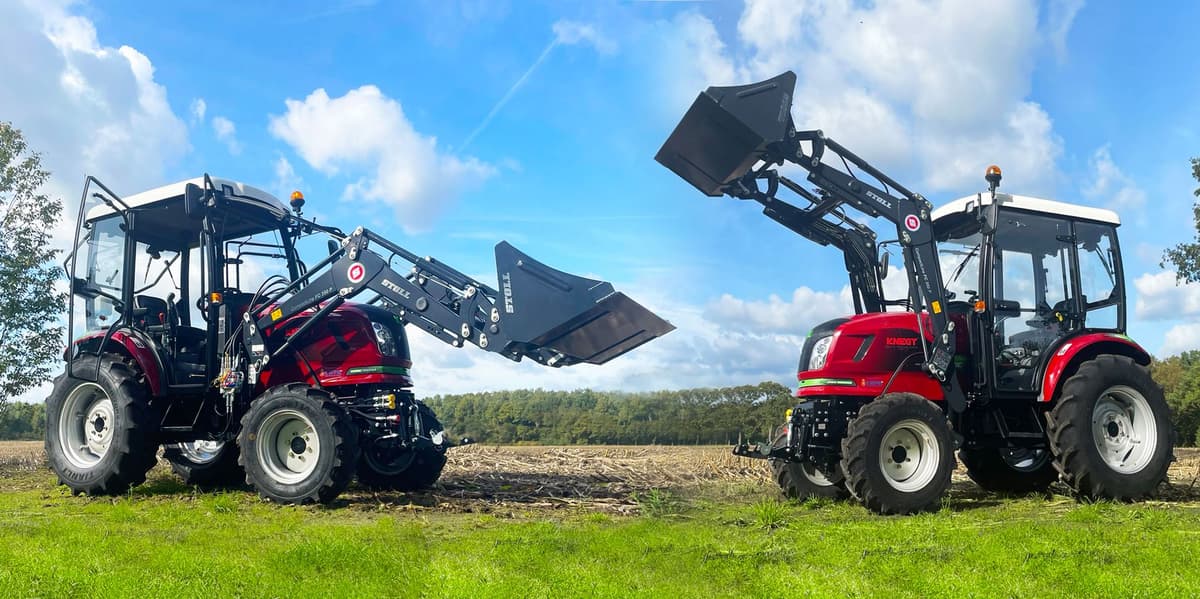
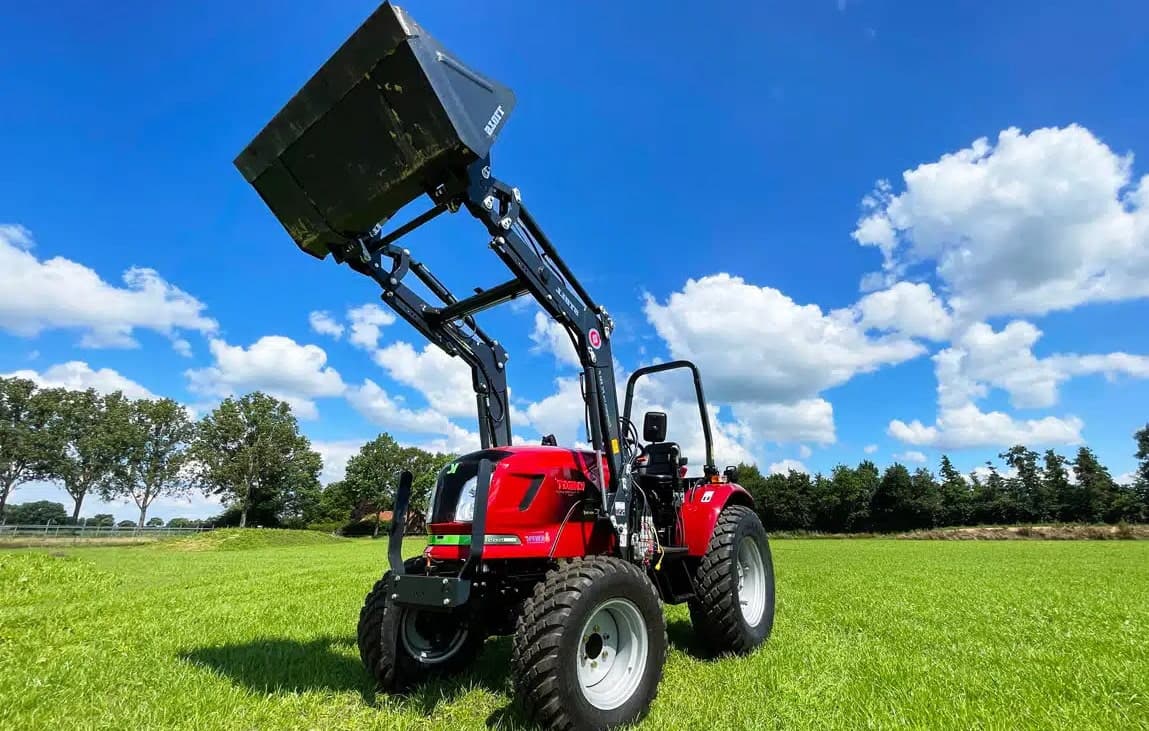
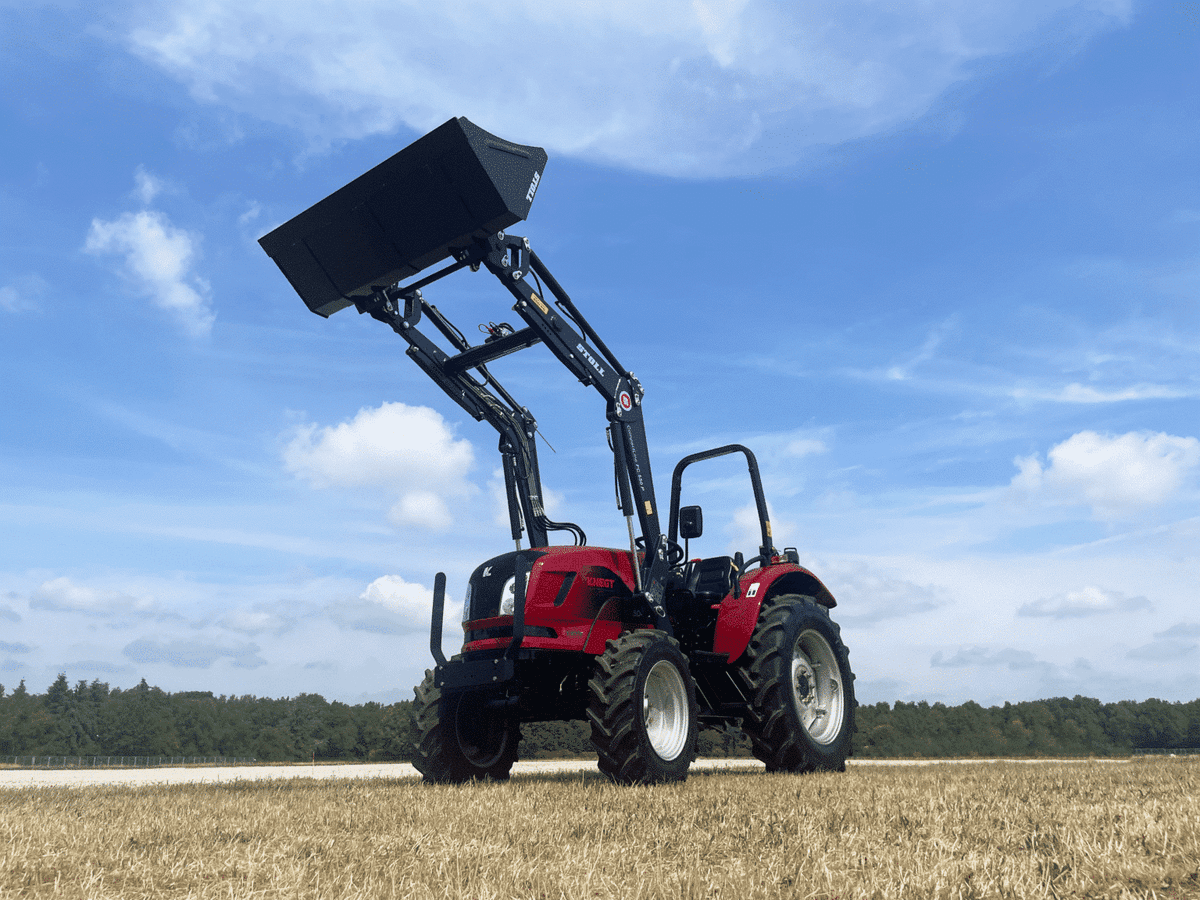
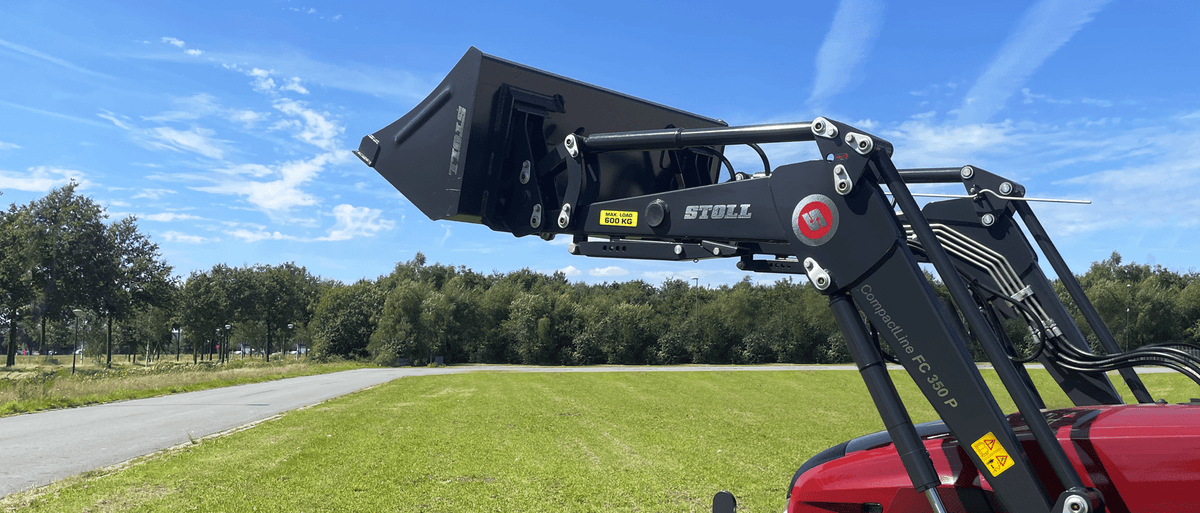
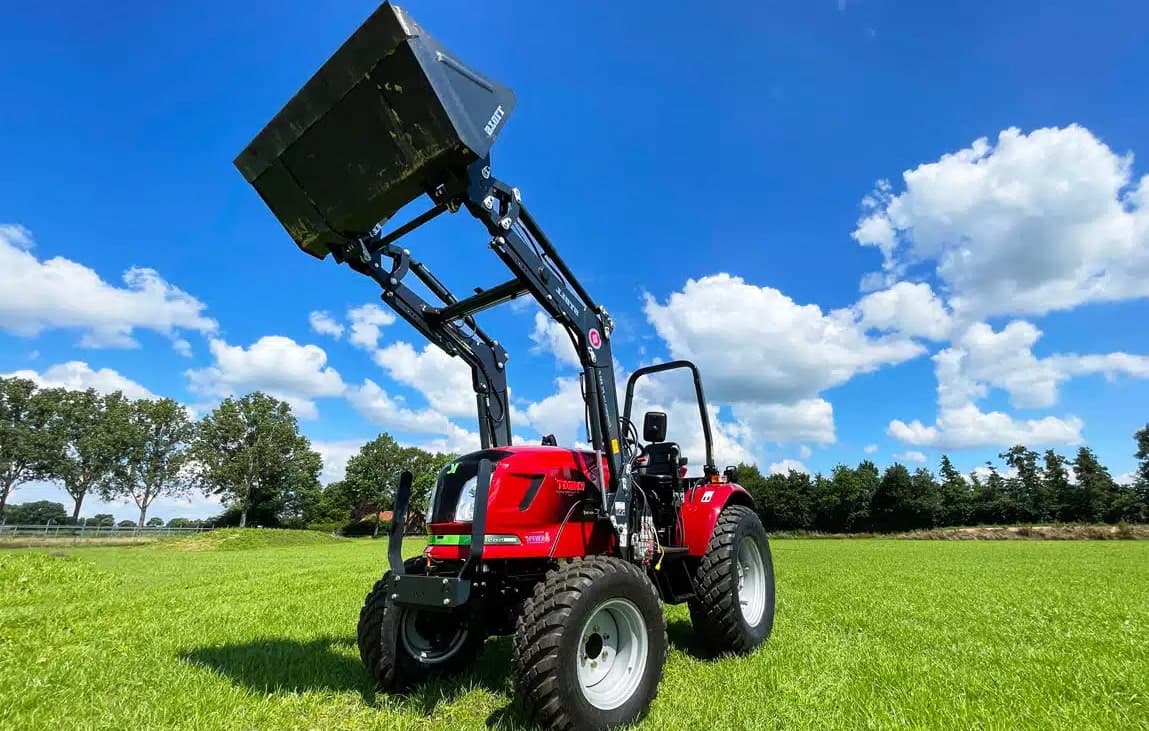
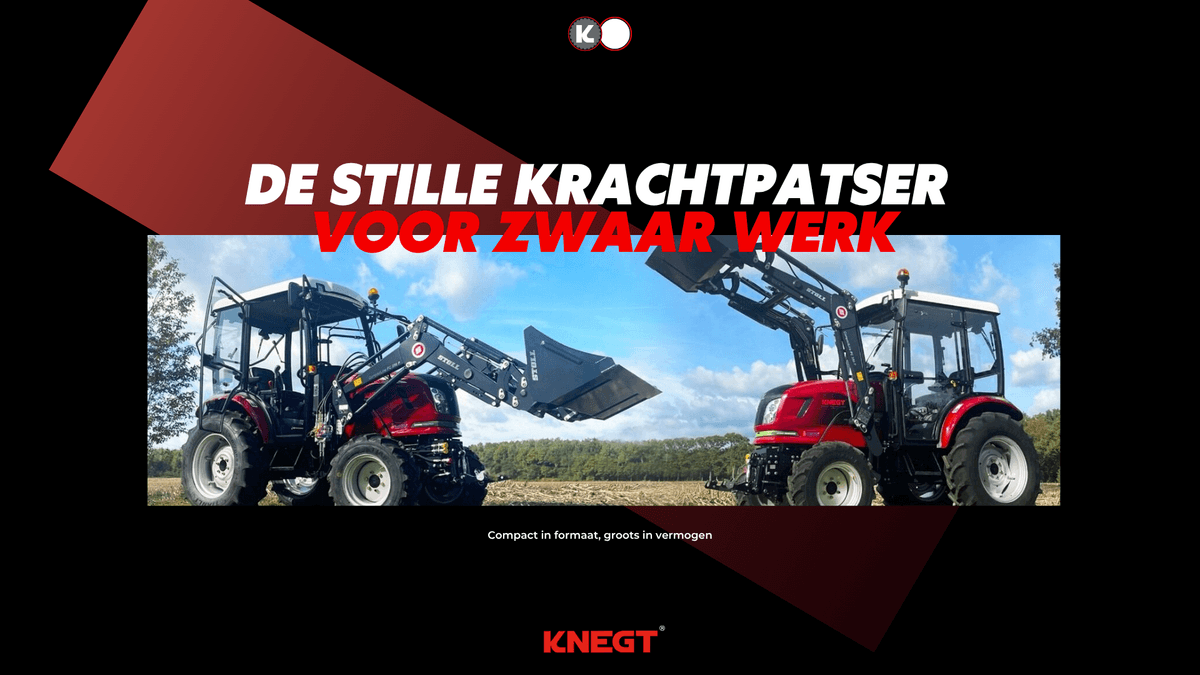
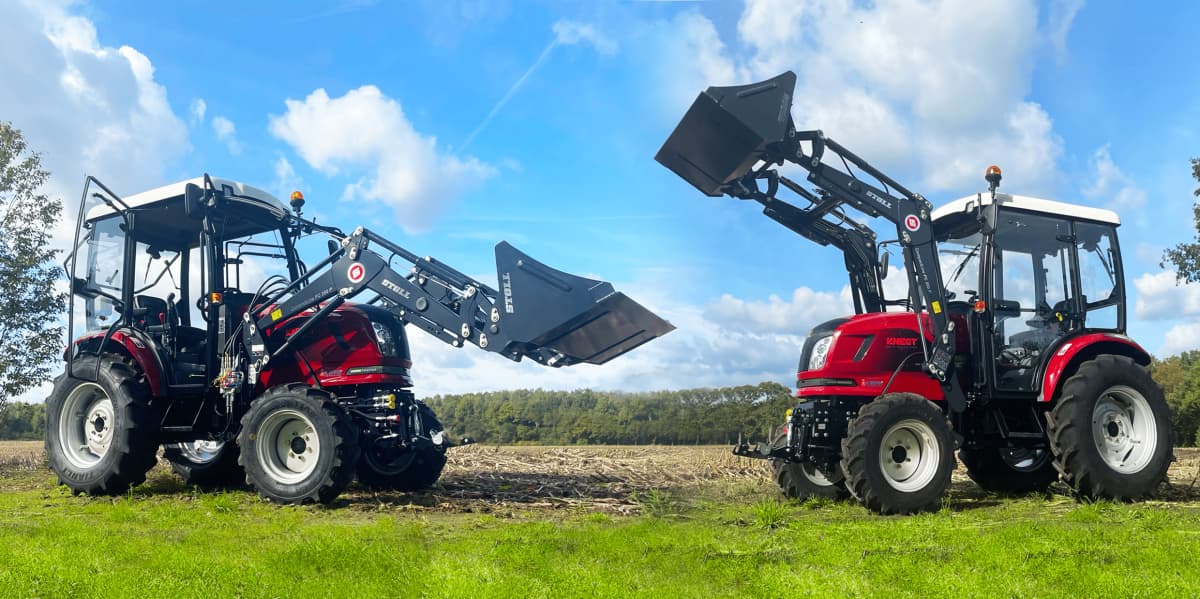
All three have four-wheel drive and power steering, are CE approved and road legal in Europe. A luxury cab and a Stoll front loader are available as options. Prefer diesel, for example because you work long days without the possibility to recharge? Then there are the diesel models 304G2, 404GT and 504GT.
Frequently asked questions
Is a hybrid tractor also emission-free?
No. Besides electric components, a hybrid tractor also has a combustion engine. As soon as it runs, it produces exhaust gases. Only a fully electric tractor works without local emissions.
Is the hydraulic system electrically driven on a fully electric tractor too?
Yes. On the electric Knegt models, a separate 15 hp electric motor drives the hydraulics, independently of the drive motor. That way you have hydraulic power for a front loader or implement while driving as well.
Can a fully electric tractor last a full working day?
That depends on the work. Per charge you work about 3 to 9 hours, depending on the model, workload and battery choice. Topping up in between or an extra battery pack extends your working day.
Do I need a charging station?
No. A standard 230V socket is enough. If you want to charge faster, a fast charger is available as an option.
Experience what fully electric means
The best way to notice the difference is to work with one yourself. Request a free demo and experience on your own site how quiet and responsive a fully electric Knegt is. Would you first like to know which model and battery suit your work? Book a consultation, request a quote or find a Knegt dealer near you.