Electric tractor or compact tractor: what's the difference?
The short answer
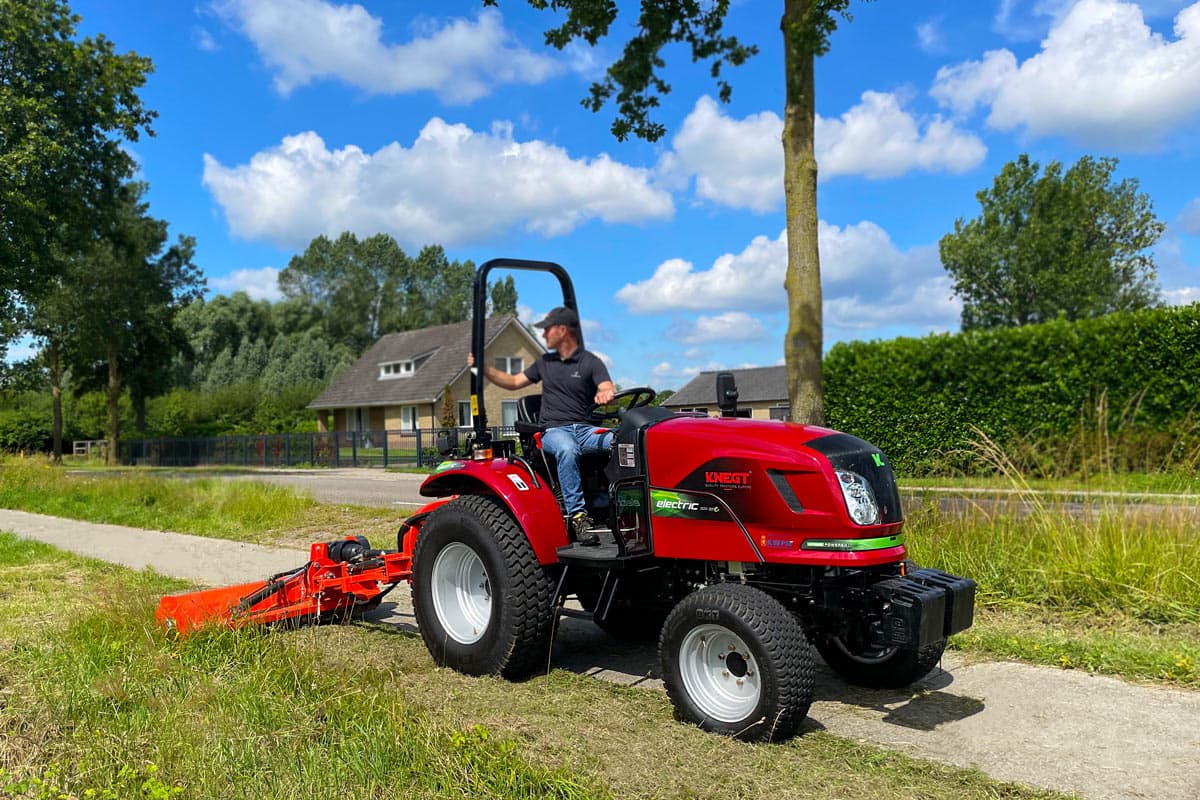
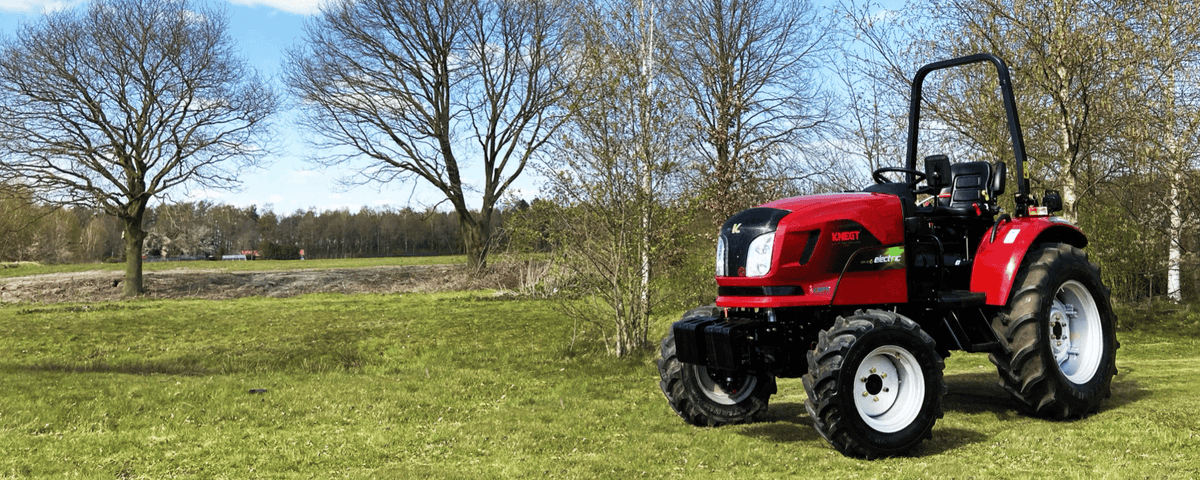
An electric tractor is a tractor that runs on a battery and electric motors instead of diesel. An electric compact tractor is the smaller, more manoeuvrable version of the same machine, built for yards, stables, greenhouses, sports grounds and public green spaces. In everyday use the terms overlap: both describe a working tractor with hydraulics, a three-point hitch and room for implements.
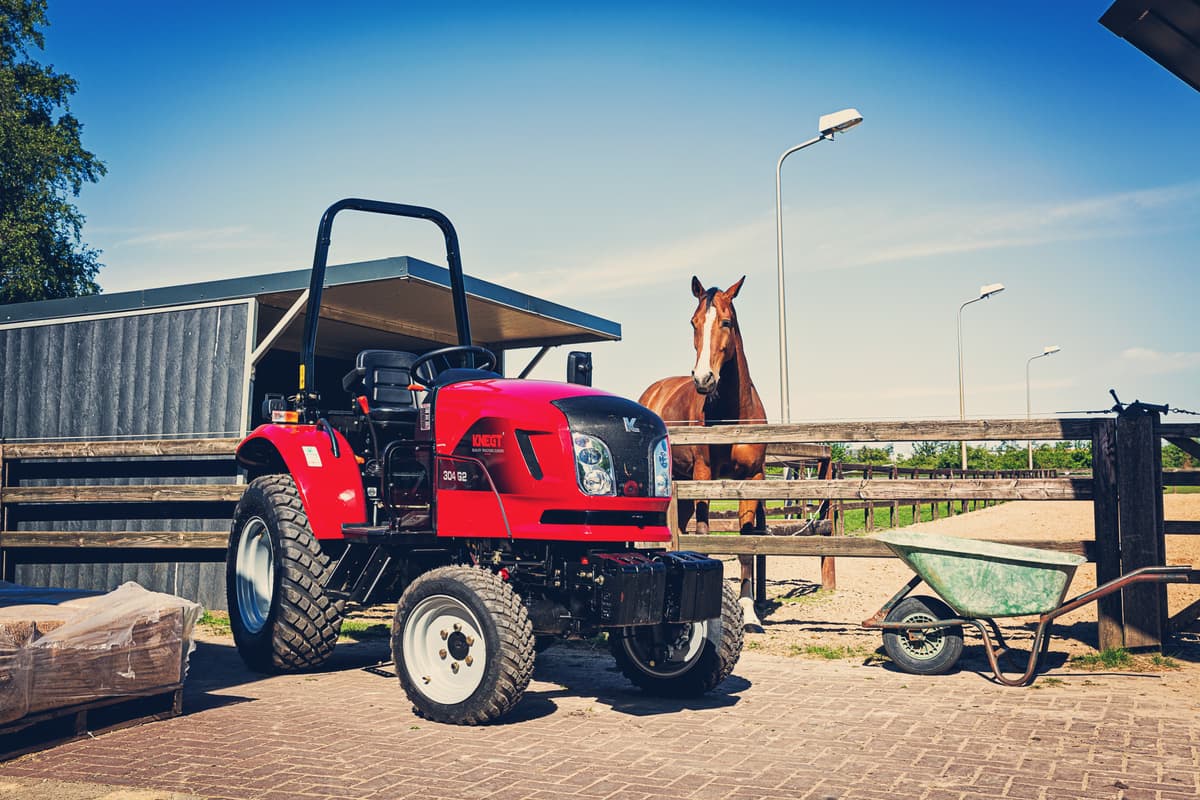
Be careful with the word tractor outside agriculture, though. In road haulage a tractor unit pulls a semi-trailer, and in warehouses an electric tow tractor or tug moves carts. Knegt builds electric compact tractors for work on the farm, the grounds and in the field: the 304G2E (45 hp), the 404G2E (55 hp) and the 504G3E (65 hp).
Tractor, compact tractor or traktor: where do the words come from?
The word tractor comes from the Latin trahere, meaning to pull. In Dutch, the everyday word for a farm tractor is trekker, which simply means puller. Which word people use often depends on the country and the sector.
- Tractor: the international term, used in English and in Dutch.
- Compact tractor: a smaller, manoeuvrable tractor for yards, greenhouses, stables, sports fields and municipal work.
- Traktor: the German, Scandinavian and Polish spelling of the same word.
- Trekker: the Dutch word for a farm tractor, also used for a lorry tractor unit.
So whether you search for electric tractor, electric compact tractor or e-tractor, you are looking for the same type of machine. The size and the attachments make the difference.
What makes a tractor electric?
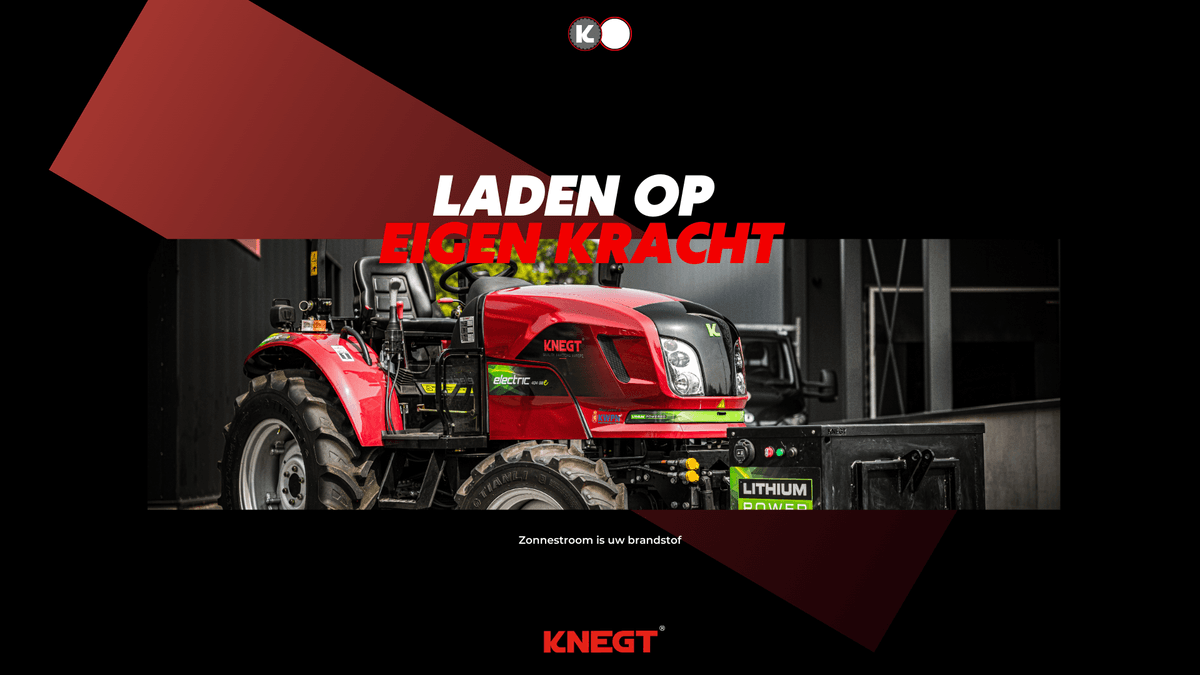
A fully electric tractor has no combustion engine. All energy comes from a battery, for driving as well as for the hydraulics and the PTO. There is no diesel tank and no exhaust.
Knegt's electric models use two separate electric motors: one for driving and one of 15 hp for the hydraulics. This leaves hydraulic power available for a front loader or implement, even while you are driving.
- Battery: a lithium battery, specified for 3,500 charging cycles. Top-up charging is possible.
- Charging: from a standard 230V socket or with a fast charger, which charges from 30 to 80% in about 2.5 hours.
- Working time: depends on how intensively you work and which battery you choose. An extra battery pack is available as an option.
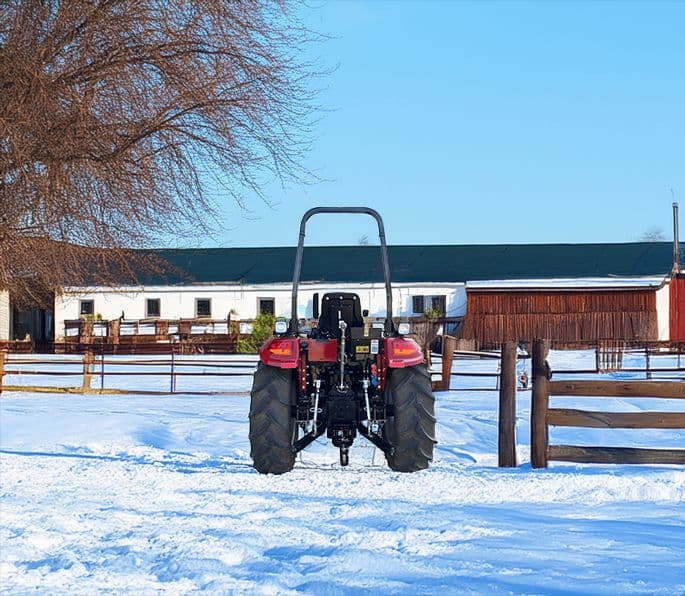
- Operation: quiet and without exhaust fumes, so also suitable for indoor spaces such as stables, greenhouses and workshops.
Not every electric tractor is a working tractor
Because the word tractor is used so widely, you will come across very different machines when searching. A simple overview helps you decide what you need:
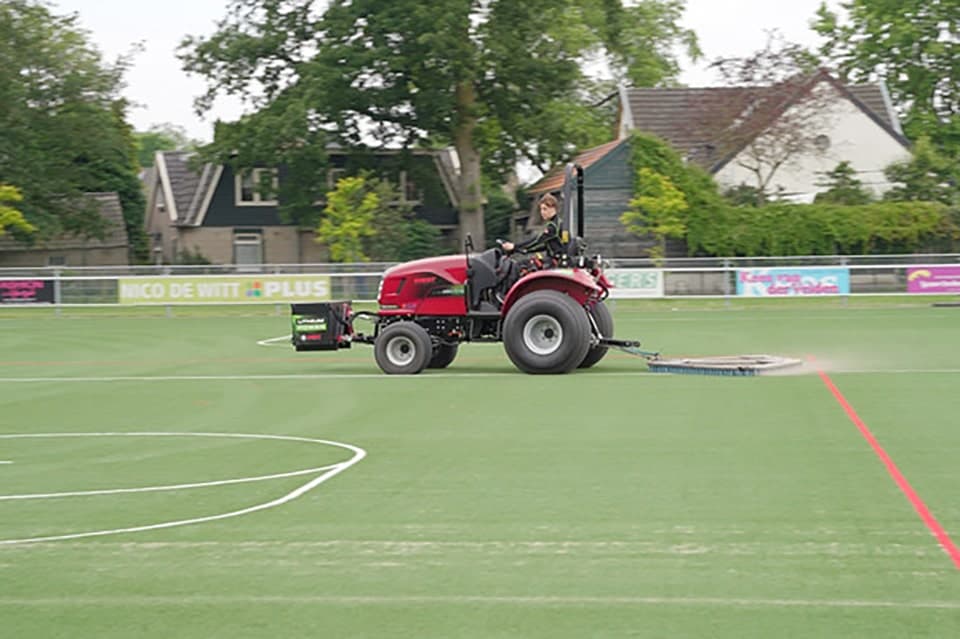
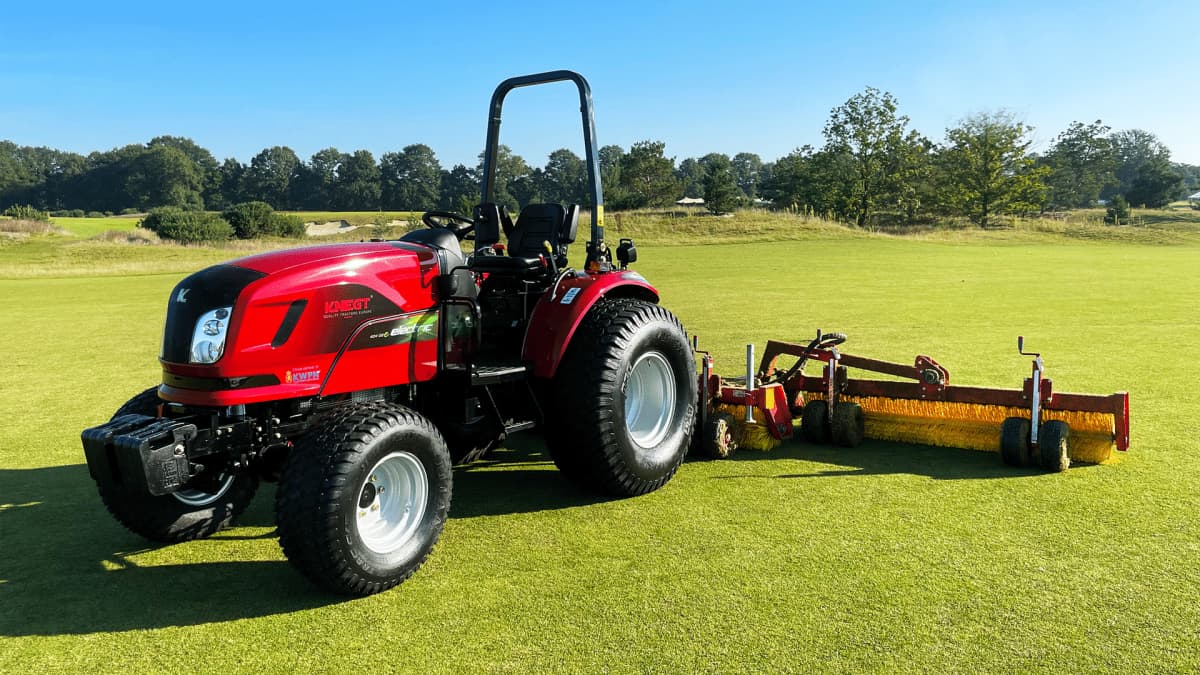
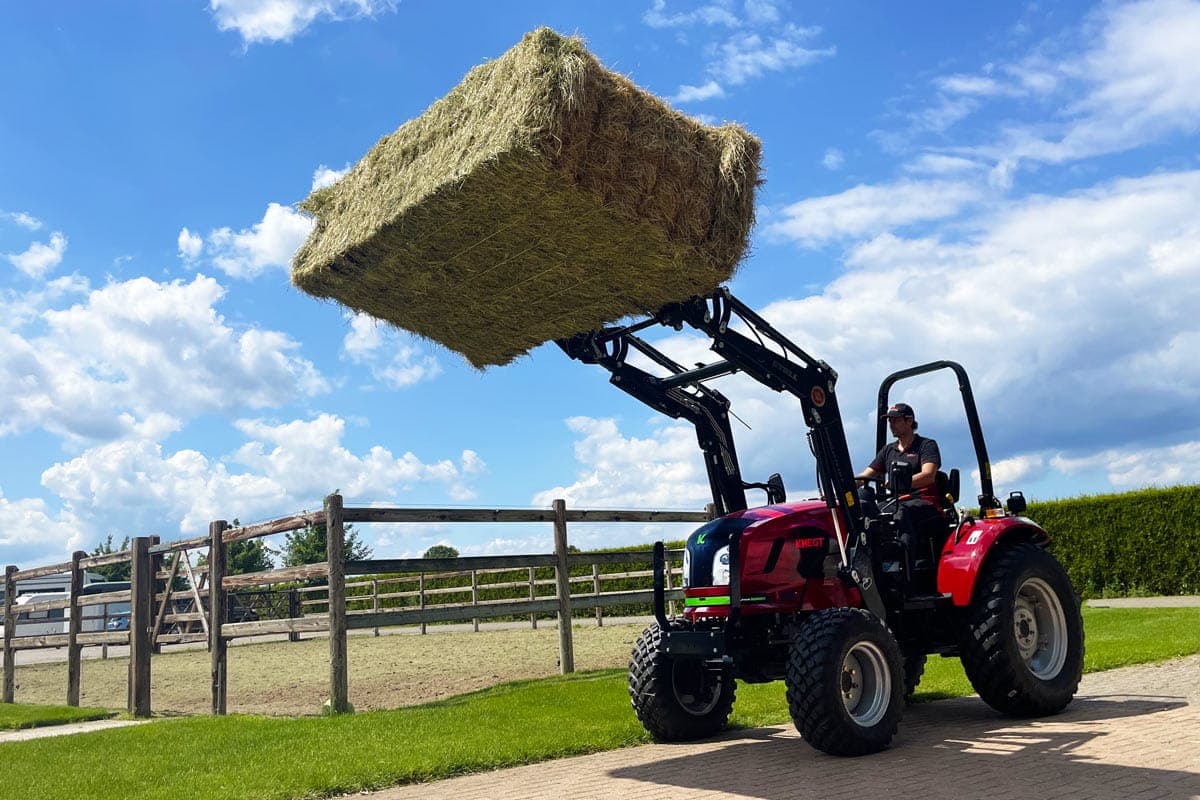
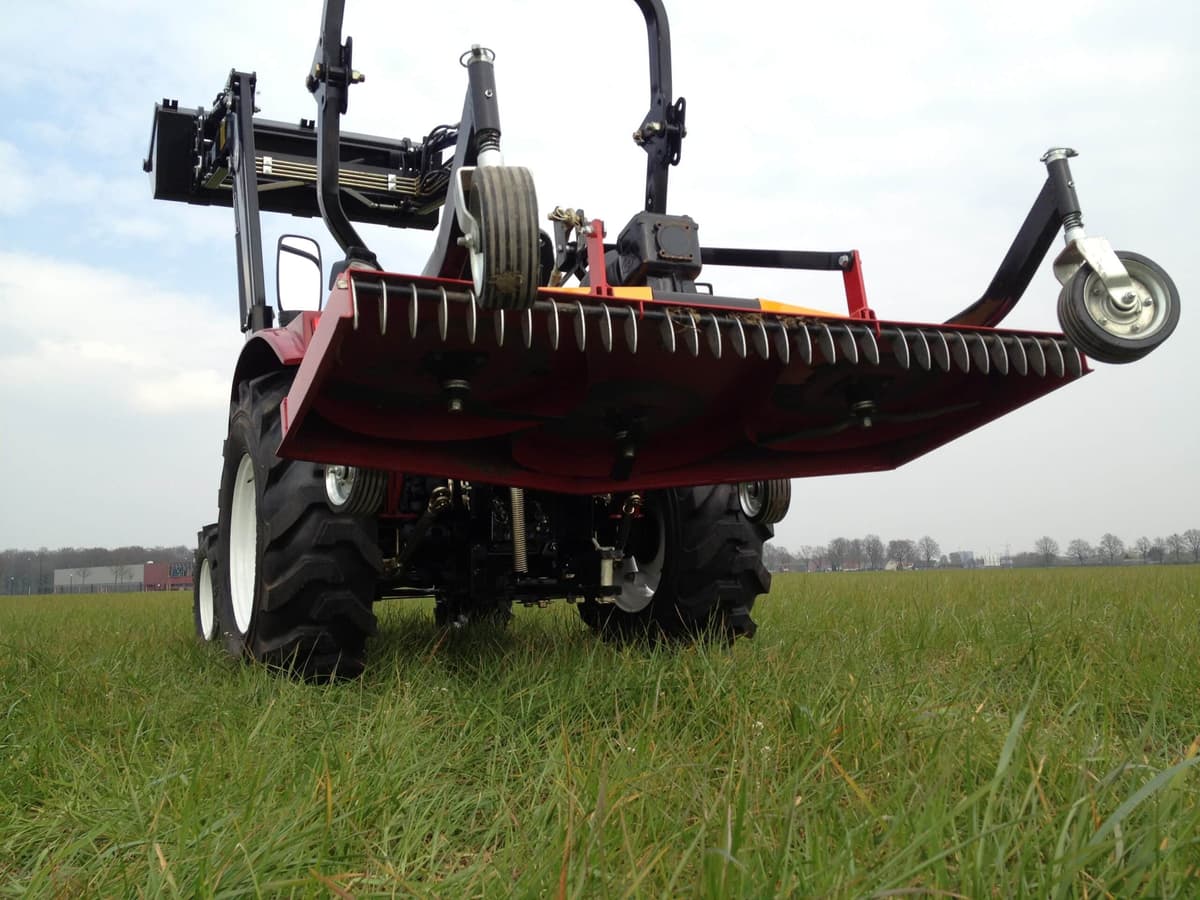
- Electric compact tractor: a full tractor with four-wheel drive, three-point hitch, PTO and hydraulics. Suitable for mowing, sweeping, loading, soil work and transport.
- Electric garden tractor or ride-on mower: mainly designed to cut grass on smaller areas, with limited options for heavier implements.
- Electric tow tractor or tug: a vehicle for moving carts or trailers in warehouses, factories or terminals, without a hitch or PTO.
- Tractor unit: a lorry that pulls a semi-trailer, not an agricultural machine.
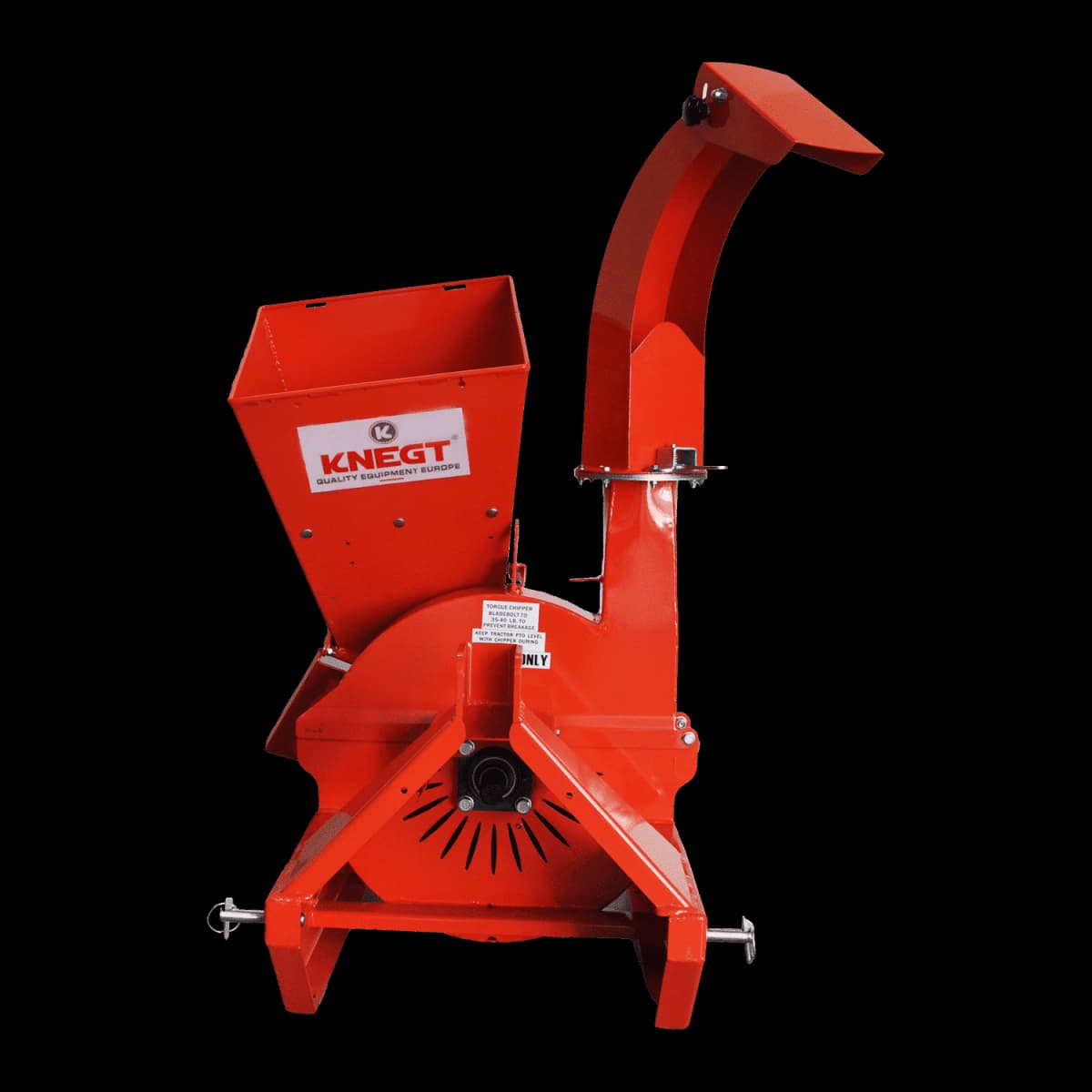
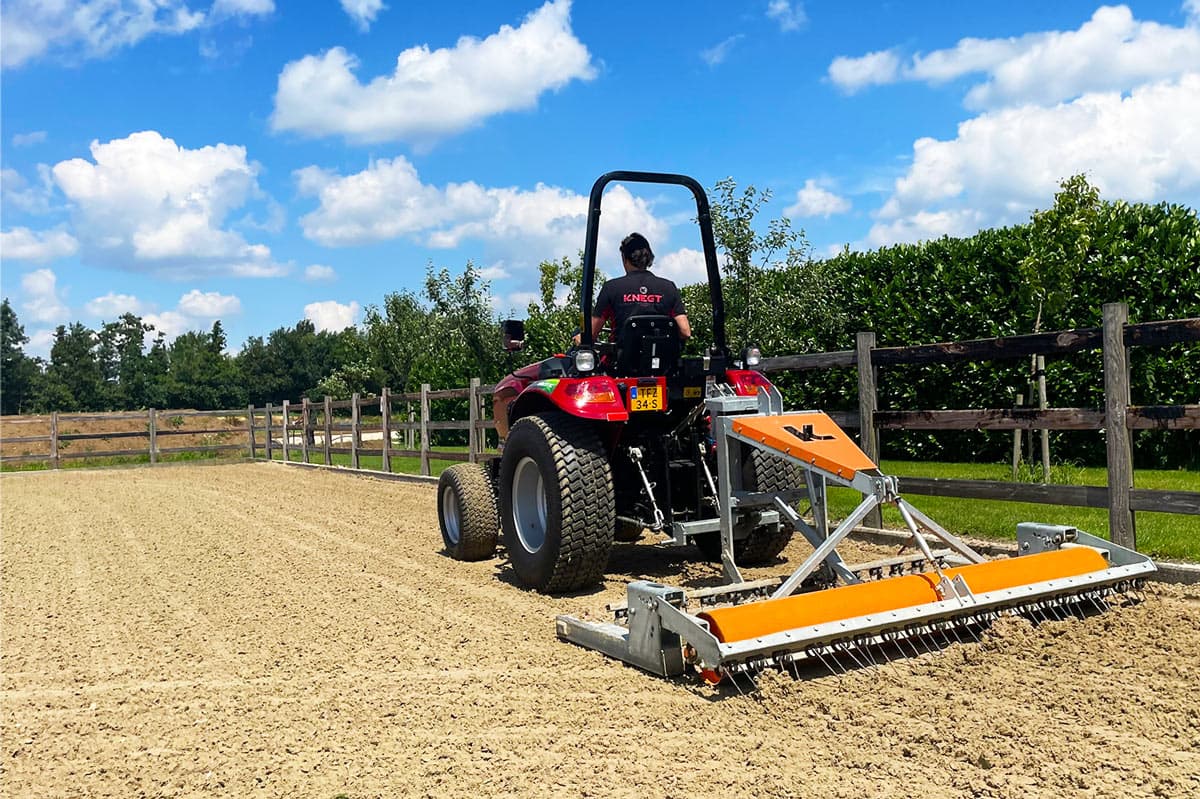
If you want to work with implements such as a flail mower, sweeper, rotary tiller or front loader, you need an electric compact tractor. Then focus on power, lifting capacity, PTO, working time and manoeuvrability.
Knegt's electric compact tractors
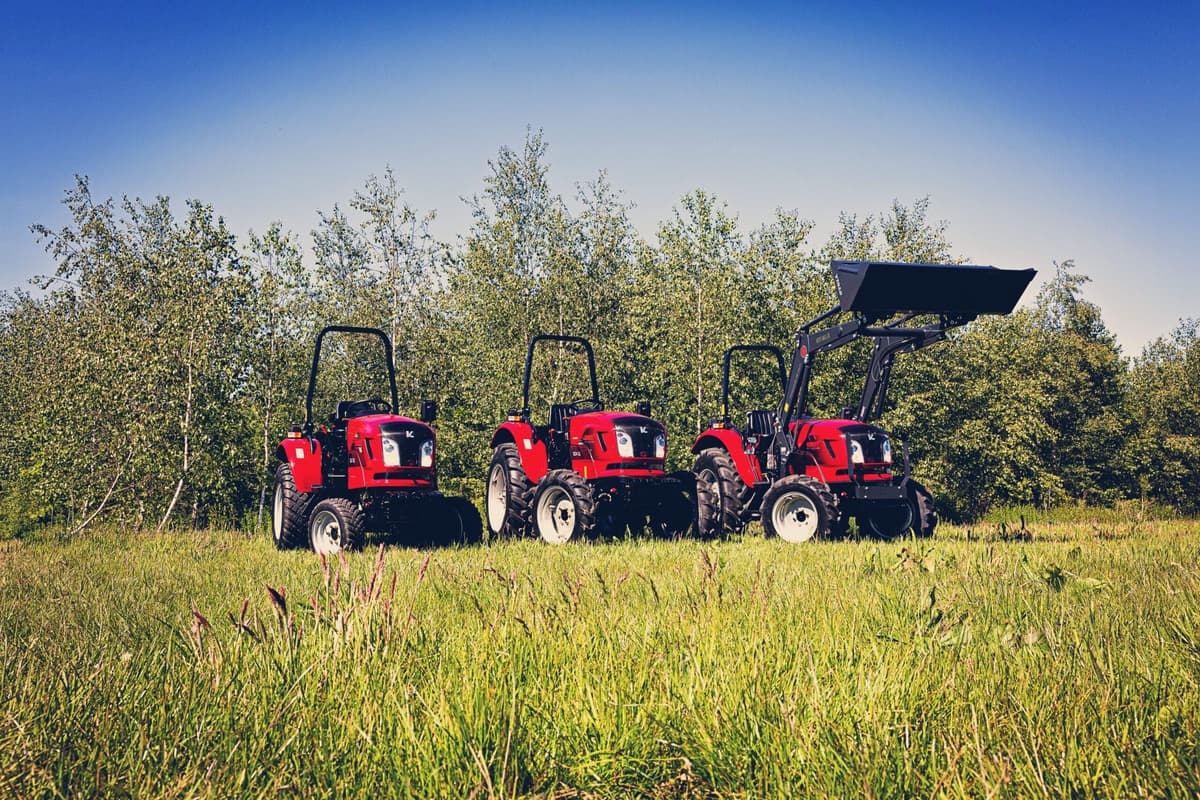
Knegt has been developing and building compact tractors in its own workshop in Veldhoven, the Netherlands, since 2006. According to Knegt, the company was the first in the world with a 100% electric compact tractor. The electric range consists of three models:
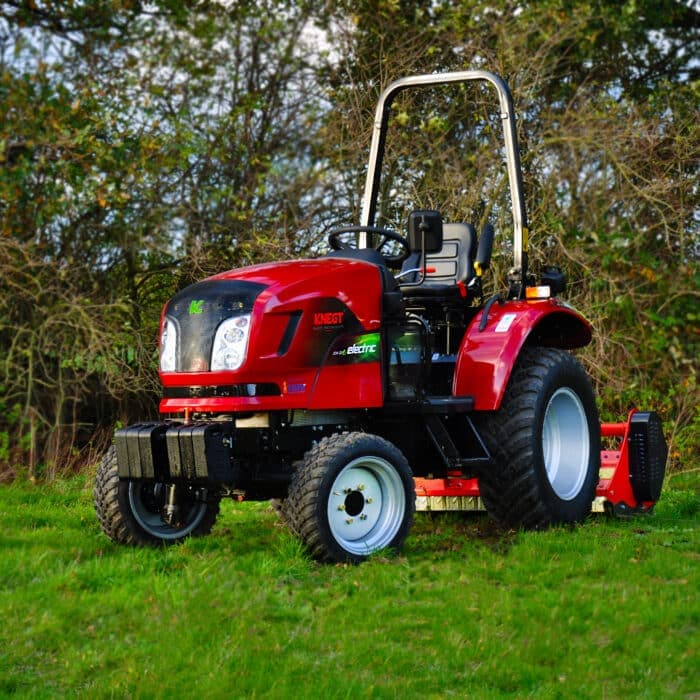
- Knegt 304G2E: 30 hp drive motor + 15 hp hydraulics, 45 hp in total. Compact and agile, strong in stables, greenhouses, riding schools and on sports grounds.
- Knegt 404G2E: 40 hp drive motor + 15 hp hydraulics, 55 hp in total. An all-rounder for mowing, transport, grounds maintenance and earthwork.
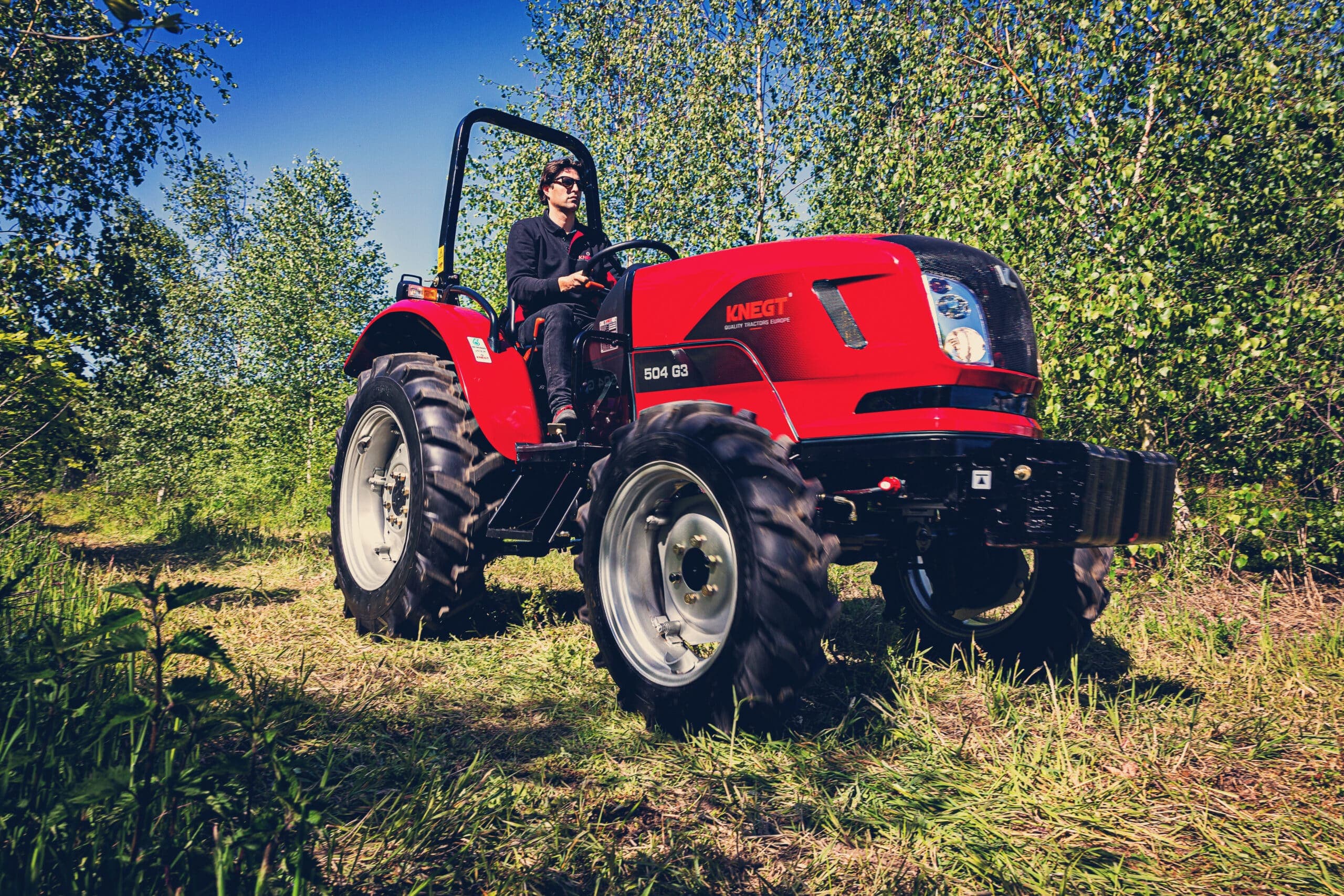
- Knegt 504G3E: 50 hp drive motor + 15 hp hydraulics, 65 hp in total. The most powerful electric model, for intensive work.
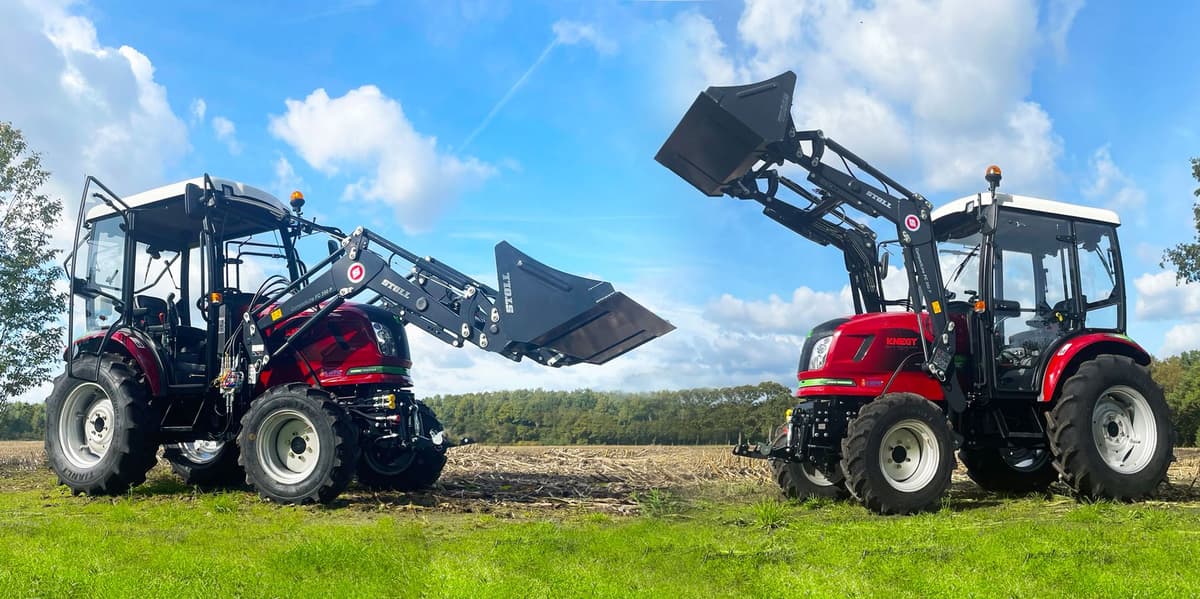
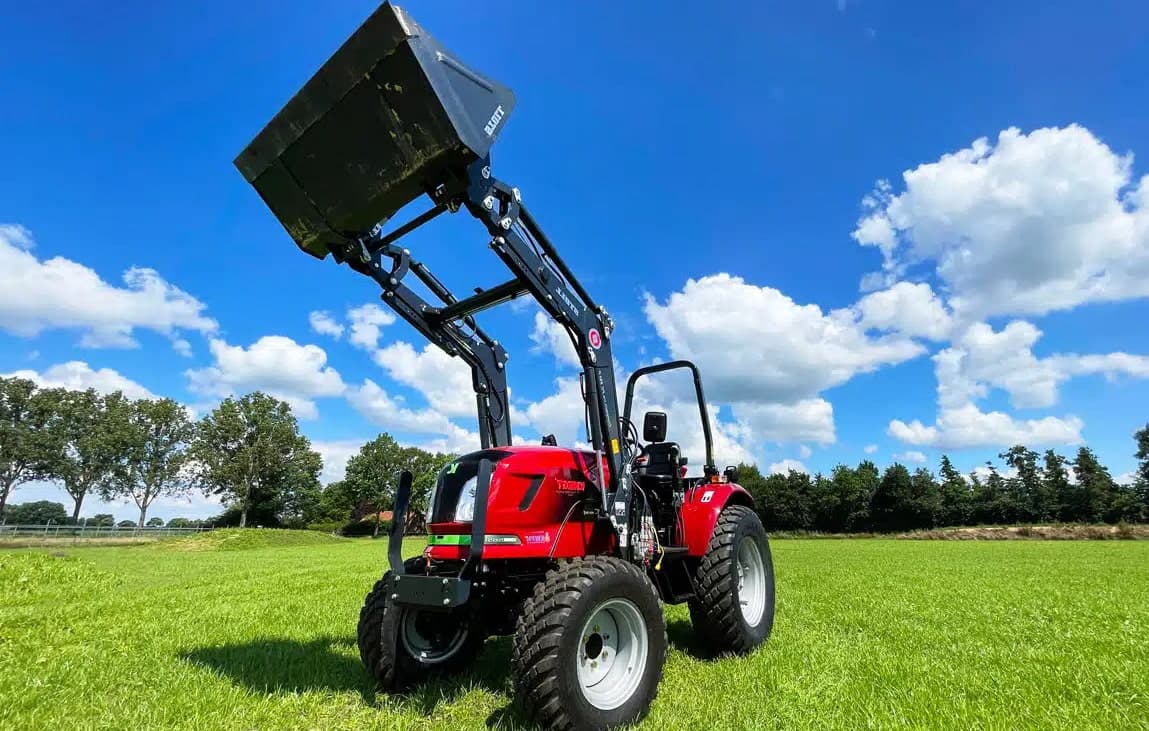
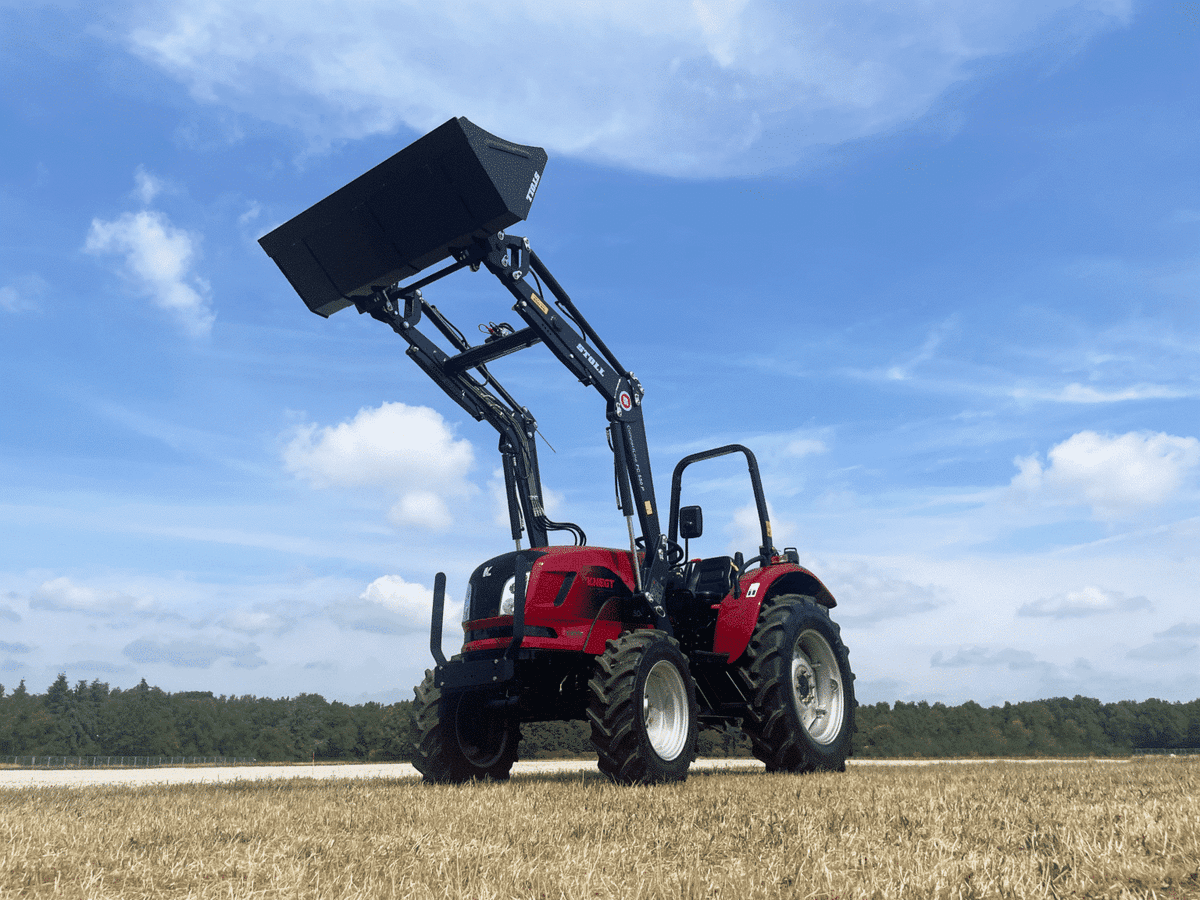
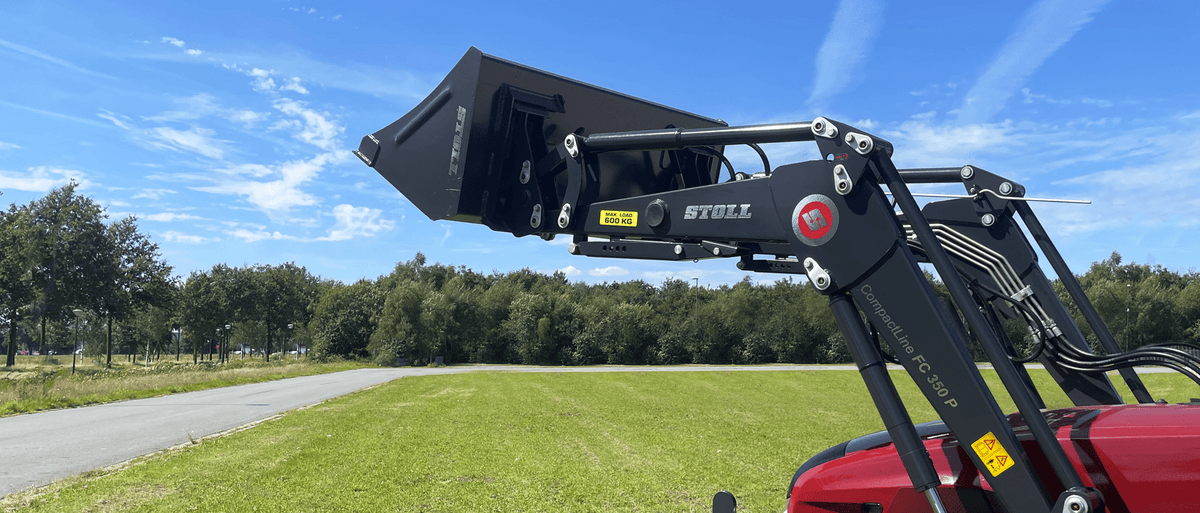
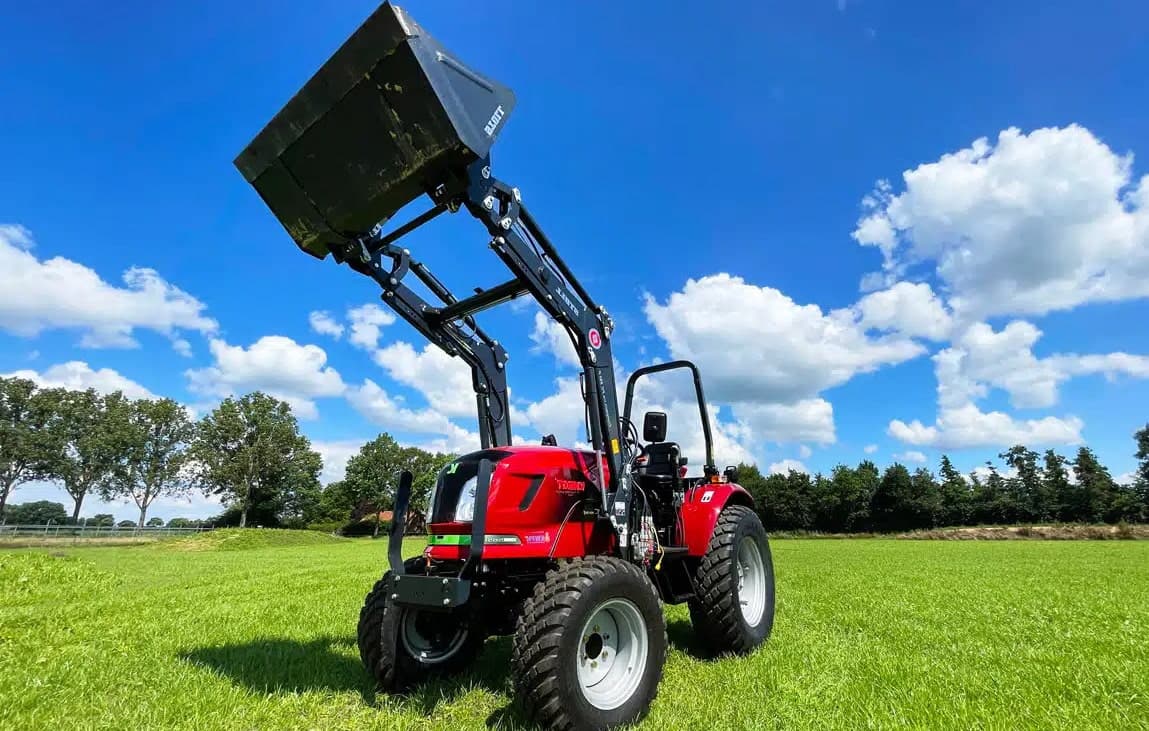
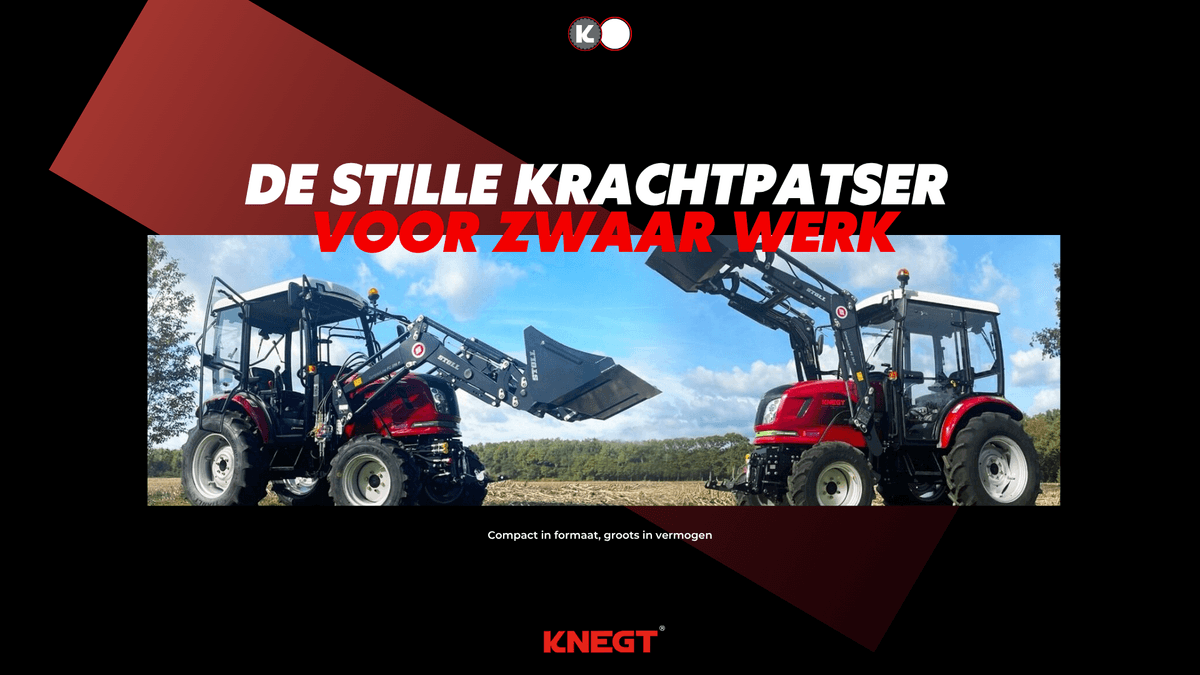
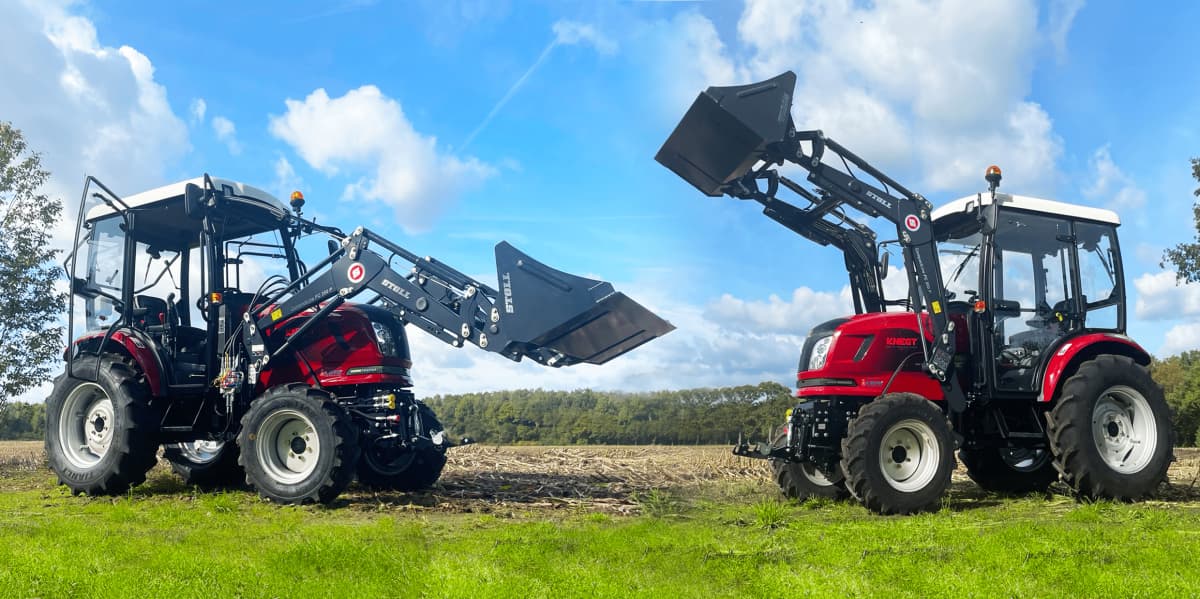
All three have four-wheel drive and power steering, are CE-approved and road-legal in Europe. A luxury cab and a Stoll front loader are available as options, and Knegt offers a wide range of implements and accessories.
Prefer diesel? Knegt also builds the diesel tractors 304G2 (25 hp), 404GT (40 hp) and 504GT (50 hp). You can see the current price of your configuration in the configurator on the models page, or request a quote.
Frequently asked questions
Is an electric compact tractor the same as an electric tractor?
Yes, a compact tractor is a smaller type of tractor. Both run on a battery and electric motors and can work with implements. The compact version is lighter and more manoeuvrable.
Is it tractor or traktor?
In English and Dutch it is spelled tractor. Traktor is the spelling used in German, Swedish and Polish, among other languages.
Can an electric tractor handle heavy implements?
That depends on the model. Lifting capacity and PTO differ per model and are listed in the specifications on the model pages. Always check that your implement matches the power, lifting capacity and PTO of the tractor.
How long does an electric tractor run on one charge?
Working time depends on how intensively you work and which battery you choose. You can top up during a break, and an extra battery pack extends the working time.
Try an electric tractor yourself
Whatever you call it, the difference from diesel only really shows when you work with it. Request a free demo and experience on your own site how quiet and responsive an electric Knegt is. Not sure which model, battery and implements suit your work? Book an advice call, request a quote or find a Knegt dealer near you.