Fertiliser spreader for a compact tractor: choose and set up
The short answer
A tractor-mounted fertiliser spreader distributes granular fertiliser evenly over grassland, paddocks, sports fields and plots. On a compact tractor, a spreader in the three-point linkage is the most common choice: the tractor lifts it and the PTO or hydraulics drive the spreading disc.
Choose a spreader that suits the area you fertilise, the lift capacity and linkage of your tractor, and the granules you spread. Then set it to the desired application rate, the working width and a constant driving speed. This prevents stripes in the grass and wasted fertiliser.
What types of fertiliser spreaders are there?
Broadly speaking, there are three types of spreader you will see behind a compact tractor:
- Disc spreader (centrifugal spreader): a spinning disc with vanes throws the granules out in a wide band. This is the most common type, because a small hopper still gives you a large working width.
- Pendulum spreader: a spout swinging back and forth distributes the granules. This type also gives a wide spreading band and is widely used on grassland.
- Drop spreader: the fertiliser falls straight down across the full width. The working width equals the width of the hopper. That is precise, for example along edges, paths and borders, but slower on large areas.
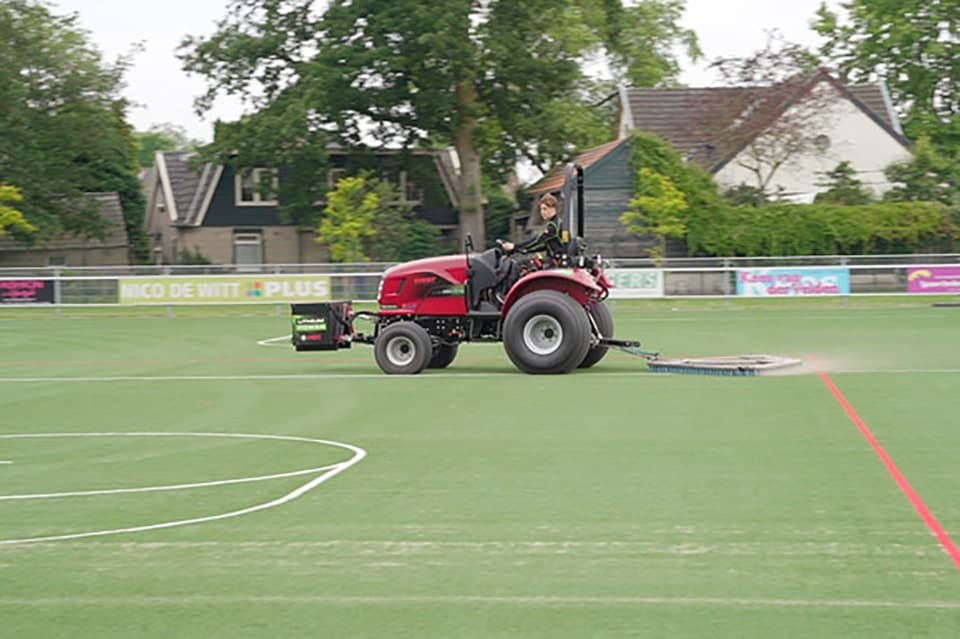
For paddocks, sports fields, nurseries and parks, a mounted spreader in the three-point linkage is the usual choice; trailed spreaders with their own wheels exist for larger areas.
What to look for when choosing
A spreader looks like a simple implement, but the right choice saves a lot of time and fertiliser. Pay attention to these points:
- Hopper capacity: a larger hopper means refilling less often, but also more weight on the linkage. Add the weight of the spreader and a full hopper of fertiliser together.
- Working width: the wider the spreading band, the fewer passes you need. On small or irregular plots, a narrower, accurate band is actually more practical.
- Drive: most mounted spreaders are driven by the PTO. Check the PTO speed the spreader requires.
- Linkage: check which three-point linkage category the spreader has and whether it matches your tractor.
- Metering: a clearly readable metering slide or scale makes it easier to spread the same rate every time.
- Border spreading: if you want to spread along ditches, fences or paths without throwing fertiliser outside the plot, a border spreading device or a spreader with a narrow band helps.
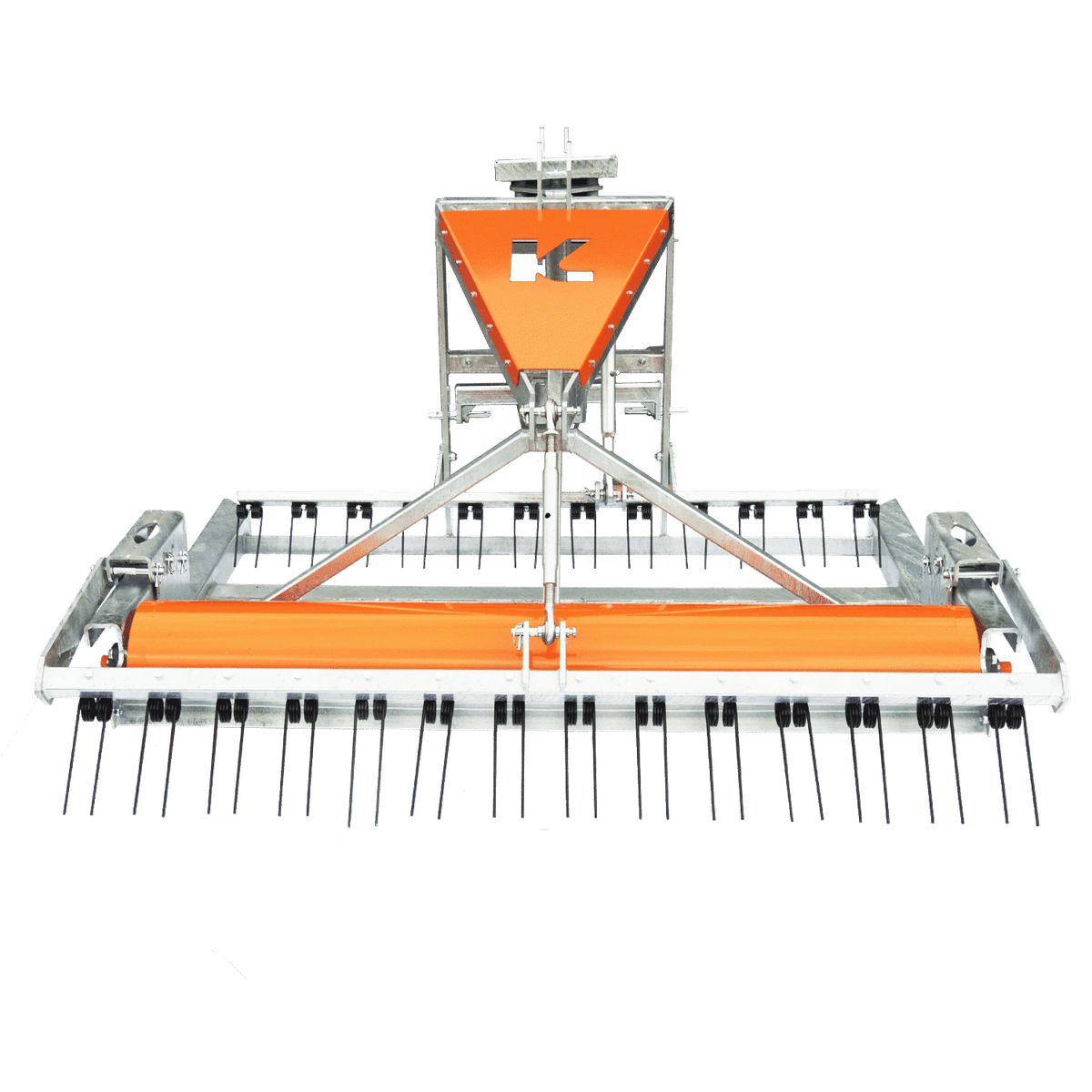
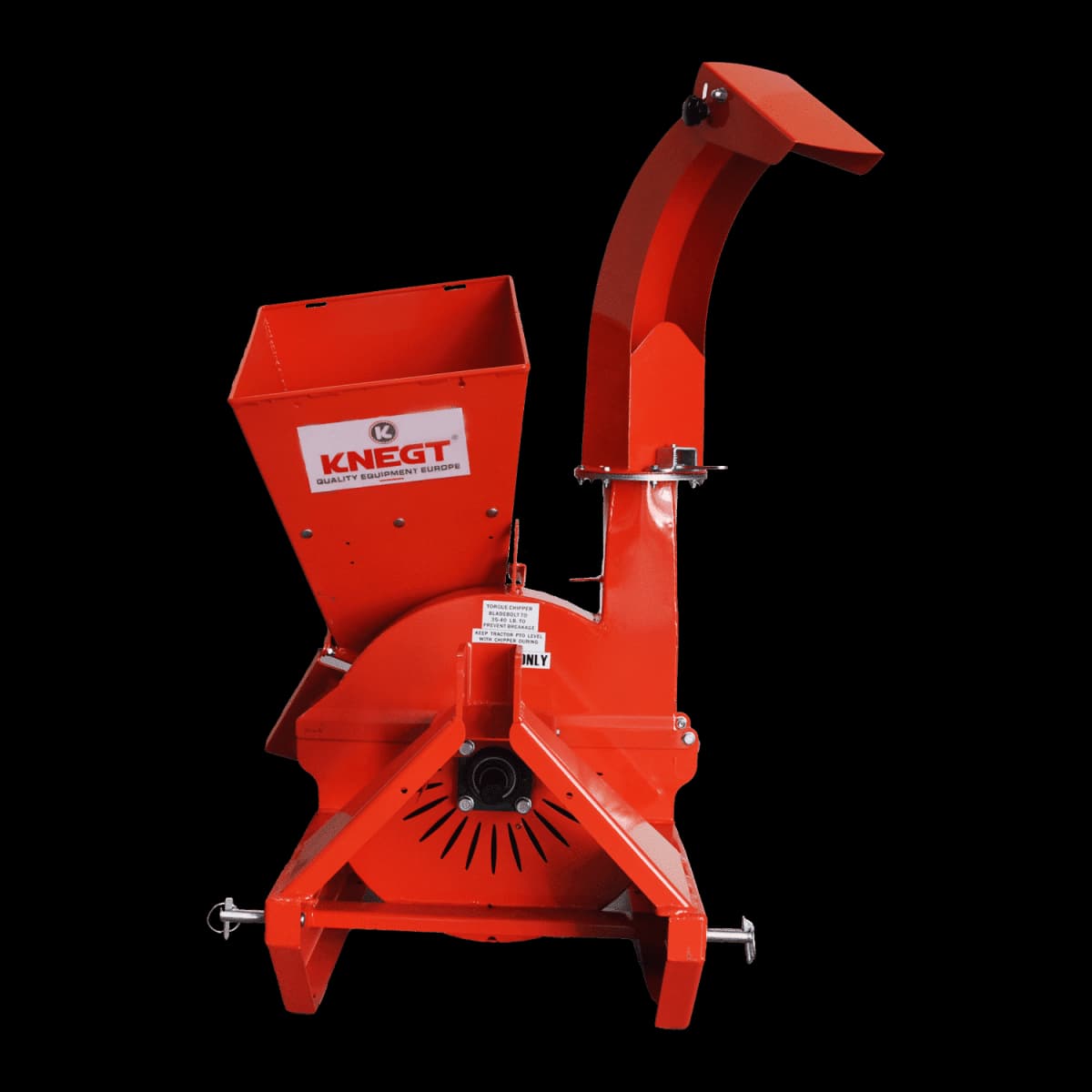
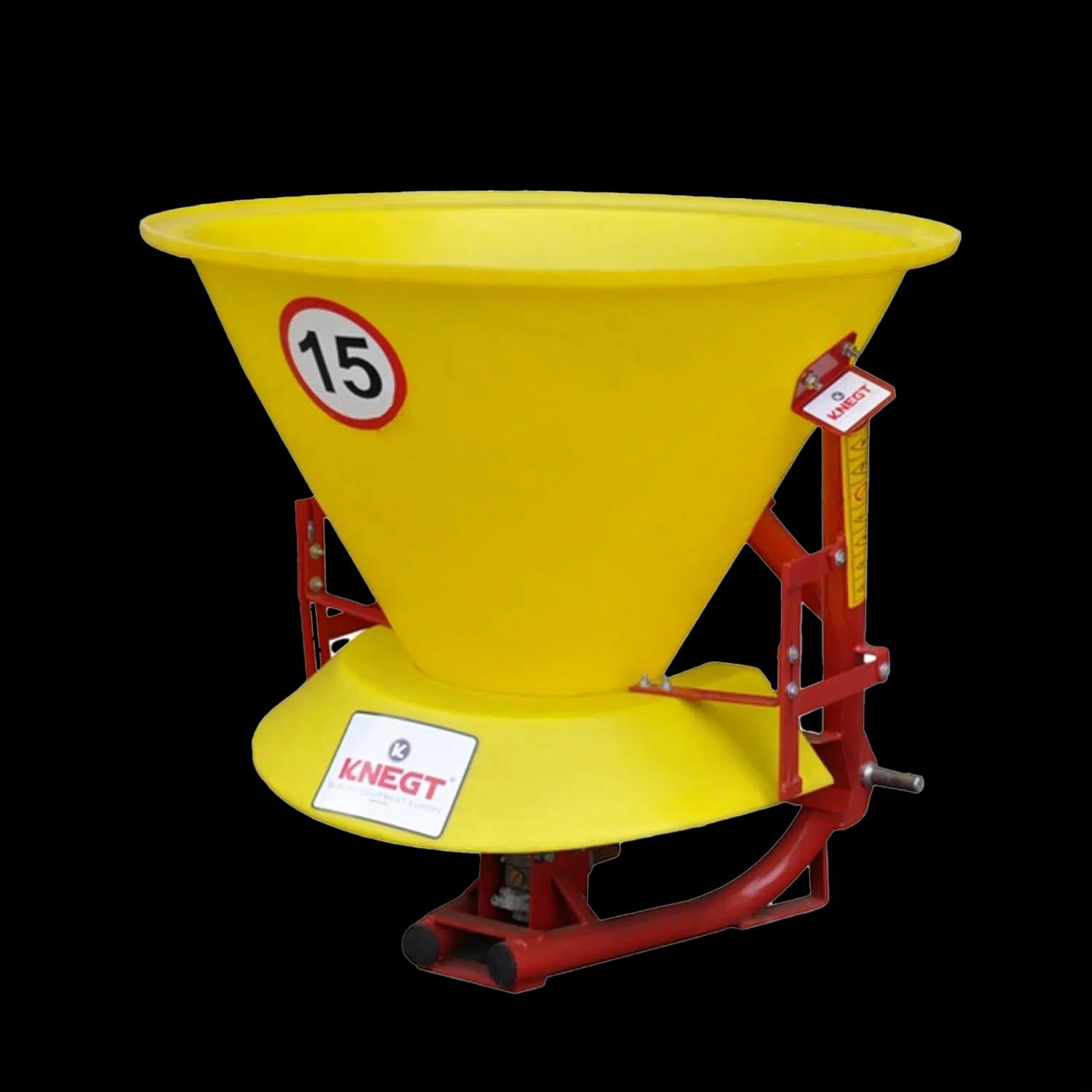
Knegt has its own fertiliser spreader in its implement range: the Fertiliser spreader MS300. On the page for growers it is listed from € 725. You can find the current specifications and price on the product page or ask your dealer.
How to set up the spreader in 5 steps
An even spread pattern starts with the setup. Work through these steps before you head into the field:
- Step 1: determine the application rate. Calculate how many kilos of fertiliser per hectare you want to spread. Take the fertilisation rules into account: they differ per country. In the Netherlands, for example, there are application standards for nitrogen and phosphate. Your adviser or the competent authority in your country can help.
- Step 2: hang the spreader level. Adjust the top link so the spreader hangs straight behind the tractor, at the height stated in the spreader's manual. A crooked spreader gives a crooked spread pattern.
- Step 3: choose a constant driving speed and a constant PTO speed. The rate depends on the opening of the metering slide, the driving speed and the PTO speed. So always drive at the same speed and the same PTO speed.
- Step 4: do a calibration test. Put a known amount of fertiliser in the hopper, spread a measured area and weigh what is left. This tells you whether the metering setting is right, and you adjust it if needed.
- Step 5: set out the tramlines. Keep a fixed distance between passes, matched to the working width of the spreader, so the spreading bands join up properly. Start with a lap along the edge and then spread the inner part.
Empty the spreader completely after use and rinse it clean. Fertiliser attracts moisture and is aggressive to metal; leftover granules clump together and attack the metering slide and disc.
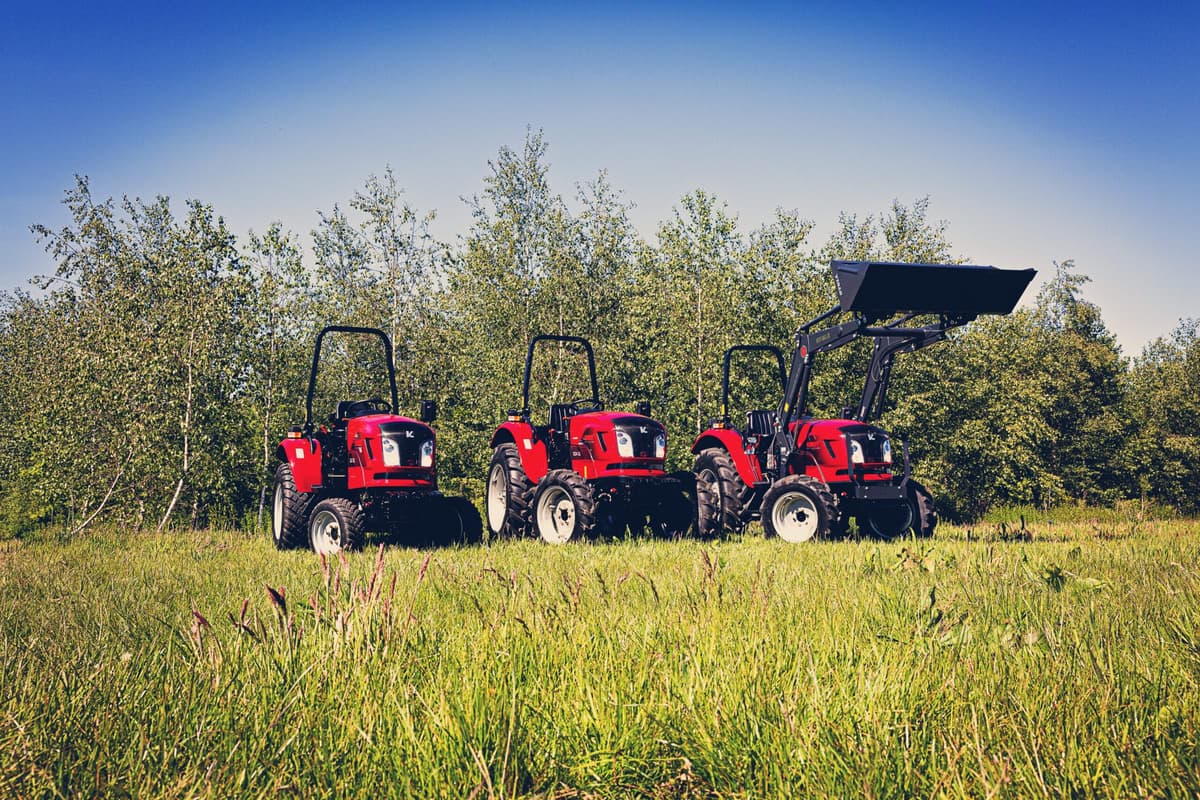
Which Knegt tractor suits a fertiliser spreader?
A fertiliser spreader is a light implement compared with soil cultivation, but with a full hopper the weight does count. So check:
- Lift capacity: on the electric 404G2E the lift capacity is 665 kg and on the 504G3E 1,100 kg, measured 61 cm behind the ball. For the other models you will find the value on the models page.
- PTO: the 404G2E and 504G3E have a PTO of 540 and 1,000 rpm. For the spreader, choose the speed prescribed by the implement manufacturer.
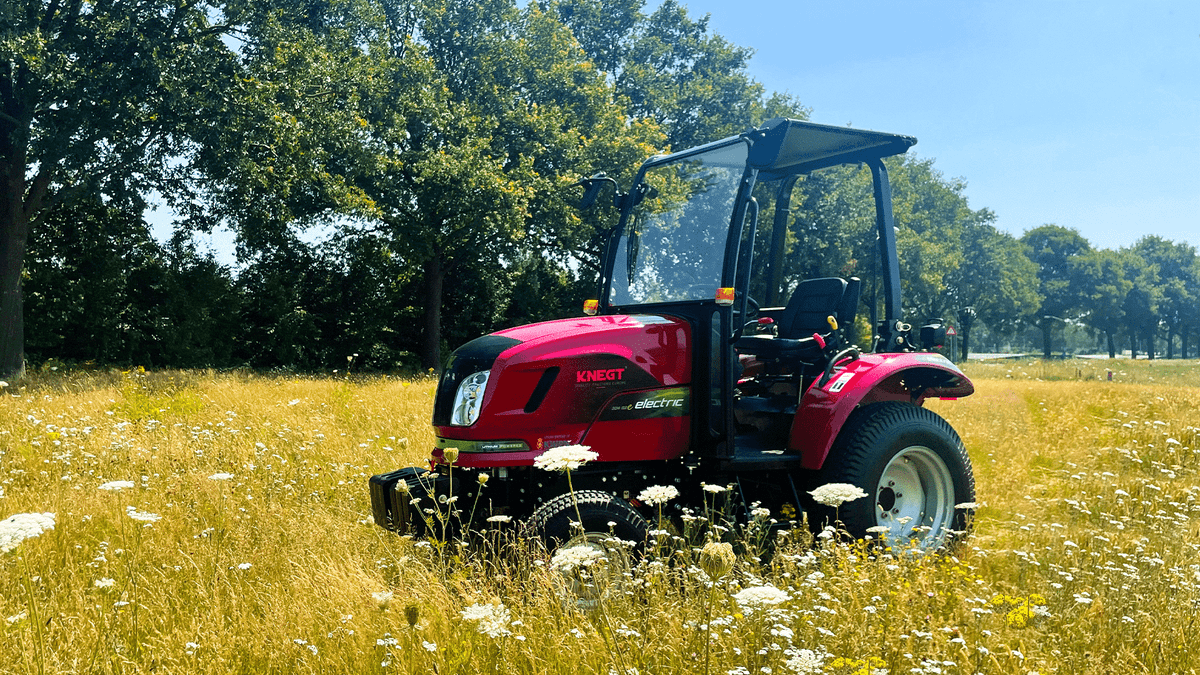
- Power: the electric models 304G2E, 404G2E and 504G3E have a 30, 40 or 50 hp drive motor and a separate 15 hp hydraulic motor.
- Grip: all models have four-wheel drive. With turf tyres you also protect the grass on sports fields and lawns.
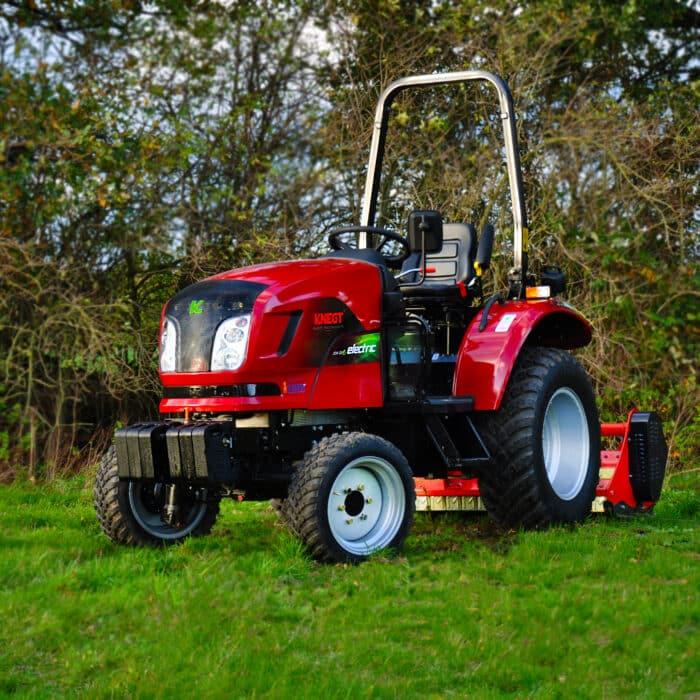
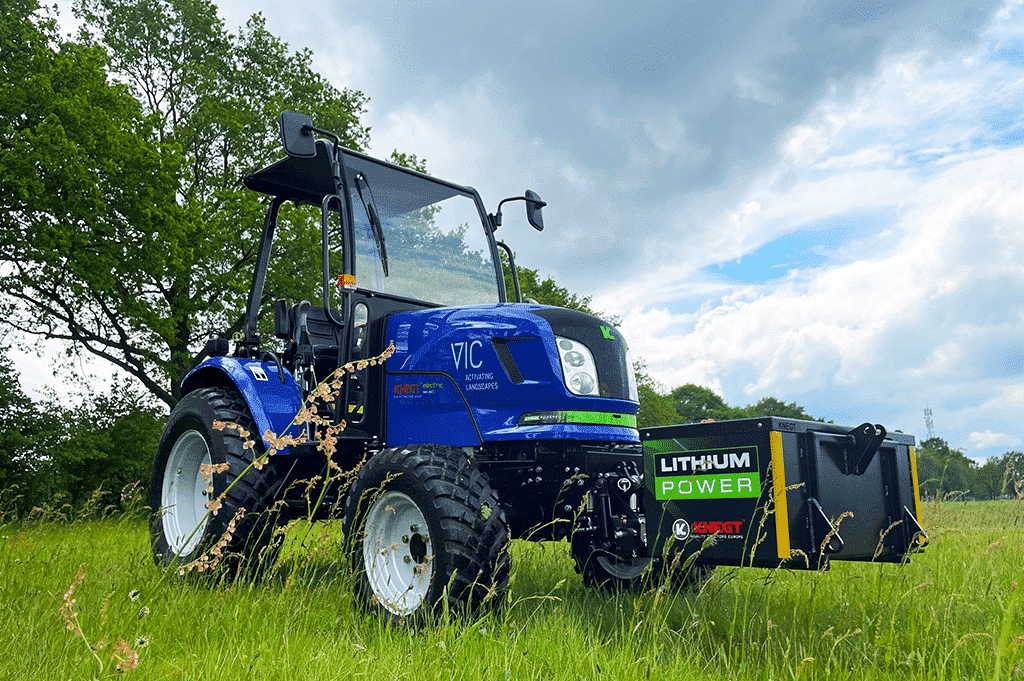
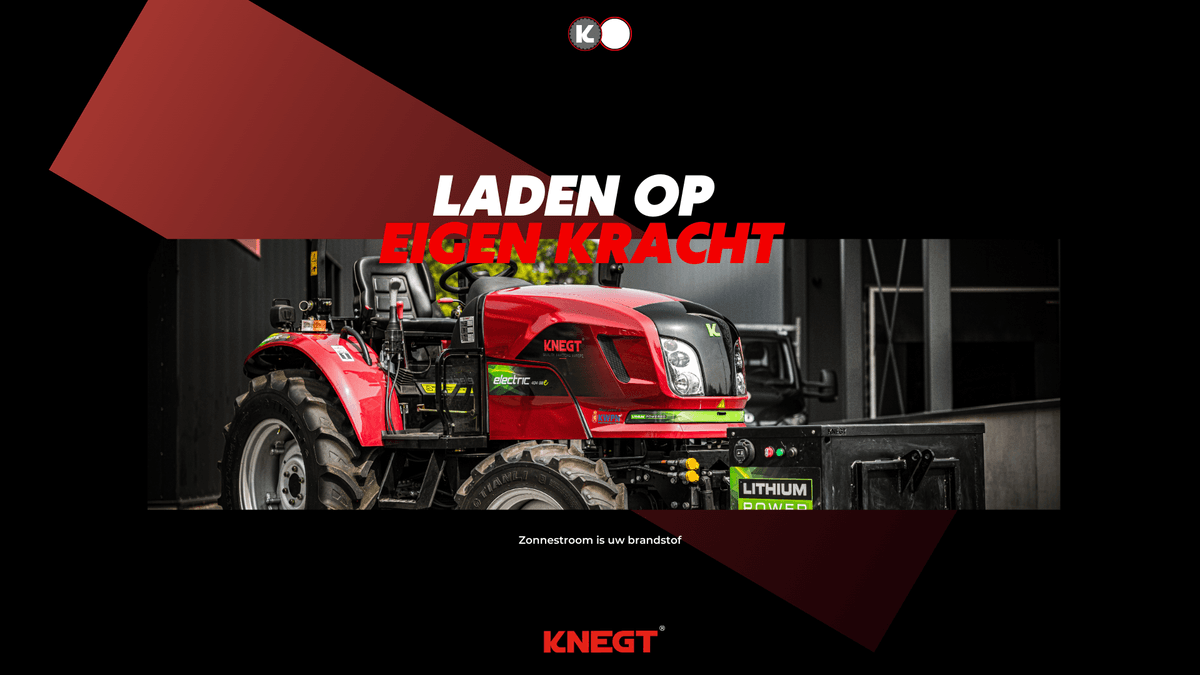
An electric compact tractor has a few extra advantages when spreading. It is quiet, so you can work early in the morning or close to animals and homes. There are no exhaust fumes, not even in a greenhouse or shed where you fill the spreader. And because spreading is usually a short job, you simply recharge the battery afterwards from a 230V socket or with the fast charger.
Frequently asked questions
Which fertiliser spreader fits a compact tractor?
Usually a mounted spreader in the three-point linkage with PTO drive. Check the linkage category, the PTO speed and the weight with a full hopper against the lift capacity of your tractor.
How do I prevent stripes in the grass?
Hang the spreader level, drive at a constant speed and PTO speed, do a calibration test and keep a fixed distance between passes that matches the working width.
Can I also spread salt or sand with a fertiliser spreader?
That depends on the spreader. Check in the manual whether the implement is suitable for it, and always clean the spreader thoroughly after use.
What does the Knegt fertiliser spreader cost?
The Fertiliser spreader MS300 is listed on the page for growers from € 725. For a tractor with spreader, simply request a quote.
Advice on fertilising with your compact tractor
Would you like to know which spreader suits your tractor, your plots and the fertiliser you use? Request an advice meeting or find a Knegt dealer near you. Together we look at lift capacity, PTO, working width and the work you want to do.
Would you first like to experience how an electric Knegt works with an implement in the three-point linkage? Then request a free demo. For the price of a tractor with implements, simply request a quote.