Electric implement carrier: one tractor, many implements
The short answer
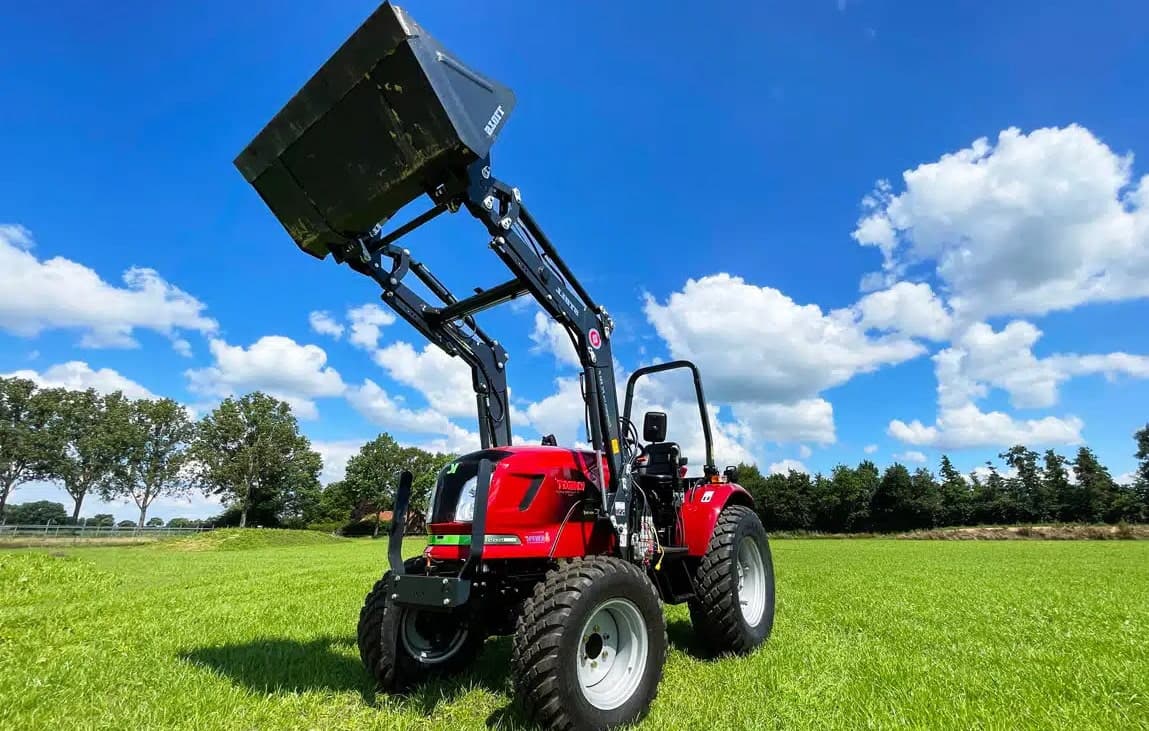
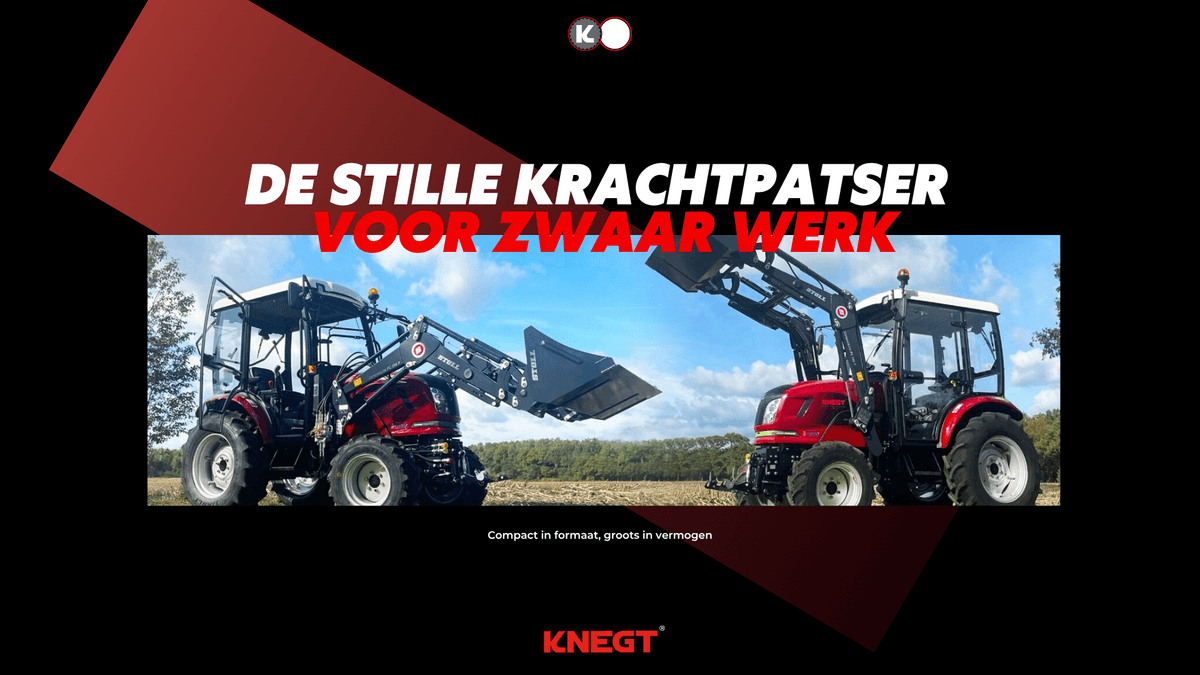
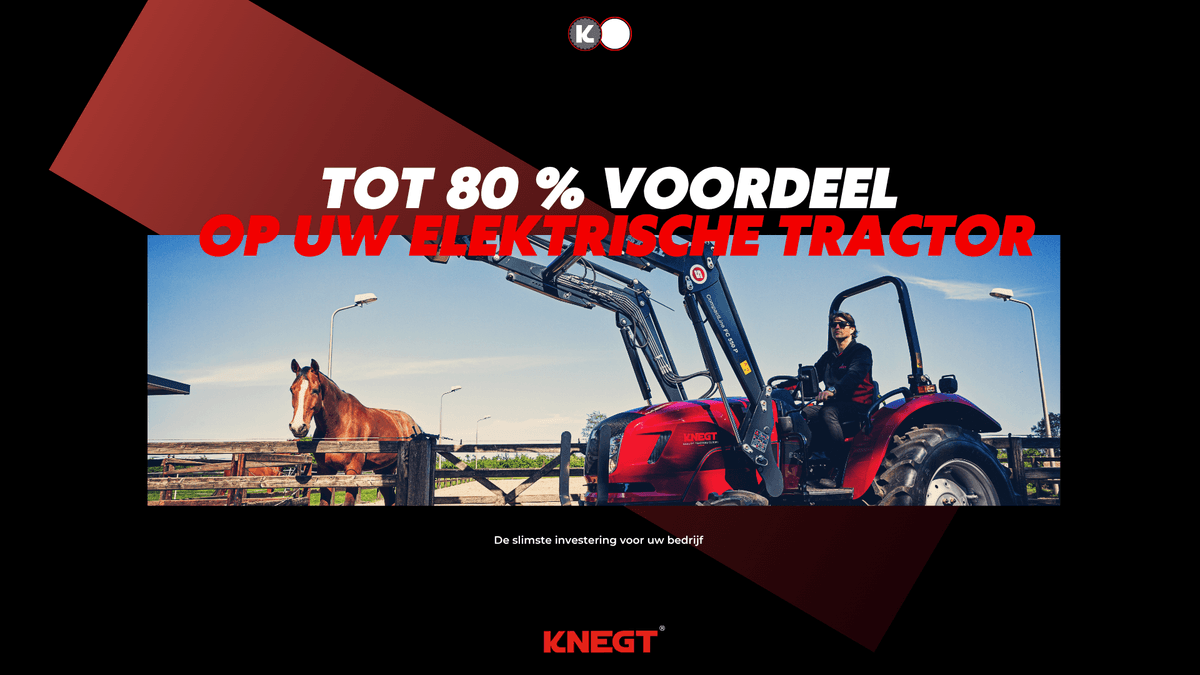
An implement carrier, also called a tool carrier, is a machine designed mainly to carry, drive and operate implements such as mowers, harrows, scrapers and transport boxes. A compact tractor with a three-point linkage, PTO, hydraulics and a front loader does exactly that: in practice it is a highly versatile implement carrier.
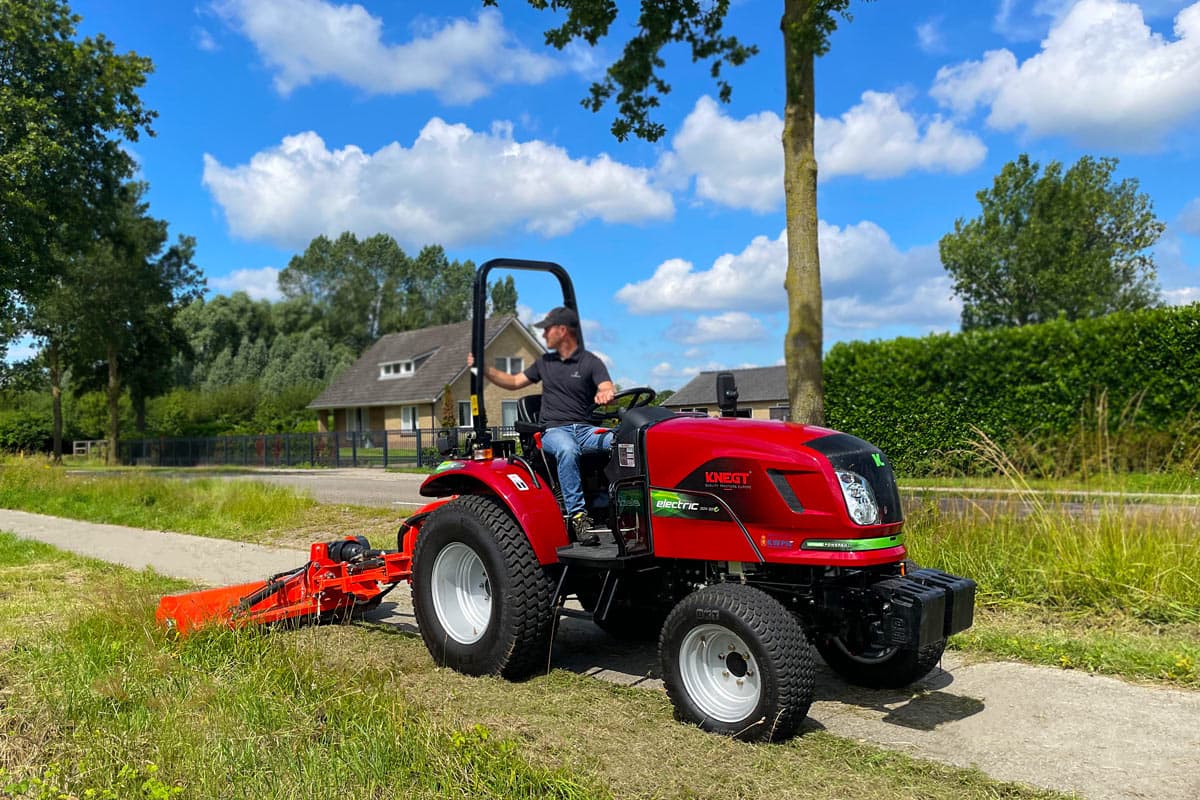
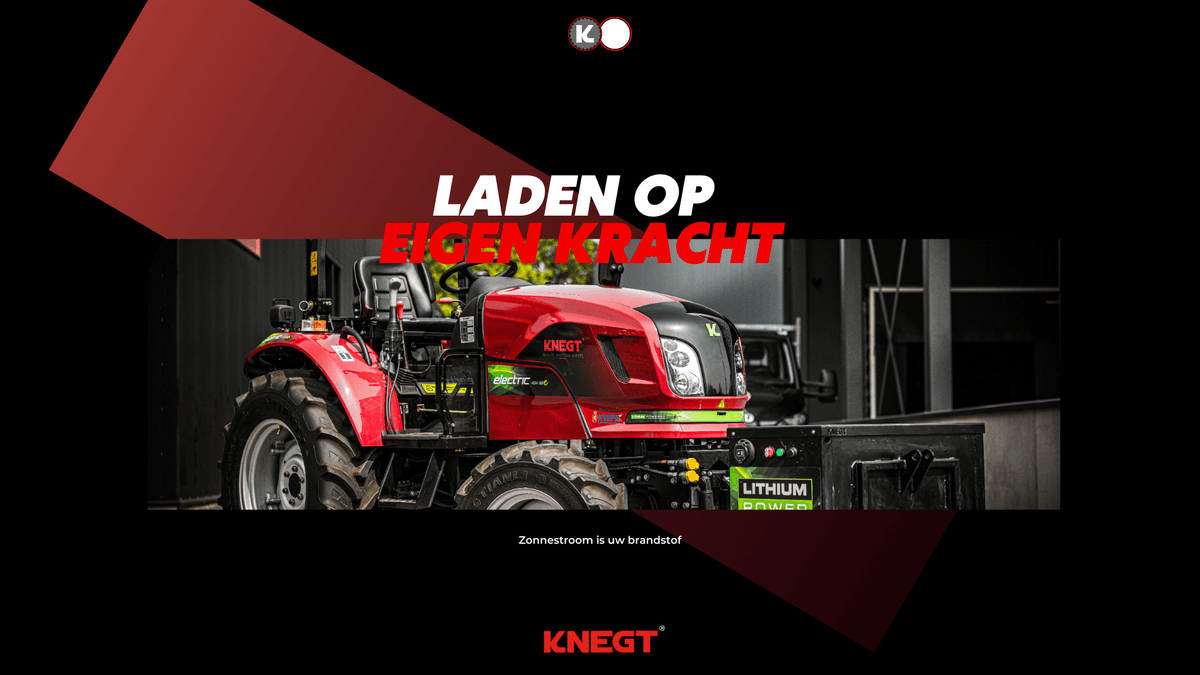
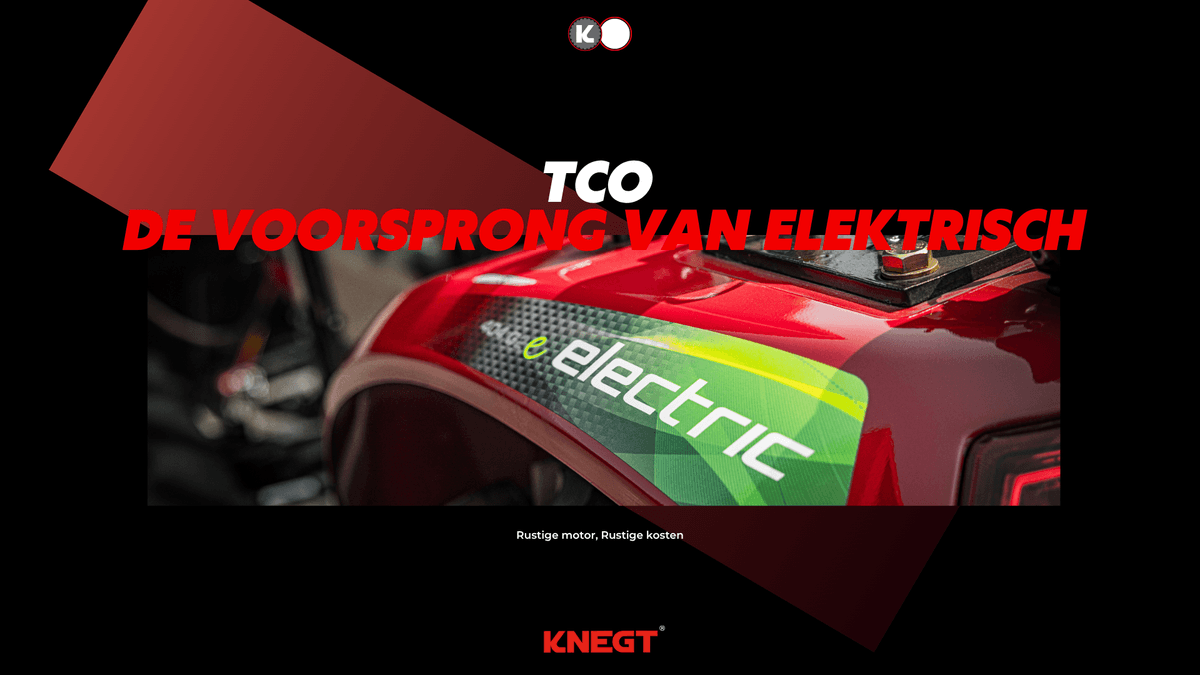
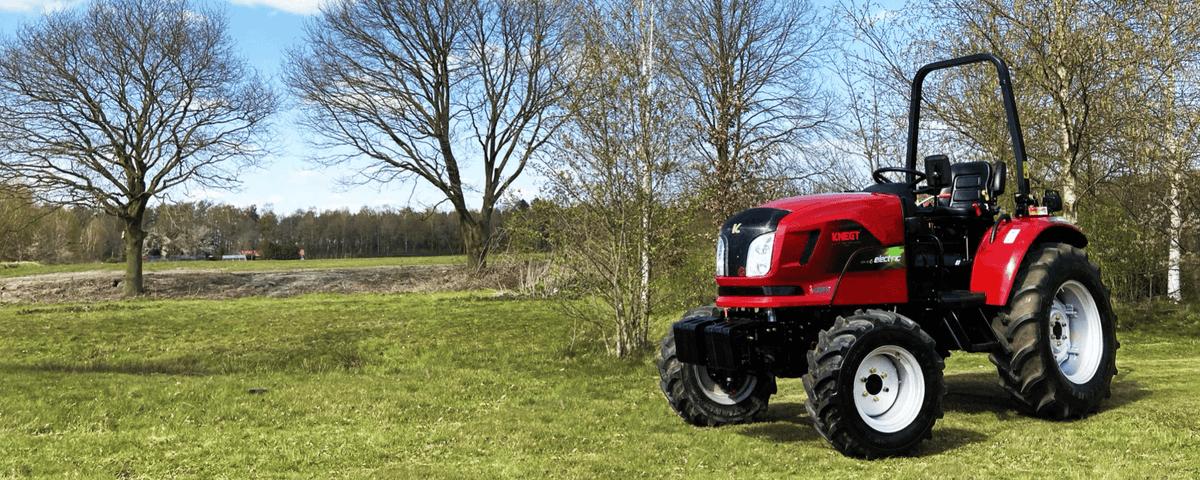
An electric implement carrier does the same work but runs on a battery instead of diesel. That means you work quietly and without exhaust fumes, even in stables, greenhouses and around people and animals. Knegt builds three electric compact tractors that can be used this way: the 304G2E, the 404G2E and the 504G3E.
What exactly is an implement carrier?
The term implement carrier is used for different machines. There are single-axle carriers that you walk behind, and four-wheeled machines with a seat. What they have in common is that the machine itself is the base, and the implement you attach determines what you do with it.
A compact tractor is built for exactly this. It has several places to attach implements and several ways to drive them:
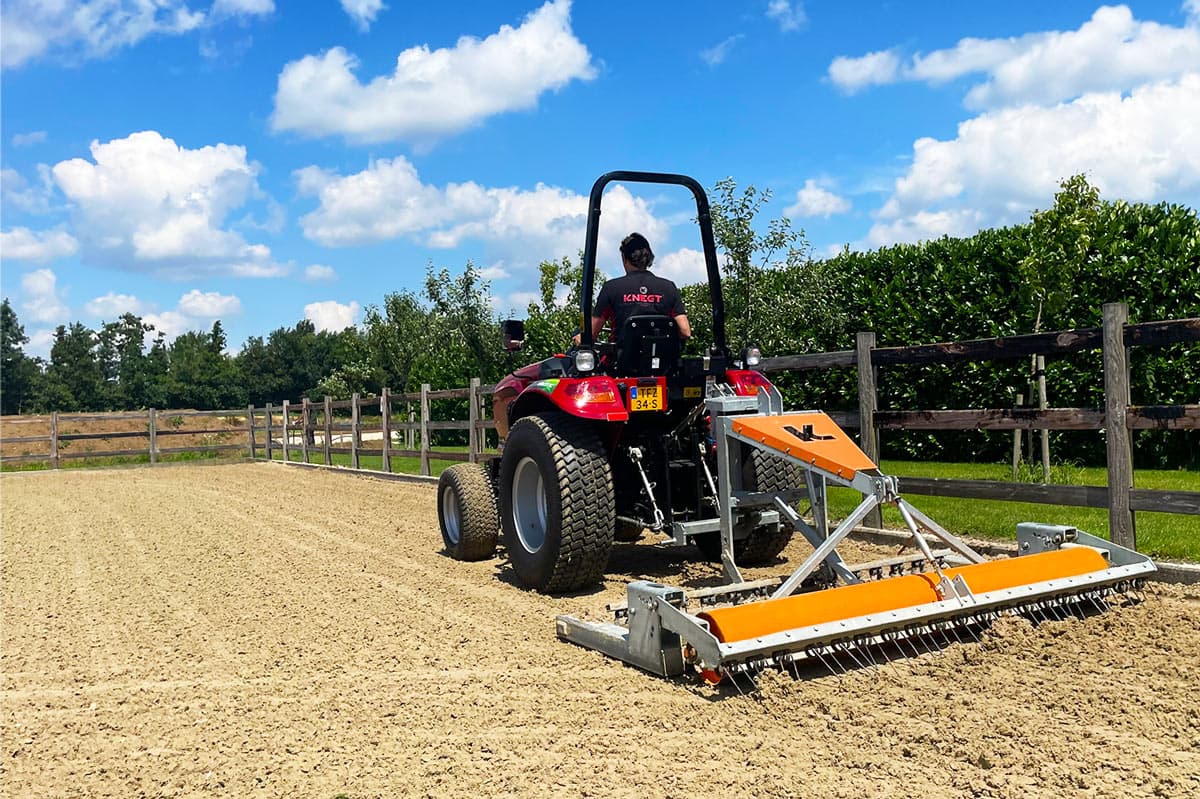
- Rear: the three-point linkage, which lifts and lowers implements, with the PTO as mechanical drive.
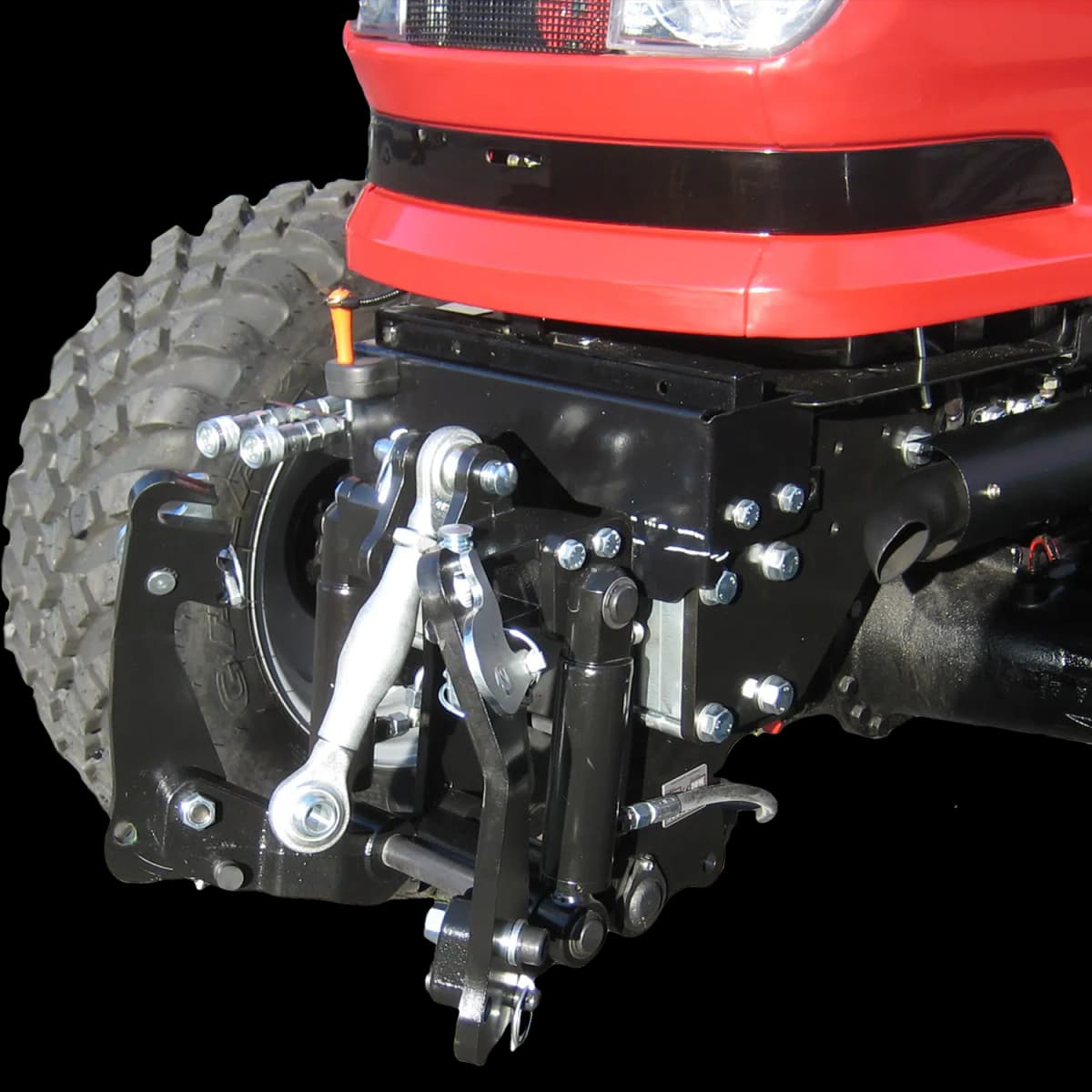
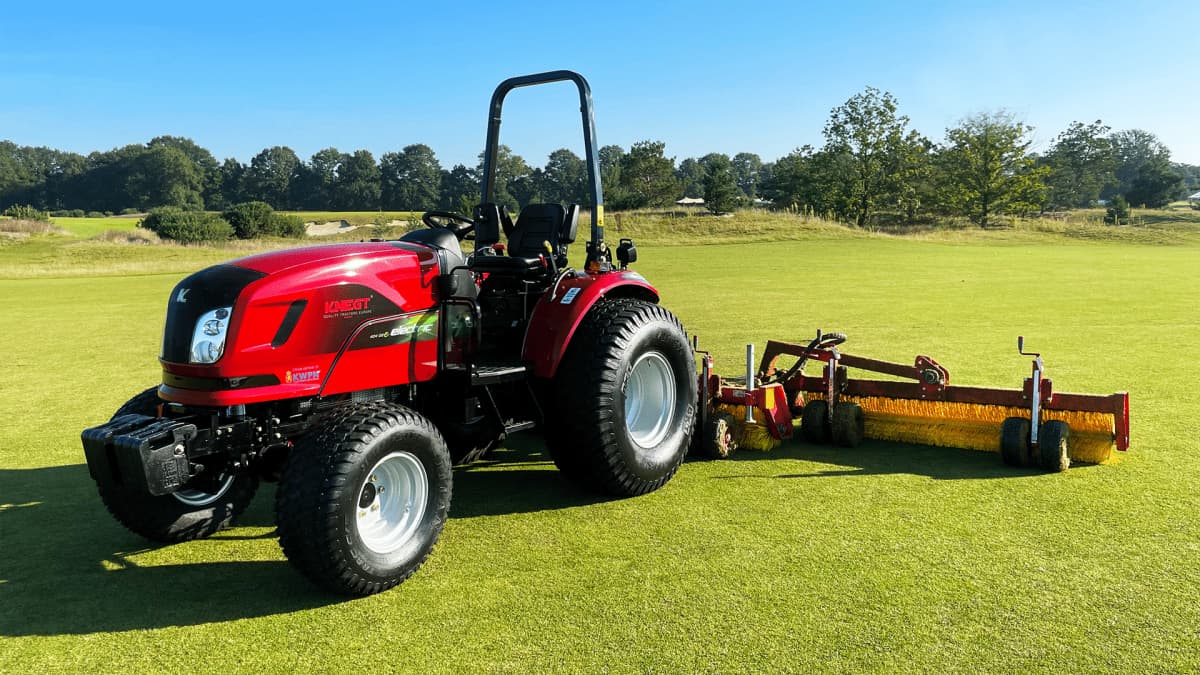
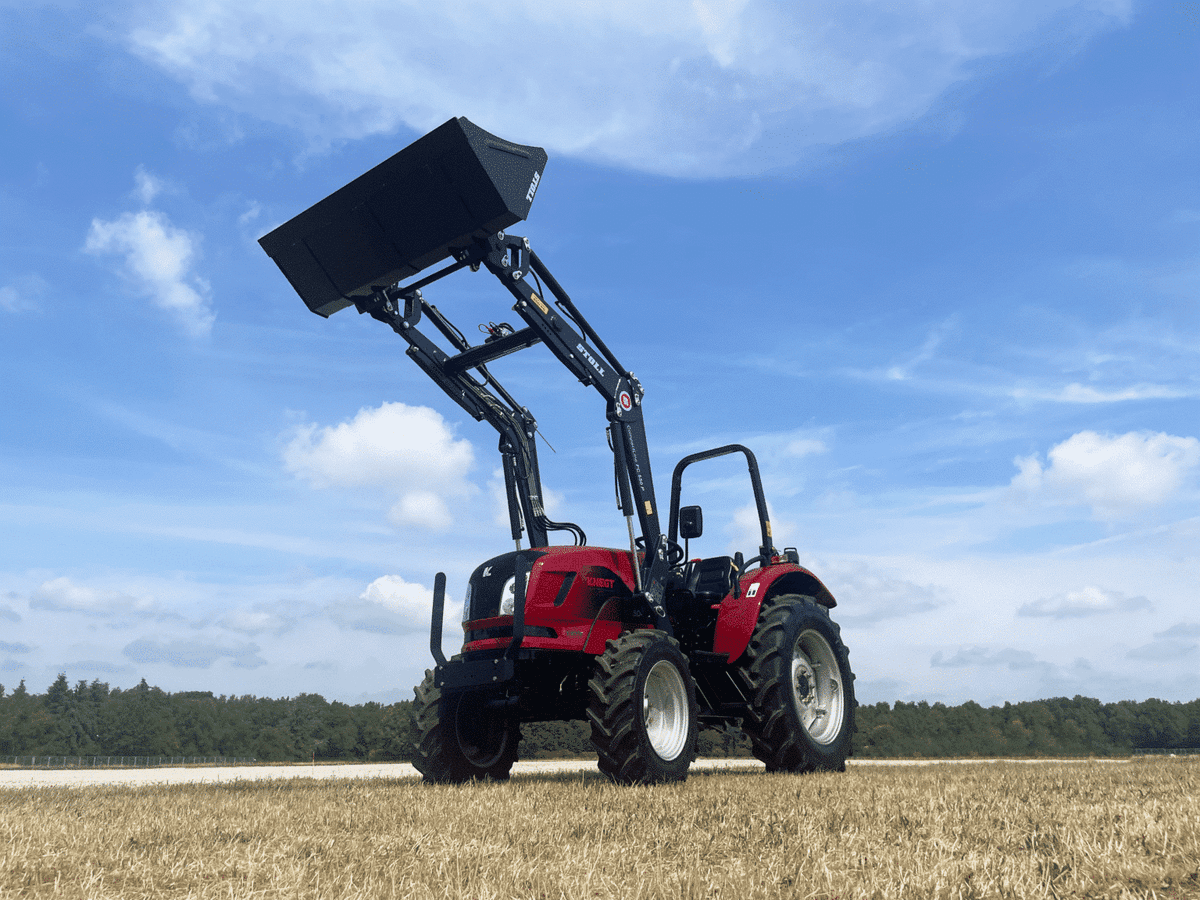
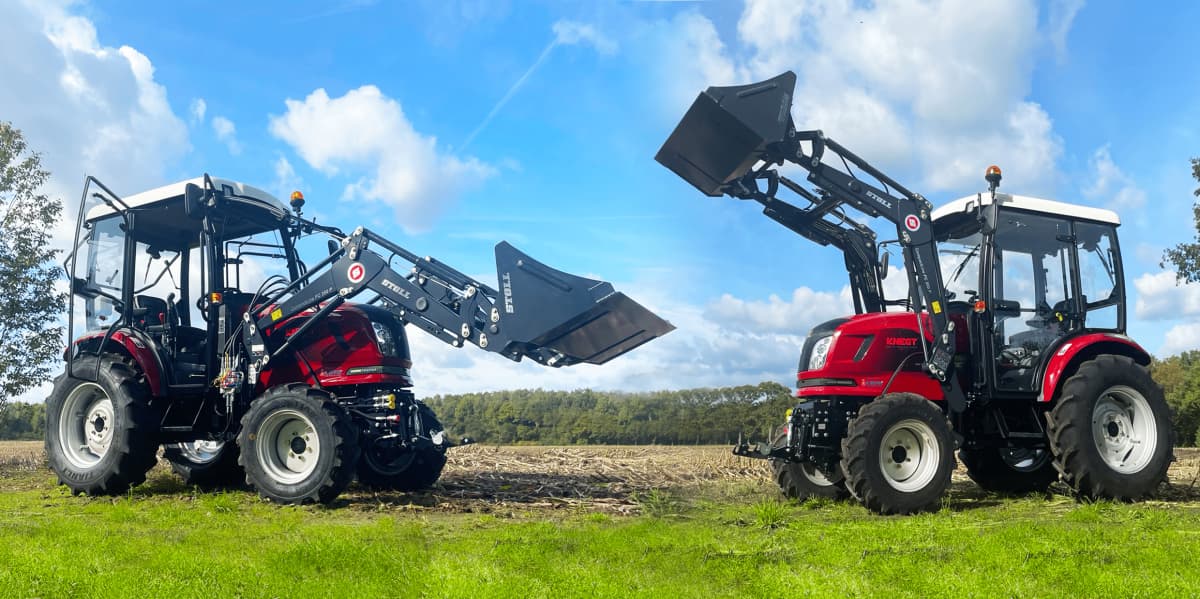
- Front: a front loader for loading and lifting, or a front linkage for mounted implements such as a sweeper or blade.
- Hydraulics: for implements you adjust from the seat or that are driven hydraulically.
- Tow hitch: for trailers and trailed implements.
The advantage over a single-purpose machine is that you invest in one base and switch implements for each job. That saves space in the shed and keeps the machine useful all year round, from mowing in summer to sweeping and scraping in winter.
Which implements can you attach to a Knegt?
Knegt has its own range of implements and accessories for its diesel and electric compact tractors. Grouped by type of work, these include:
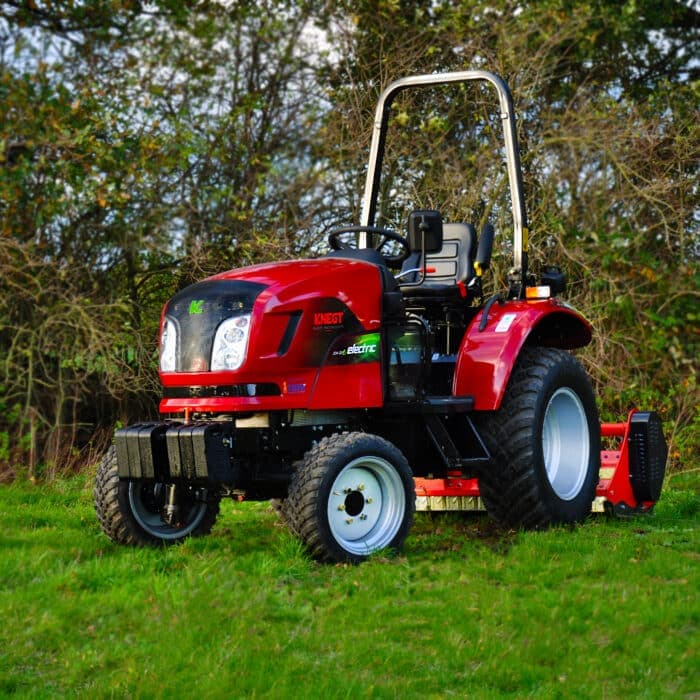
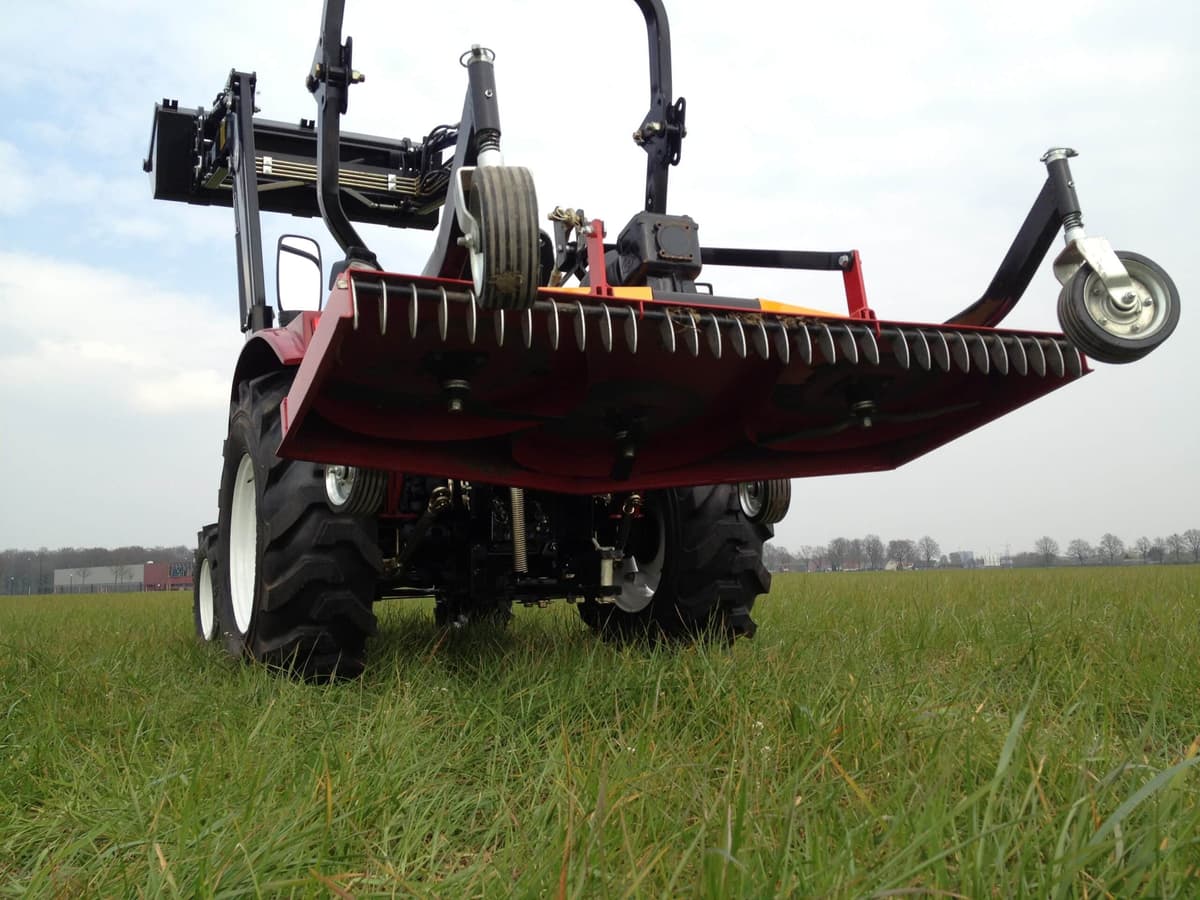
- Mowing and grassland care: flail mowers in standard, sideshift and offset versions, the pasture topper and the grassland harrow.
- Soil preparation: land leveller, power harrow, stone burier and post hole digger.
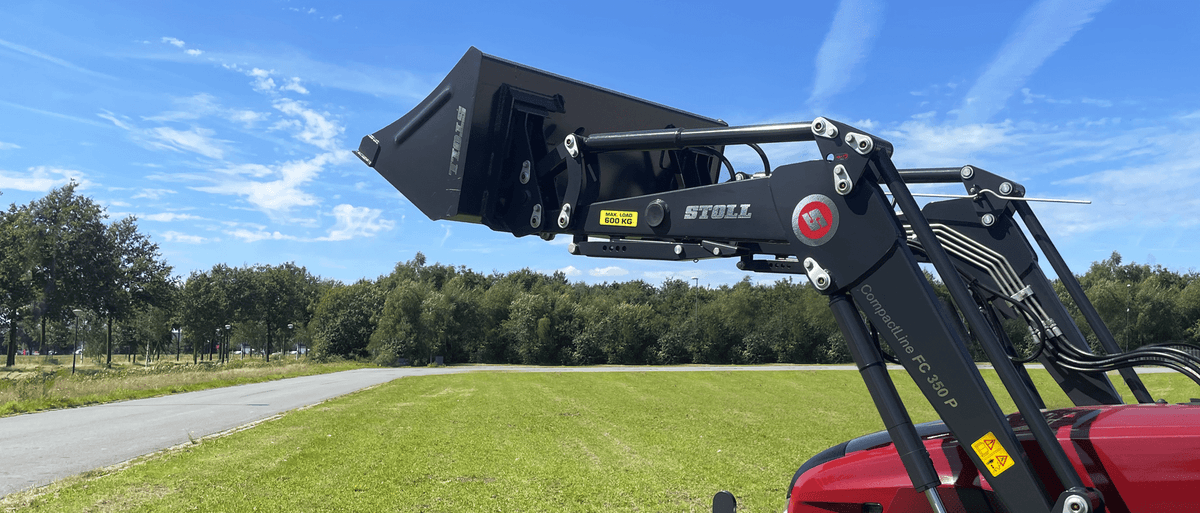
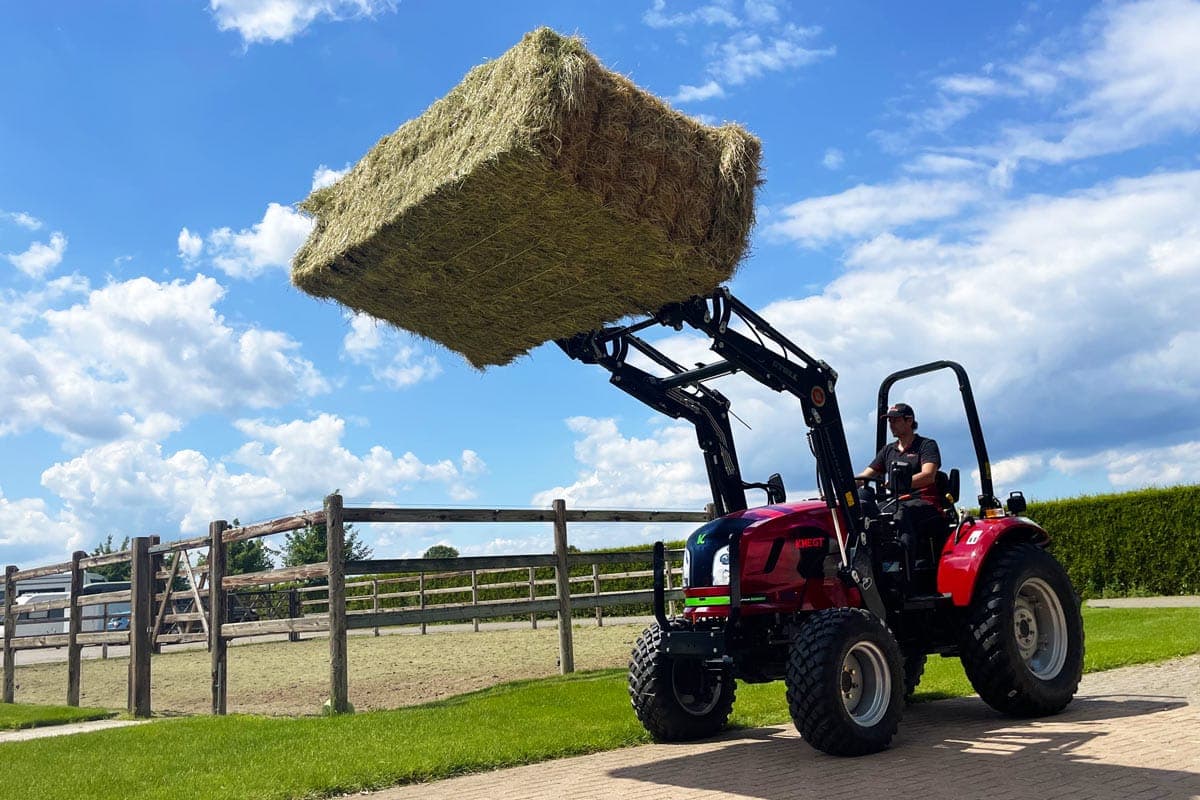
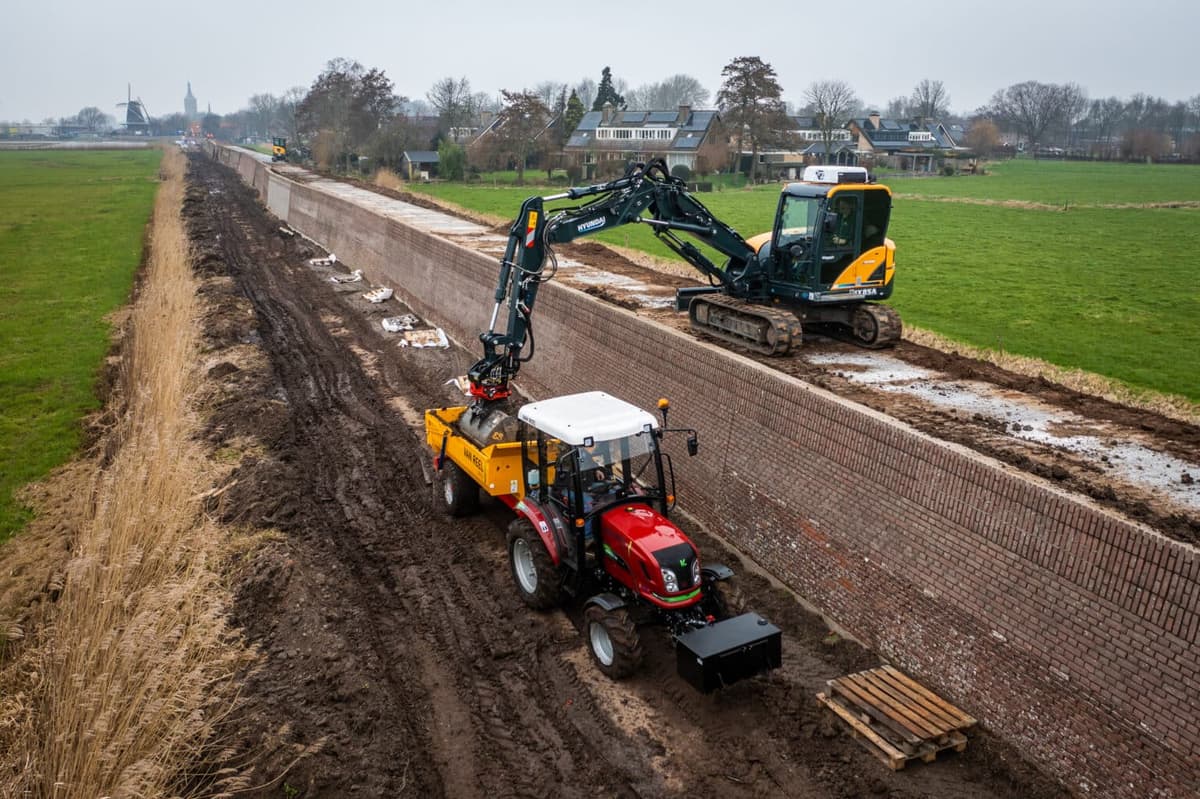
- Transport and loading: transport box, pallet carrier, bale clamp and the Stoll front loader with, for example, a pallet fork.
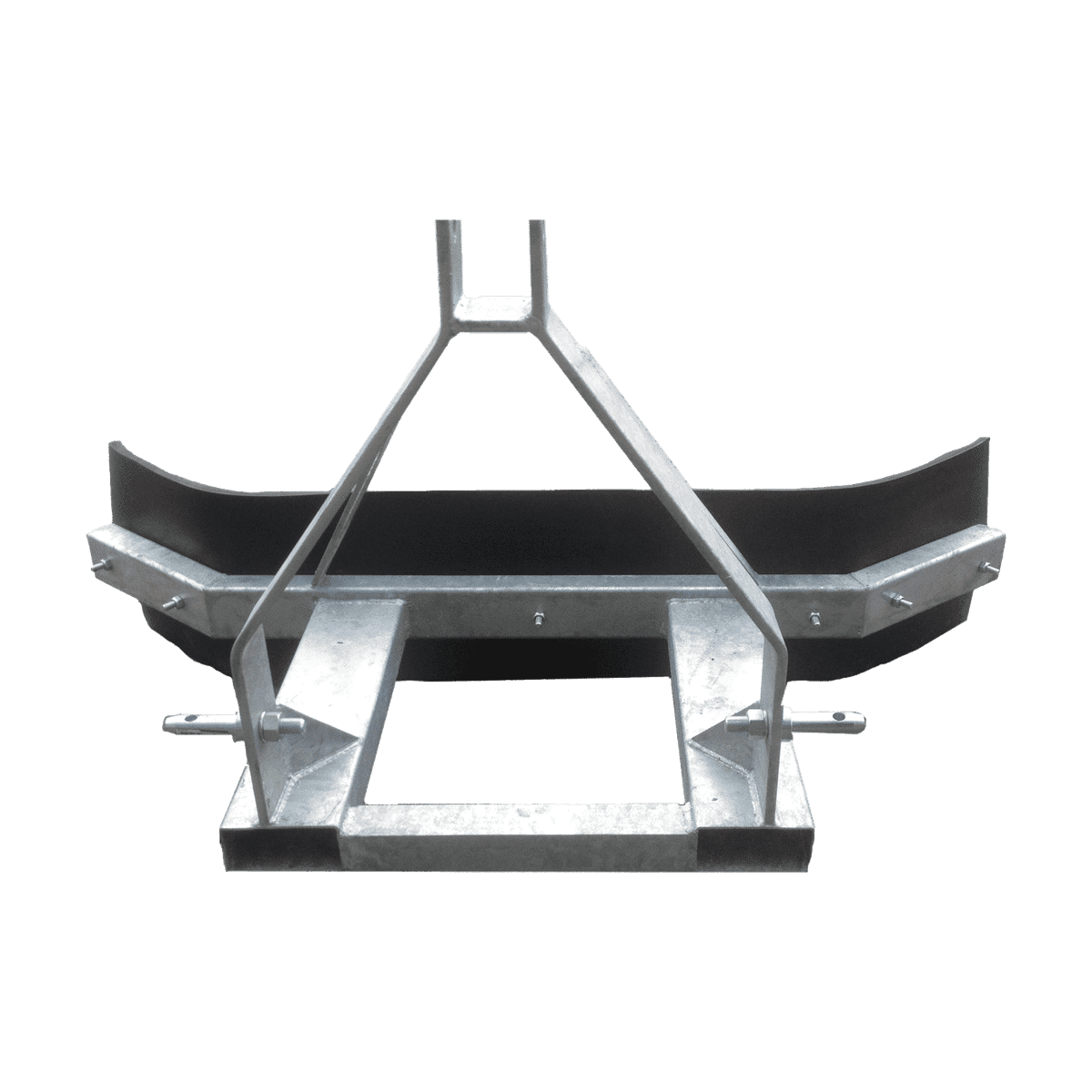
- Yard and stable: manure scraper, plus front-mounted implements with the Zuidberg front linkage.
- Green waste and wood: wood chipper and fertiliser spreader.
Knegt implements driven by the PTO, such as the flail mowers and pasture toppers, are attached to the three-point linkage. Which version and working width suit your tractor differs per implement. The implement product pages list the required power and the hitch for each version.
Why an electric implement carrier?
On electric Knegt tractors, the motors for driving and for hydraulics are separate. The hydraulics have their own 15 hp motor. As a result, hydraulic power remains available for the linkage, the front loader and hydraulic implements, even while you drive. For a machine whose main job is carrying implements, that matters.
Electric operation also has some clear advantages:
- Quiet: you can work early in the morning in a residential area, between visitors in a park or next to horses in the stable without noise.
- No exhaust fumes: suitable for indoor spaces such as stables, greenhouses and industrial halls.
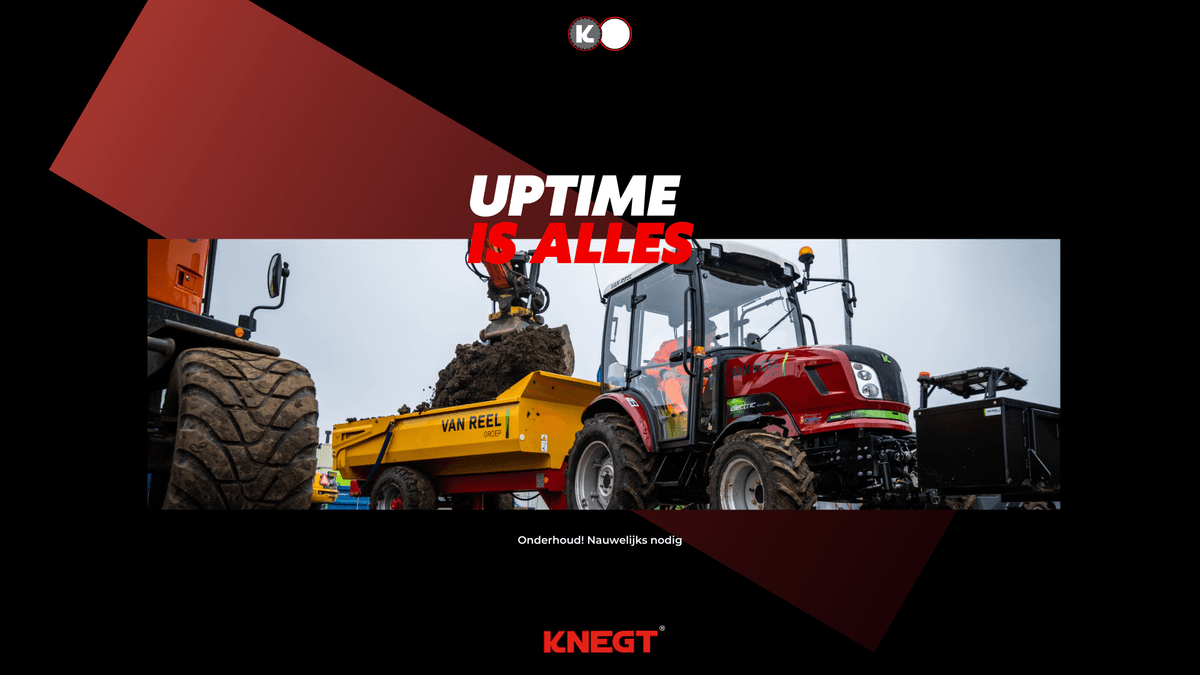
- Simpler maintenance: an electric drive has fewer moving parts than a diesel engine. Knegt recommends a service every 350 hours or once a year.
- Charge where you want: charging is possible from a standard 230V socket or faster with the optional fast charger, and opportunity charging in between is possible.
How long you can work on one charge depends on the intensity of the work, the implement and your battery choice. With an extra battery pack or by topping up during breaks, you can keep going for longer.
Choosing the right implement carrier in 5 steps
The best implement carrier is the tractor that suits the implements you use most. Here is how to approach the choice:
- Step 1, list your implements: which jobs do you do every week, and which only a few times a year?
- Step 2, check the required power: every implement has a minimum power requirement. The Knegt pasture toppers, for example, need 25 to 30 hp, while the larger sideshift and offset flail mowers need more power.
- Step 3, check the hitch: linkage category (category 1 or 2), PTO speed and lifting capacity must match your tractor. You will find the lifting capacity and PTO speed for each model in the specifications on the models page.
- Step 4, think about size and manoeuvrability: if you often work between stalls, trees, greenhouses or on narrow paths, a compact size counts for more than maximum power.
- Step 5, choose your options: a luxury cab for working in every season, the Stoll front loader for loading work and a battery that matches your working day.
The three electric models at a glance:
- Knegt 304G2E: 45 hp, of which 30 hp for driving and 15 hp for hydraulics. Compact and agile for stables, greenhouses and tight sites.
- Knegt 404G2E: 55 hp, of which 40 hp for driving and 15 hp for hydraulics. An all-rounder for mowing, groundwork and transport.
- Knegt 504G3E: 65 hp, of which 50 hp for driving and 15 hp for hydraulics. For heavier implements and intensive use.
Prefer diesel? Then there are the 304G2 (25 hp), the 404GT (40 hp) and the 504GT (50 hp). All Knegt tractors have four-wheel drive and power steering.
Frequently asked questions
What is the difference between an implement carrier and a tractor?
An implement carrier is mainly built to carry and drive implements. A compact tractor with three-point linkage, PTO, hydraulics and front loader can do that too, and can also pull and transport. In practice, a compact tractor is therefore a versatile implement carrier.
Can an electric tractor drive PTO implements?
Yes, the electric Knegt tractors are designed to work with implements. Check for each implement whether the required power and PTO speed suit the model; your dealer will help you.
Can I drive on public roads with an implement attached?
Knegt tractors are CE approved and road legal in Europe. A mounted implement does change the dimensions and visibility, so ask your dealer what your combination requires.
How much does an electric implement carrier cost?
That depends on the model, battery, options and the implements you choose. Request a quote for an up-to-date price for your situation.
Put together your implement carrier with expert advice
Would you like to know which Knegt tractor and which implements suit your work? Request a free demo and see the tractor with implements at work on your own site. Prefer to talk first? Book an advice session, request a quote or find a Knegt dealer near you.