3-point hitch tow bar: choosing Cat 1 or Cat 2
The short answer
A 3-point hitch tow bar is a steel frame that you attach to the three-point linkage of your tractor, with a tow ball or towing point for pulling a trailer or trailed implement. Because the linkage carries the frame, you set the towing height easily with the hydraulics.
Choose a tow bar in the same category as your tractor's lift arms: Category 1 (22 mm pins) is common on compact tractors, Category 2 (28 mm pins) on heavier linkages. Knegt supplies a 3-point tow bar in both Category 1 and Category 2.
What is a 3-point tow bar and how does it work?
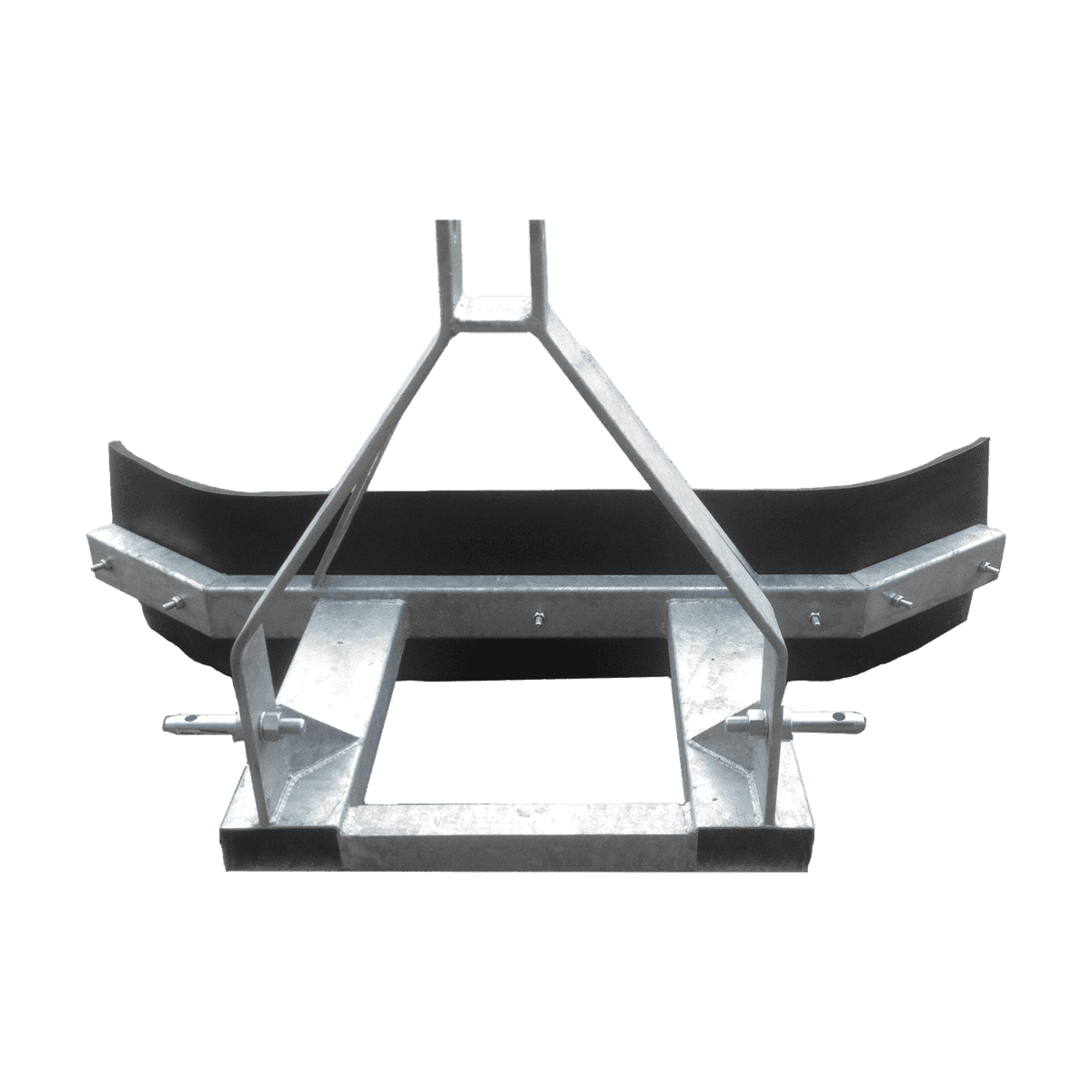
A 3-point tow bar consists of a horizontal beam with a pin at each end for the lower lift arms, and an upright with a mounting point for the top link. The coupling point, such as a tow ball, sits on the beam. This turns your three-point linkage into a hitch that you raise and lower with the hydraulics.
You attach a tow bar like any other three-point implement:
- Reverse until the lower lift arms line up with the pins on the beam and secure them with the linch pins.
- Fit the top link to the upright and adjust its length so the tow bar stands straight.
- Set the lift arm stabilisers so the tow bar cannot swing sideways.
- Use the linkage to bring the coupling point to the height of the drawbar and hitch up the trailer.
Before you drive off, check that all pins are secured and the trailer is properly coupled.
Category 1 or Category 2: what is the difference?
Three-point linkages are classified internationally into categories. Among other things, these set the diameter of the pins an implement uses to hang on the lower lift arms. For a tow bar, these two matter most:
- Category 1: 22 mm pins for the lower lift arms. Common on compact and smaller tractors.
- Category 2: 28 mm pins for the lower lift arms. Intended for heavier tractors and linkages.
If you choose the wrong category, the pins will not fit the lift arm balls or the connection will have too much play. Adapter bushes exist to combine categories, but the safest choice is a tow bar in the same category as your linkage. Your tractor's manual states which category it has. If in doubt, ask your dealer.
Tow bar or fixed hitch?
Many tractors also have a hitch fixed to the chassis. A 3-point tow bar has some clear advantages:
- Adjustable height: with the linkage you set the coupling point exactly at drawbar height, whether the trailer has a low or a high drawbar.
- Easier hitching: you use the hydraulics to bring the ball under the coupling, without lifting the drawbar.
- Quick changeover: you remove the tow bar as easily as any other implement, freeing the linkage for a mower or rotary tiller.
- Ball coupling: with a tow ball you can pull trailers with a ball coupling, such as many transport carts and small trailers.
There is one drawback: while the tow bar is on the linkage, you cannot use another implement there. If you tow a trailer every day and also work a lot with rear implements, a fixed hitch may be more practical. In Knegt's towing hitch range you will find other solutions alongside the tow bar.
What to look for when choosing and using one
A tow bar is a simple accessory, but towing a trailer involves considerable forces. Pay attention to these points:
- Category: choose the same category as your tractor's lift arms.
- Towing weight and nose weight: the permitted towing weight and maximum nose weight of both the tractor and the tow bar determine what you may pull. Look these values up in the documentation and always stay below them.
- Lift capacity: the nose weight rests on the three-point linkage. For reference, the three-point lift capacity is 665 kg on the Knegt 404G2E and 1,100 kg on the 504G3E, measured 61 cm behind the ball ends.
- Trailer coupling: check whether your trailer has a ball coupling or a towing eye, and choose the coupling point accordingly.
- Public roads: if you drive the combination on public roads, it must meet the applicable rules, for example on lighting. Your dealer can advise you.
- Safe hitching: make sure nobody stands between the tractor and trailer while you operate the linkage.
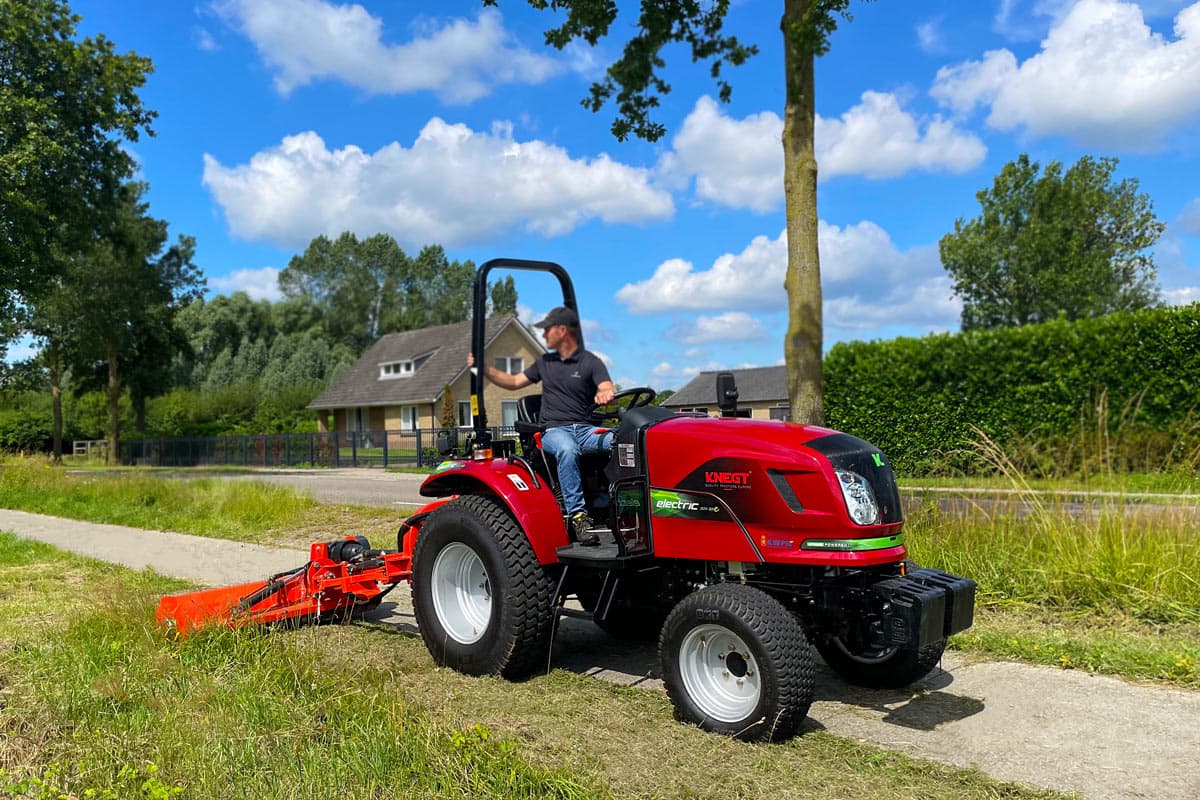
With an electric Knegt compact tractor you tow quietly and without emissions, for example on a campsite, at an equestrian centre or in a greenhouse. Keep in mind that working time per charge depends on workload: heavy towing uses more energy than light work.
Frequently asked questions
What is the difference between a 3-point tow bar and a tow hitch?
A 3-point tow bar hangs on the three-point linkage, so it is height-adjustable and quick to remove. A tow hitch is fixed to the tractor chassis.
Which tow bar category fits my tractor?
That depends on the lift arms. Category 1 uses 22 mm pins, Category 2 uses 28 mm pins. You will find the category in your tractor's manual or through your dealer.
Can I pull an ordinary trailer with a 3-point tow bar?
With a tow bar fitted with a tow ball you can pull trailers with a ball coupling, as long as you stay within the permitted towing weight and nose weight of the tractor and tow bar.
Can I fit a tow bar to an electric Knegt?
Yes, a tow bar in the right category attaches to the three-point linkage like any other implement. Your dealer will be happy to check which version suits your model and trailer.
Advice on your tow bar or trailer
Not sure which tow bar or hitch suits your tractor and trailer? Request a consultation or find a Knegt dealer near you. For the current price of the 3-point tow bar in Category 1 or 2, simply request a quote.
Would you like to experience how an electric Knegt works with a trailer? Request a free demo. Together we will look at which tractor, battery and accessories suit your work.